Common Canadian Road Signs and Their Meanings
Road signs with a picture and a plain-English meaning for each, grouped the way they appear on knowledge tests. This page covers 111 signs across six categories, plus a short guide to railway crossings. Jump to a category below, or scroll through.
Colour and shape: the quick guide
Recognizing a sign’s colour and shape can help you work out its purpose before you read the message. Colour and shape are a starting point, not a rule: designs vary by sign and by province or territory, so always read the sign itself.
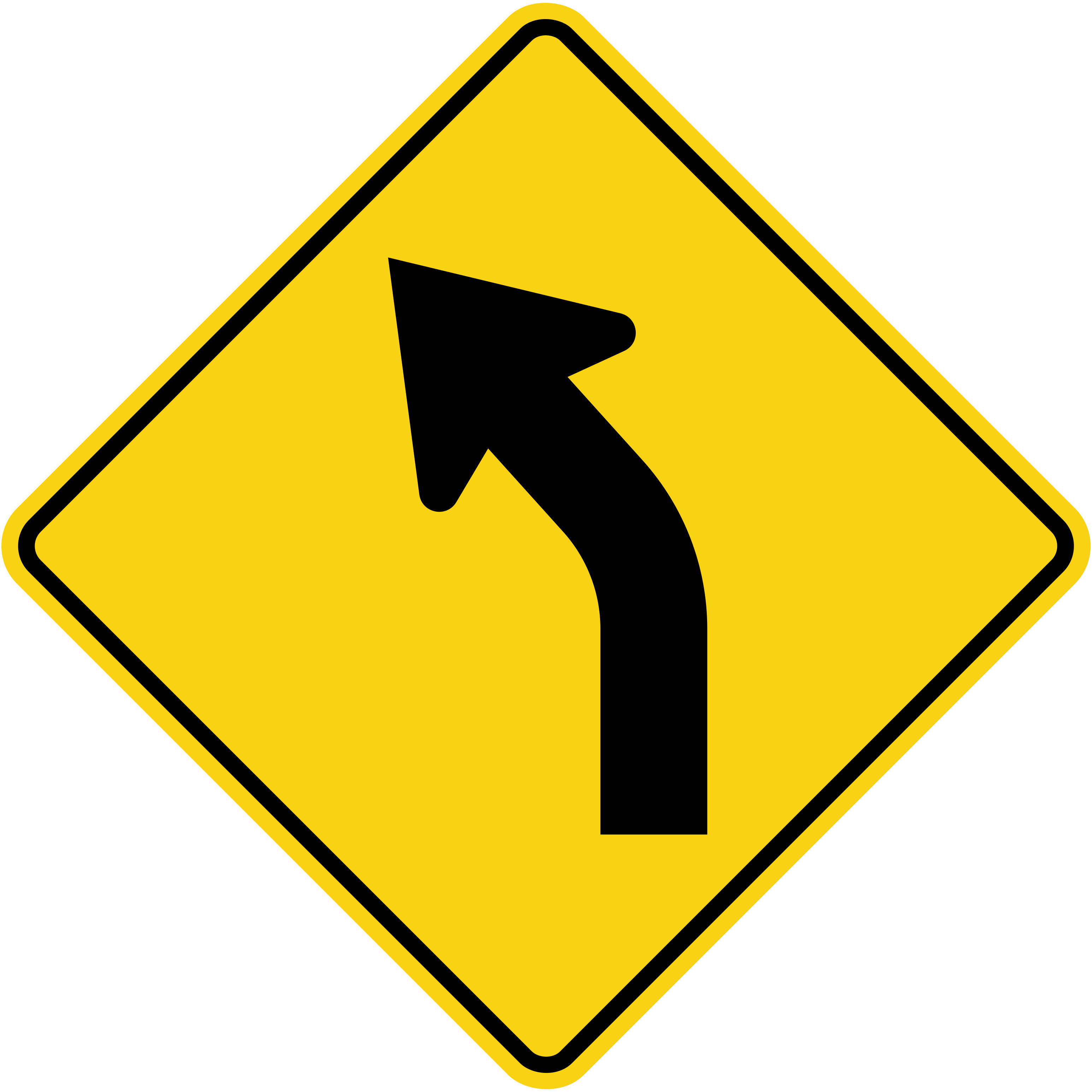 Yellow diamondWarningHazards and changing conditions aheadMost warning signs use this design, but some use other shapes or colours.
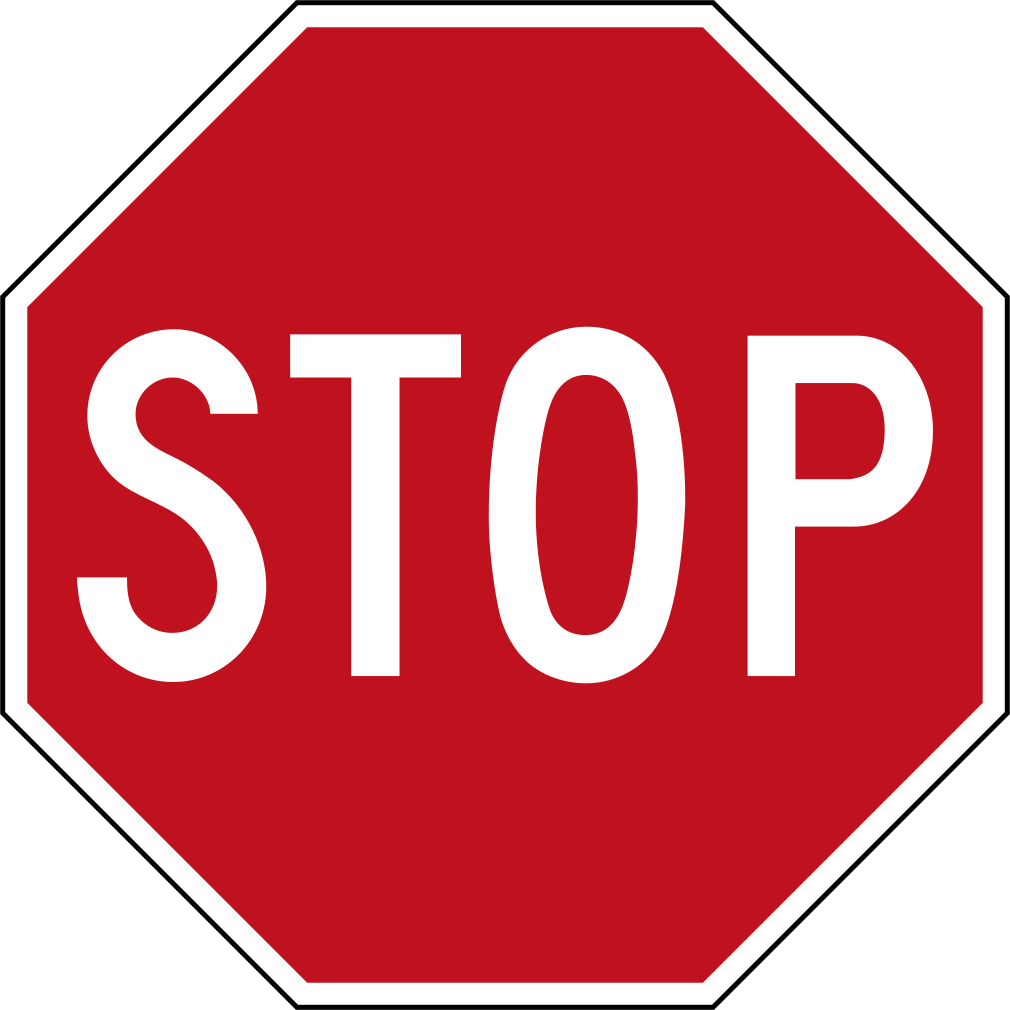 Red octagonStopCome to a complete stopThe octagon is the shape used for stop signs. Wording differs by province; see the stop sign wording below.
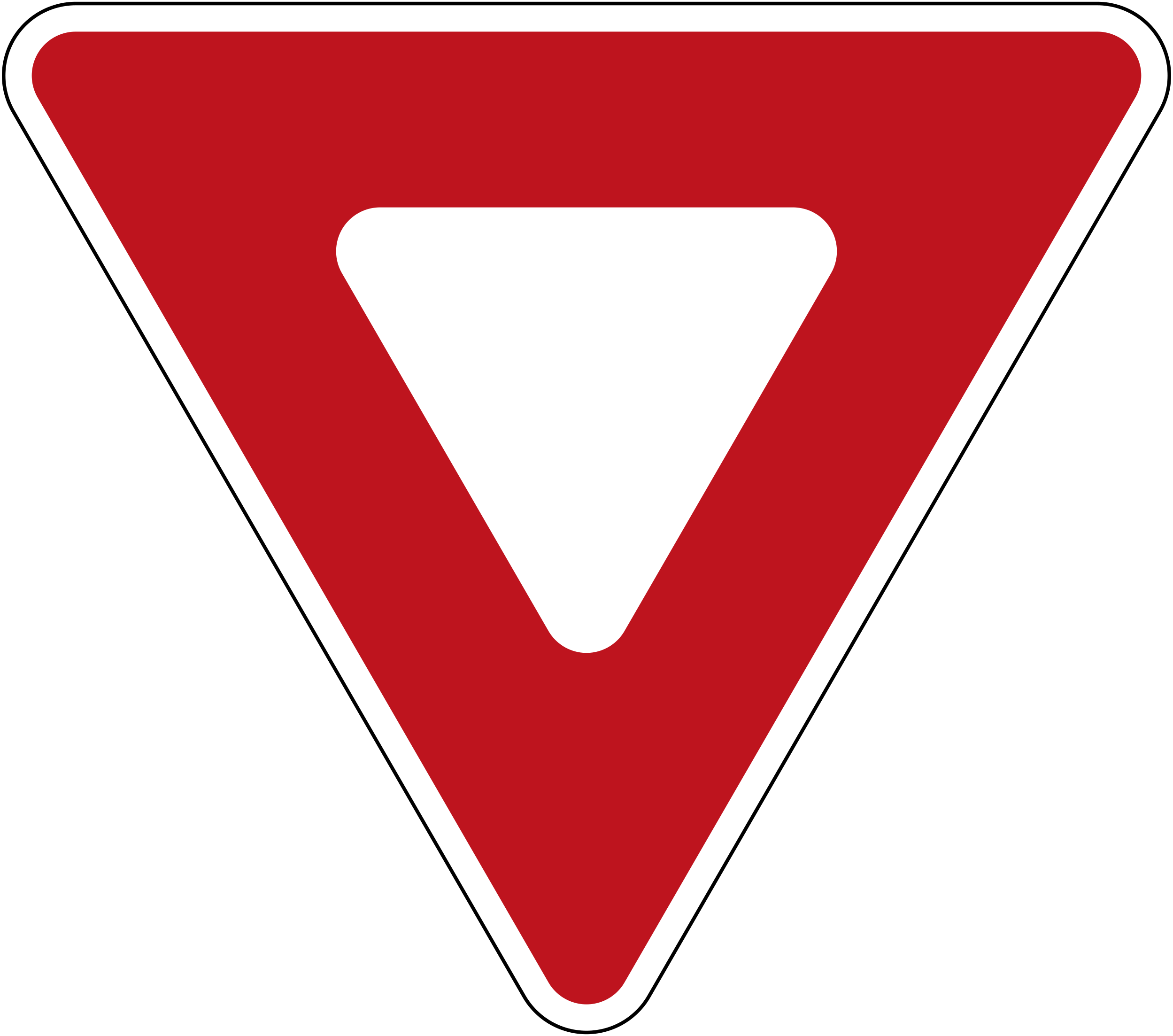 Red-and-white triangleYieldGive way to other trafficThe triangle points down. Slow down and yield the right-of-way.
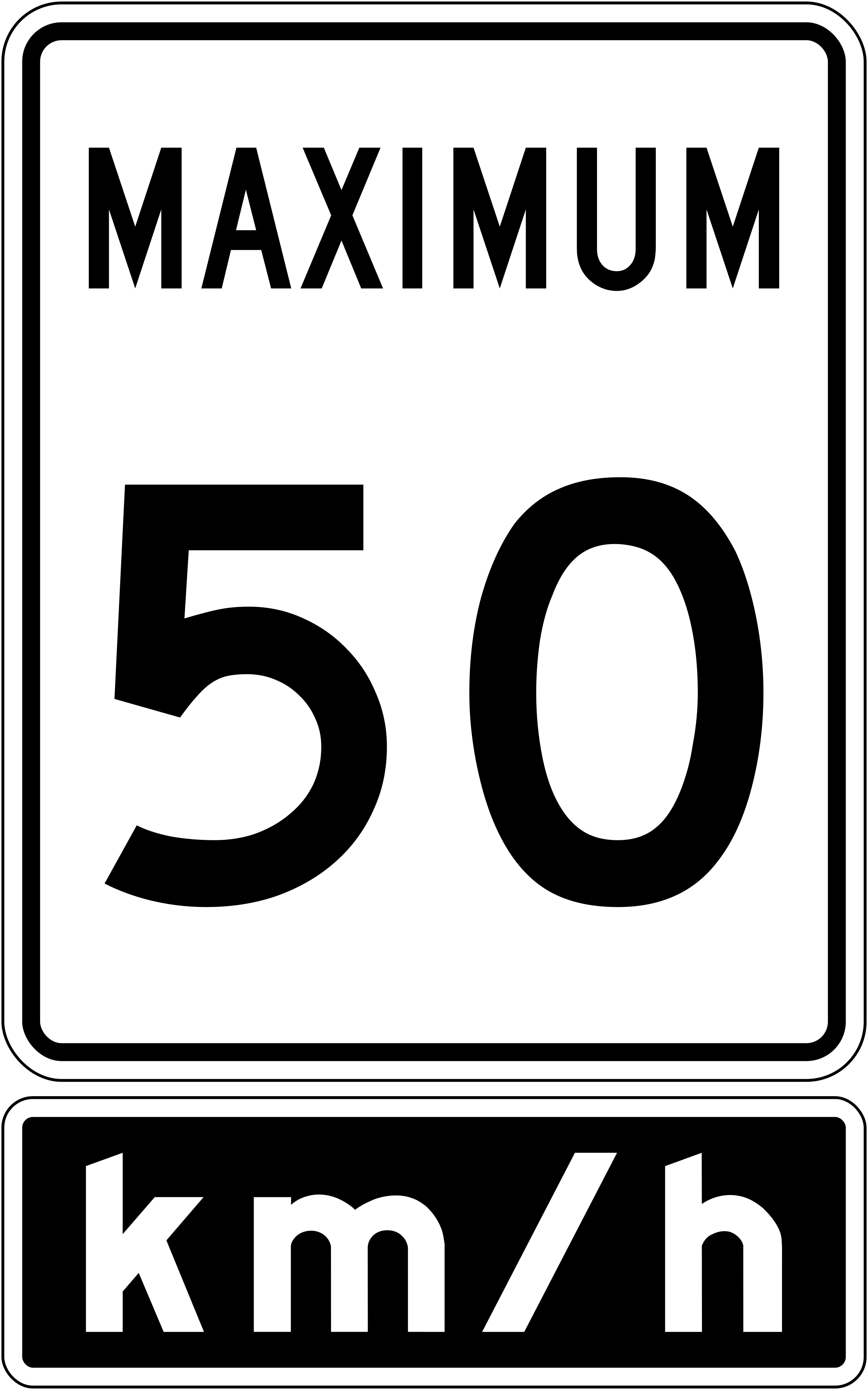 White rectangleRegulatoryRules you must followMany regulatory signs look like this, but some use other colours and shapes.
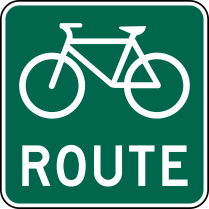 Green rectangleGuideDirections and destinationsGreen signs usually point the way or show distances.
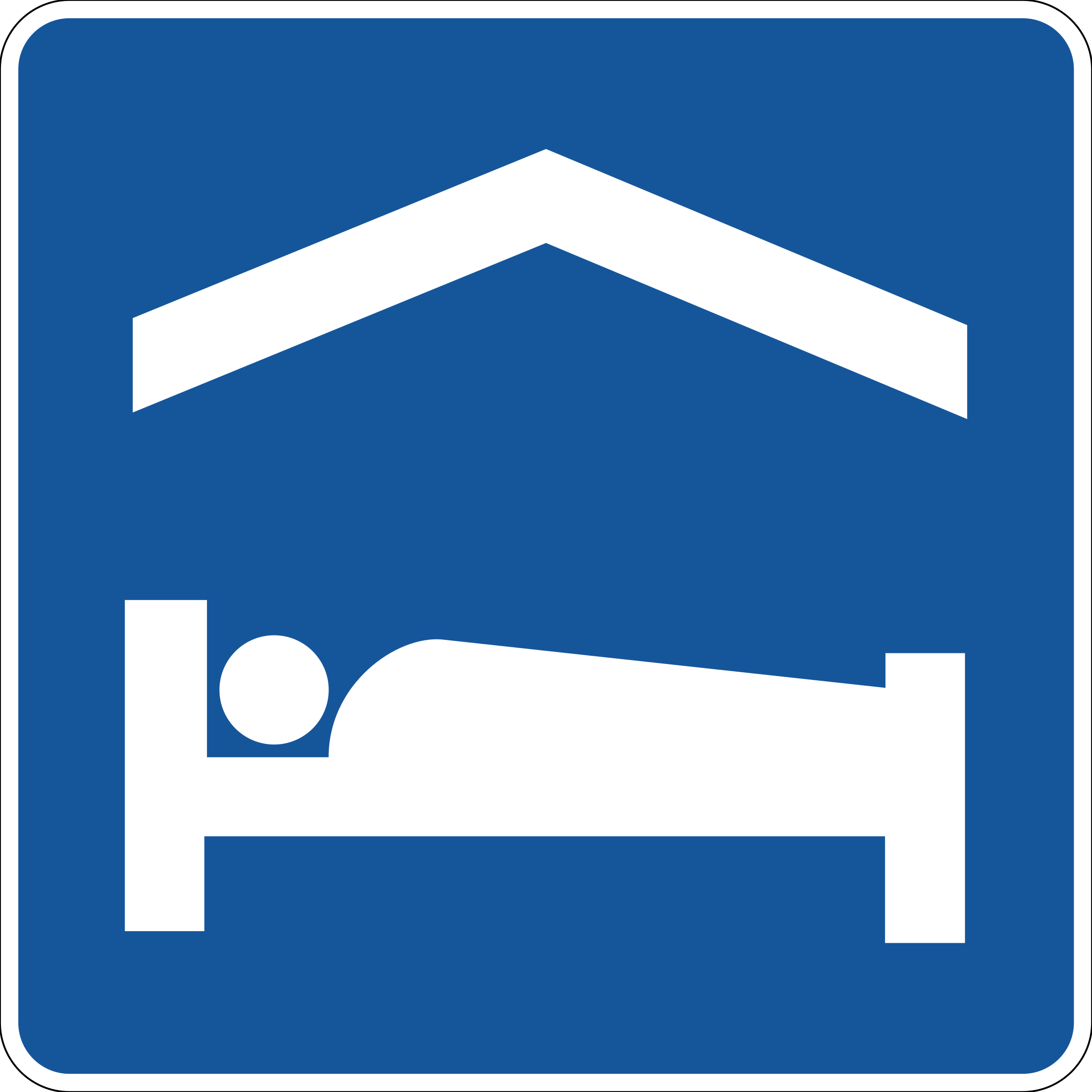 Blue signServices and informationServices and general informationBlue is commonly used for services and information. Shapes vary by sign.
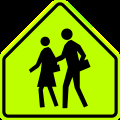
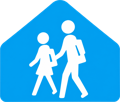 Fluorescent yellow-green or blue pentagonSchoolSchool-related warningsMost provinces and territories use a fluorescent yellow-green pentagon. Newfoundland and Labrador uses both blue and fluorescent yellow school zone signs. Other school-related signs may have different designs.
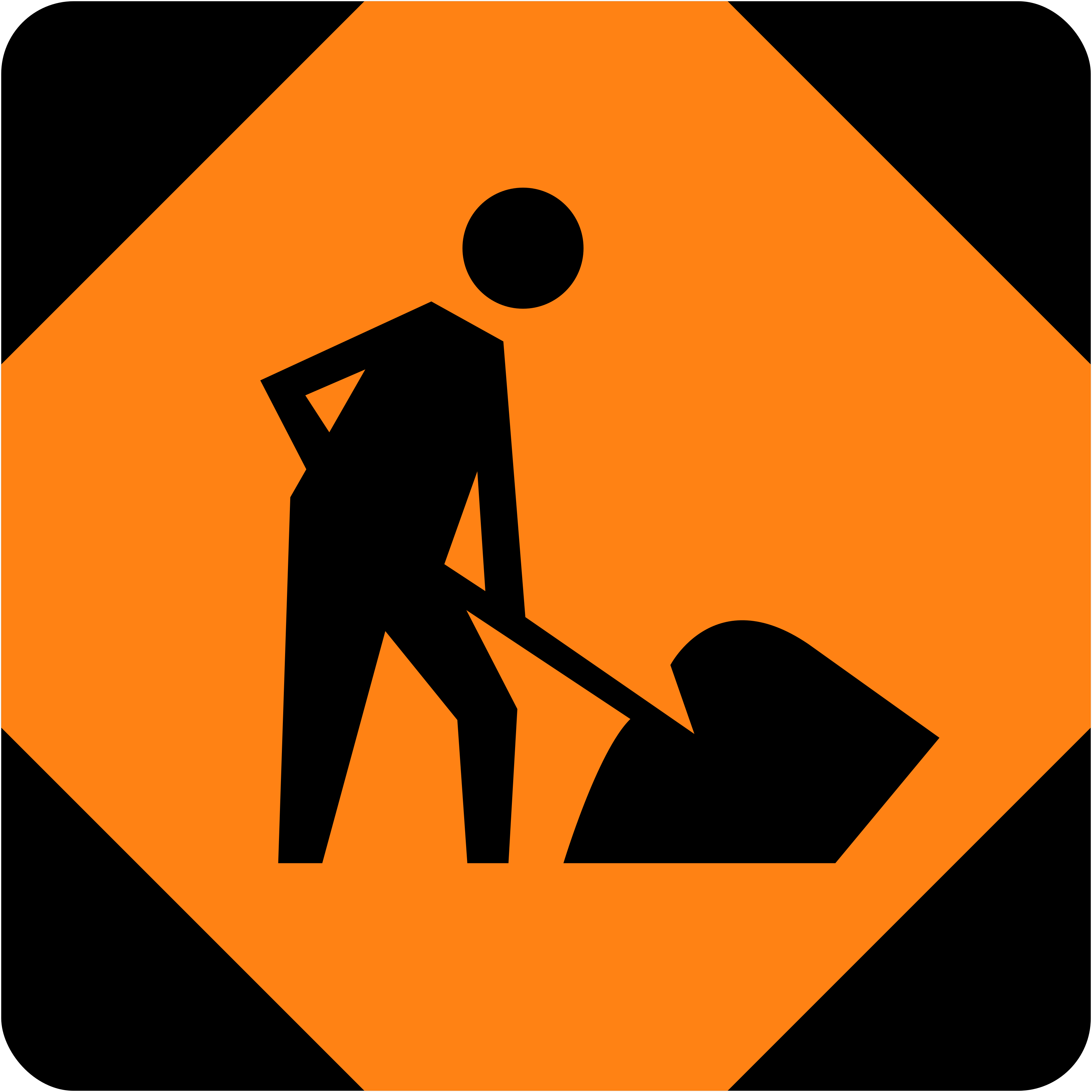 Orange diamondConstructionRoadwork and temporary traffic conditionsOrange diamonds are common in work zones, but other shapes are used too.
Stop sign wording by province
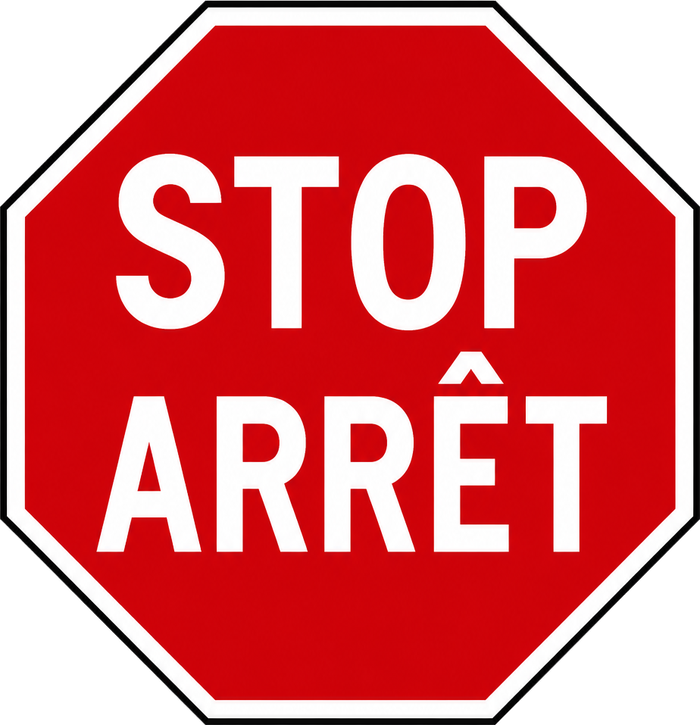
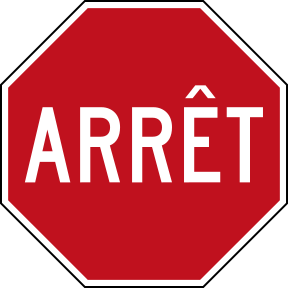
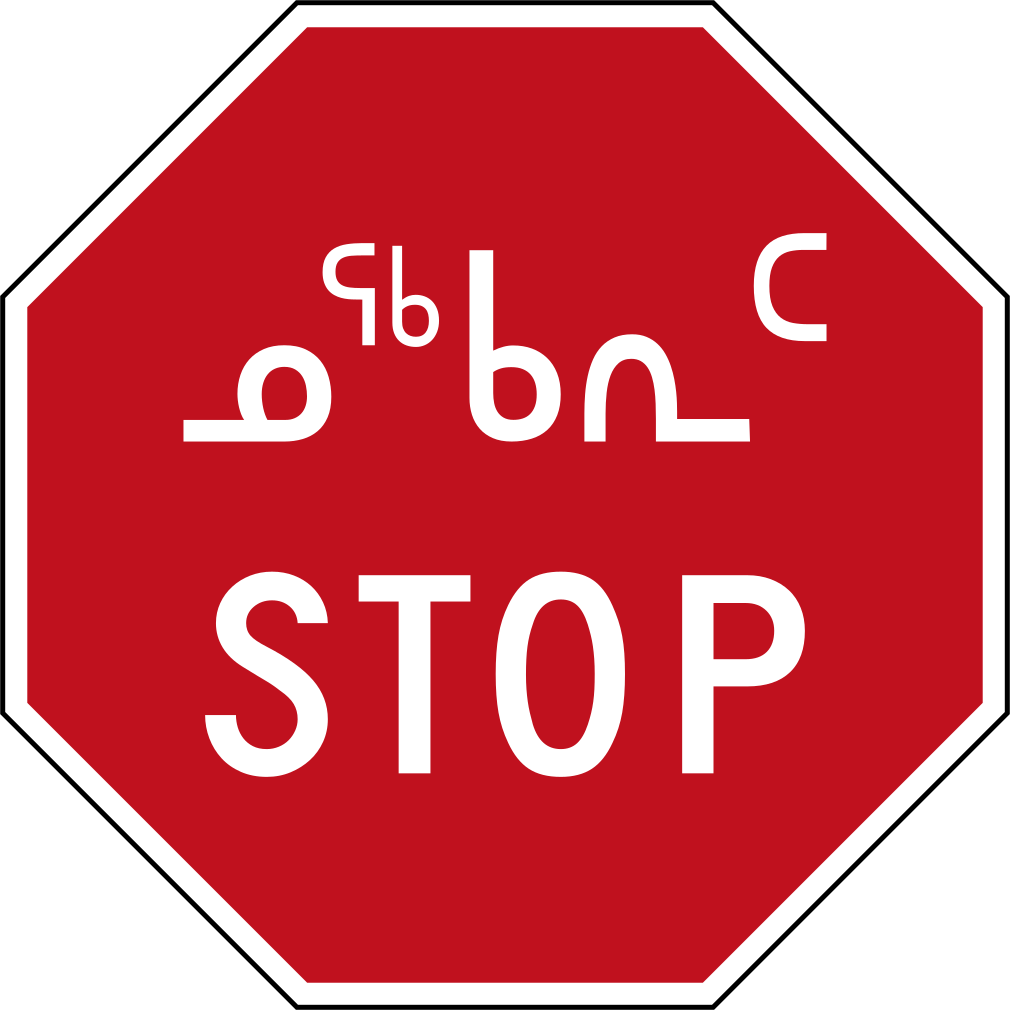
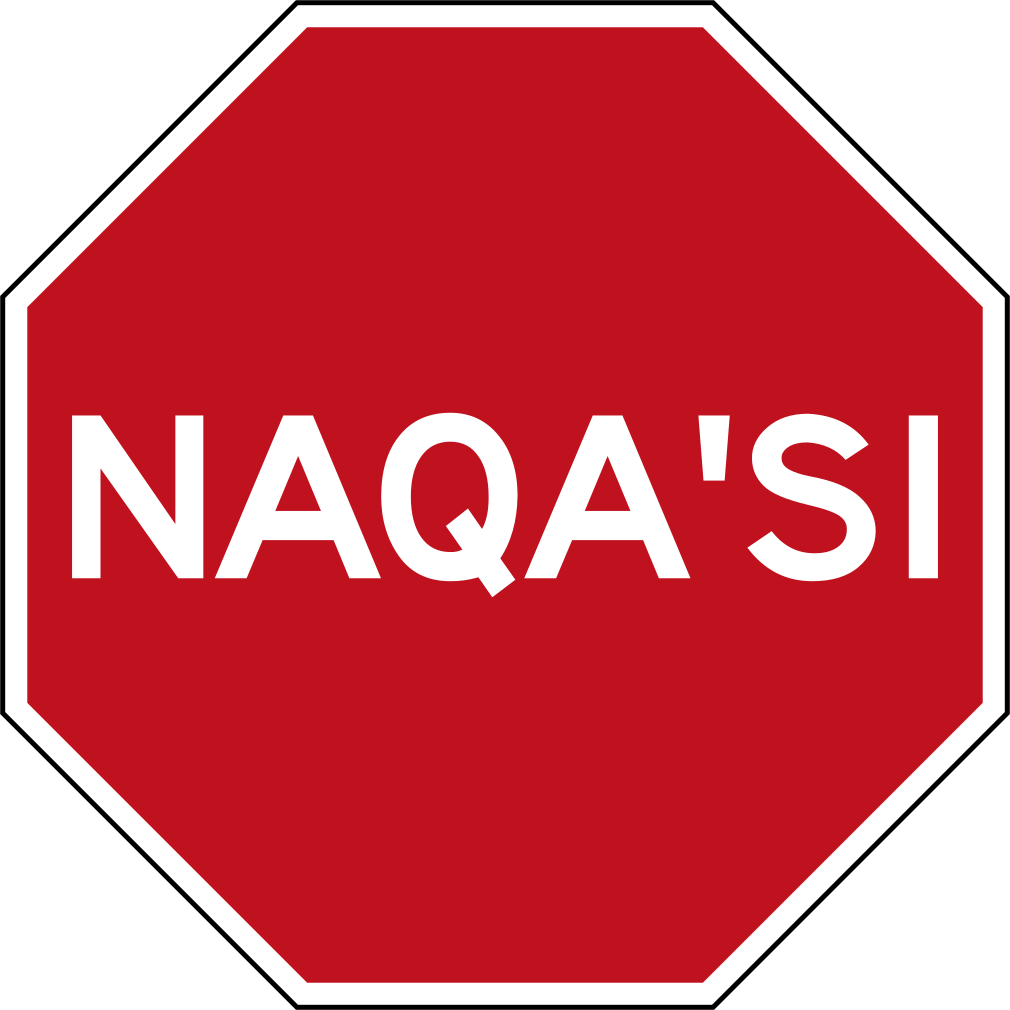
The shape and red colour stay the same. Only the wording changes, so follow your provincial or territorial driver’s guide.
This quick guide does not replace your provincial or territorial driver’s guide. Follow your own guide for the signs and rules that apply where you drive.
Yellow diamond signs commonly warn drivers of hazards, changes in road conditions or potential dangers ahead. Not every warning sign uses this colour and shape.
Curve Ahead
The road curves left or right ahead.
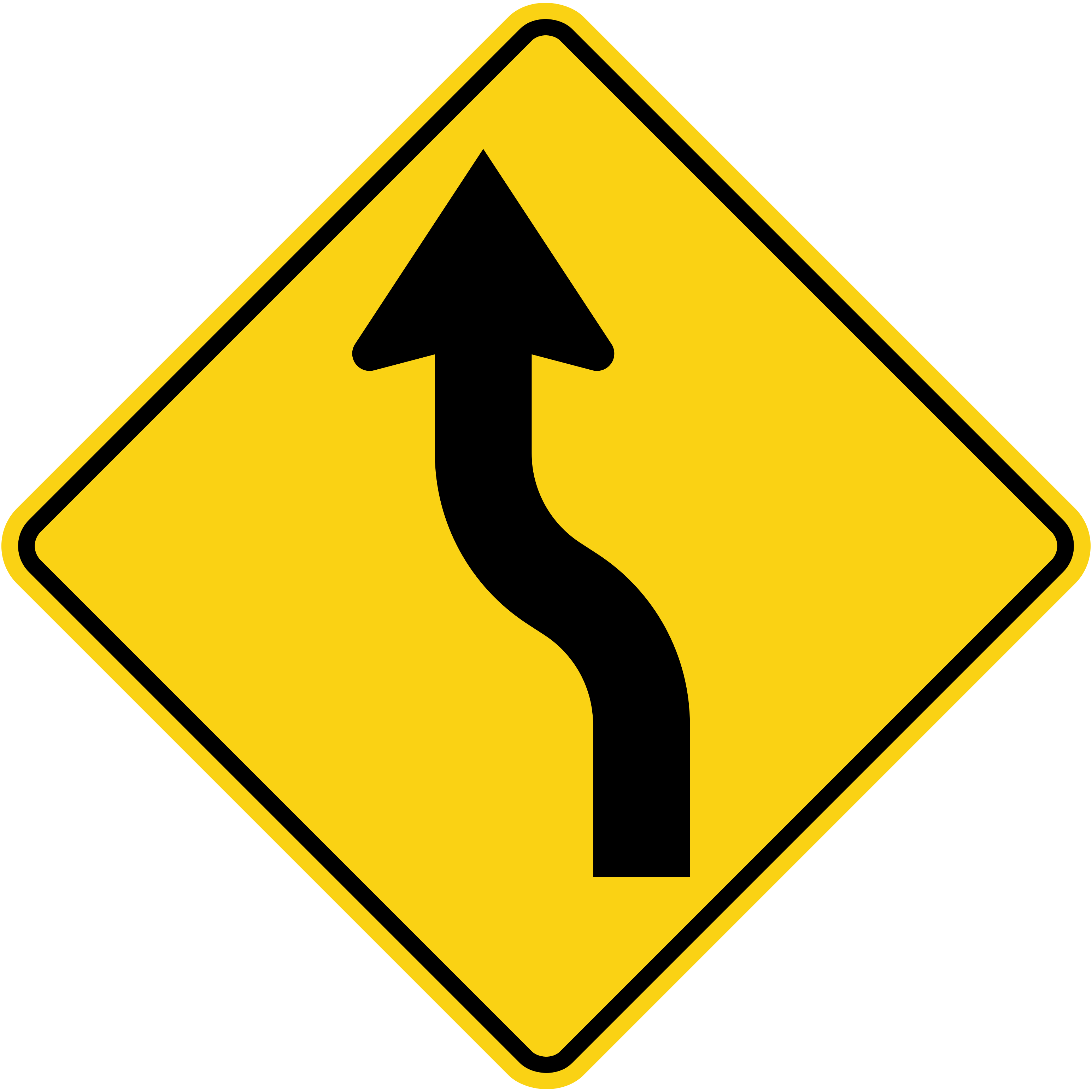
Reverse Curve
The road curves one way, then immediately the opposite way — an S-shape.
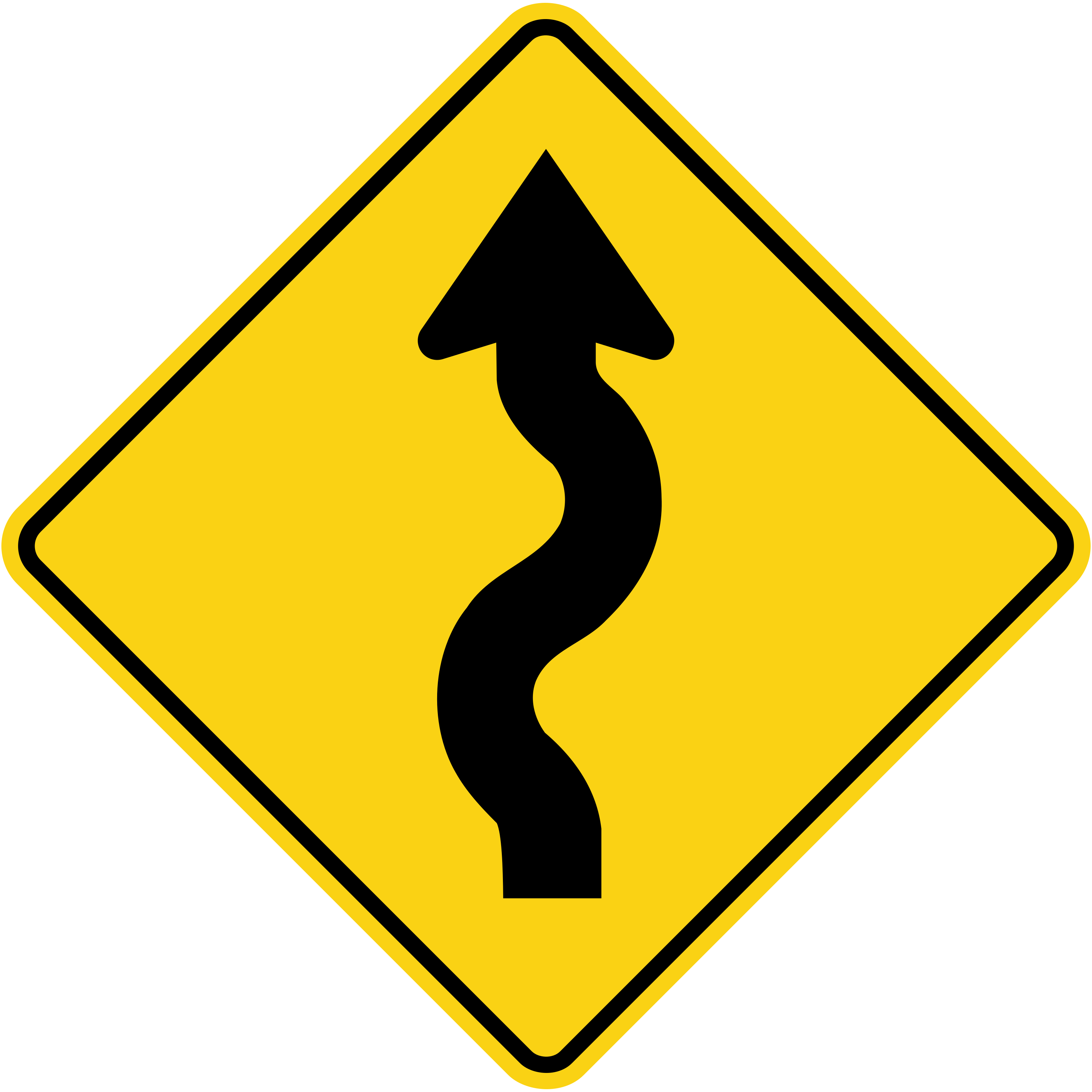
Winding Road
A series of curves ahead, sometimes for several kilometres.
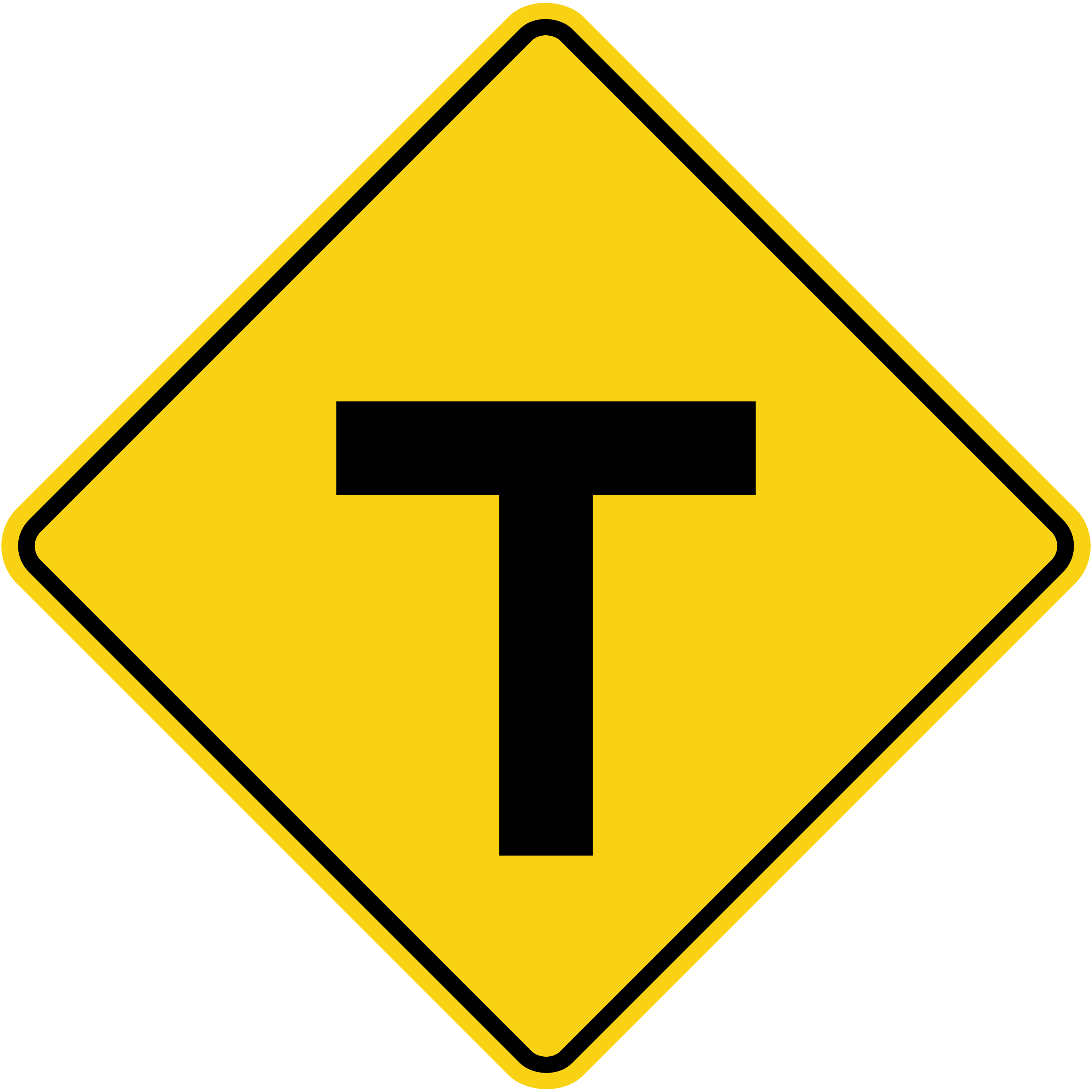
T-Junction
Your road ends ahead at a crossing road, forming a T.
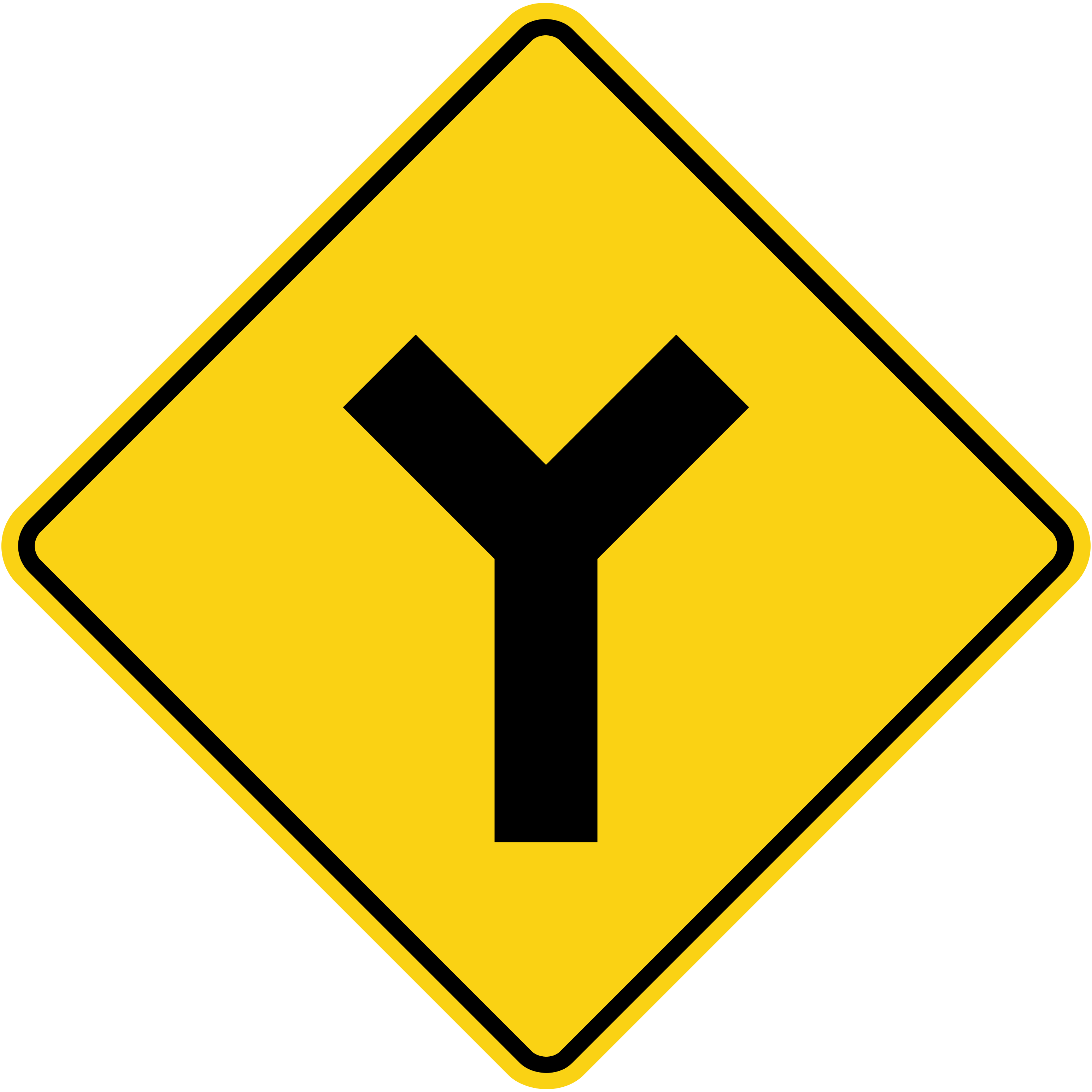
Y-Junction
The road splits into two, forming a Y.
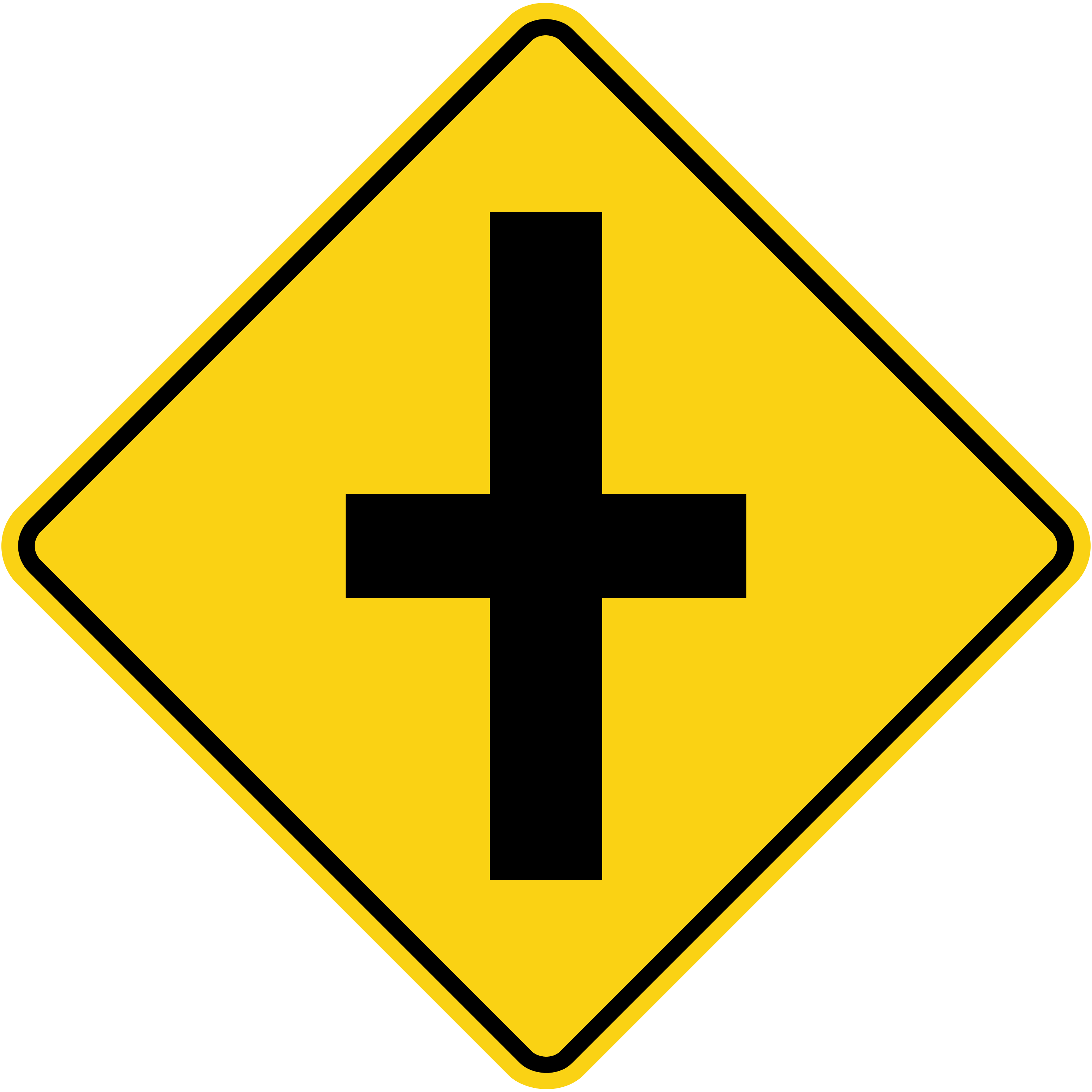
Side Road Intersection
An intersection ahead where neither road has the right-of-way.

Merging Traffic
Traffic from another road is about to join yours.
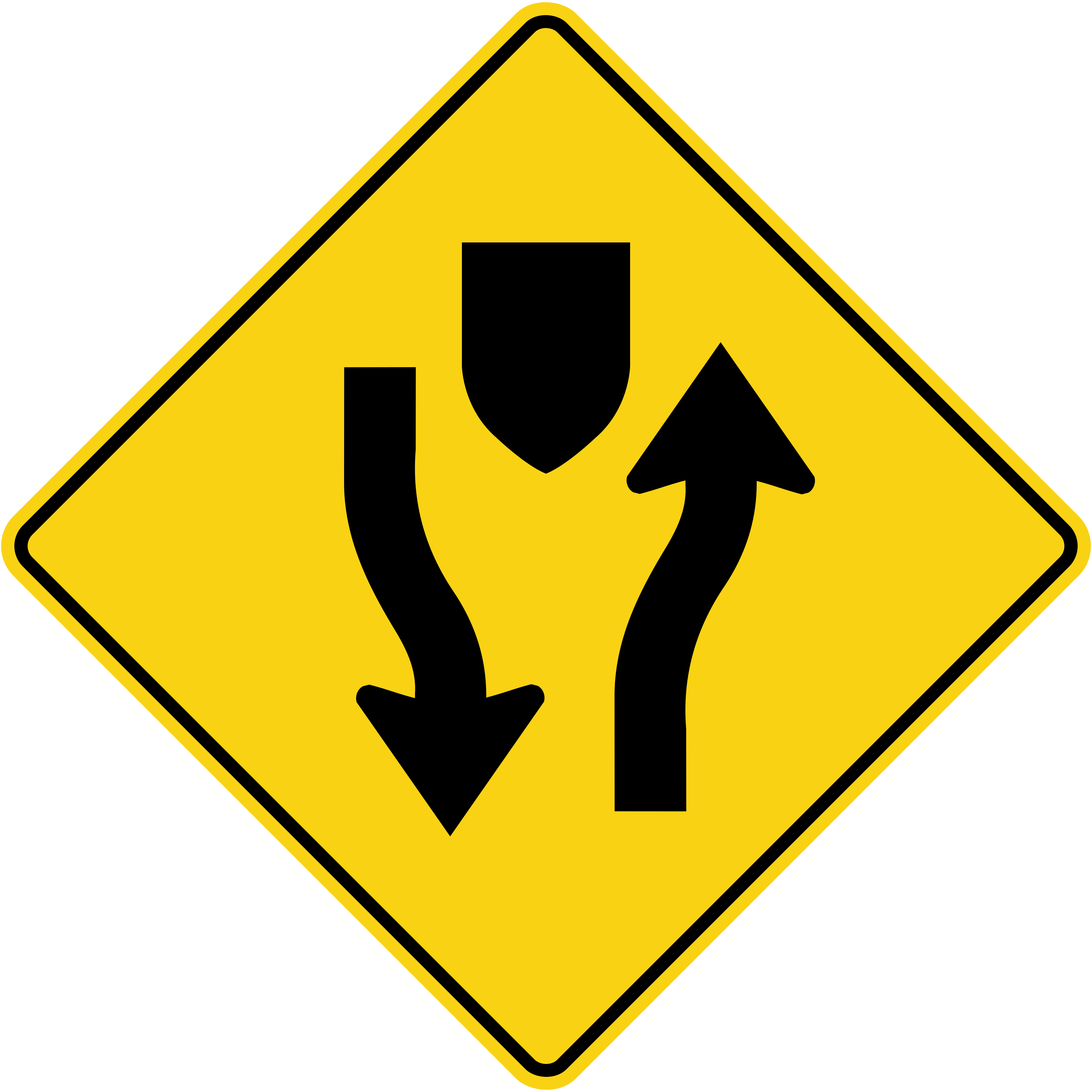
Divided Highway Begins
The road ahead splits into two one-way roadways with a median between them.
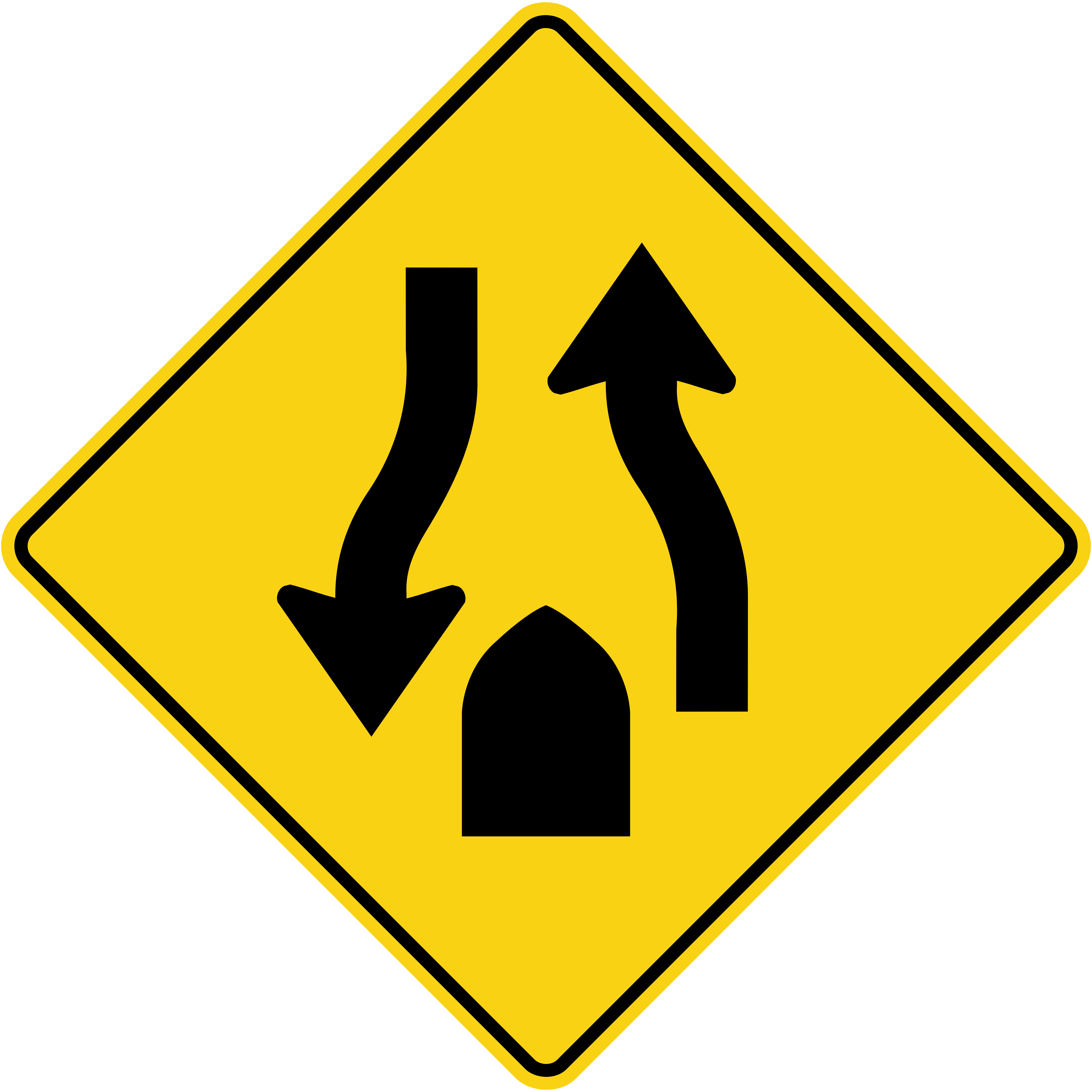
Divided Highway Ends
The median ends ahead — you’re back on a normal two-way road with oncoming traffic.
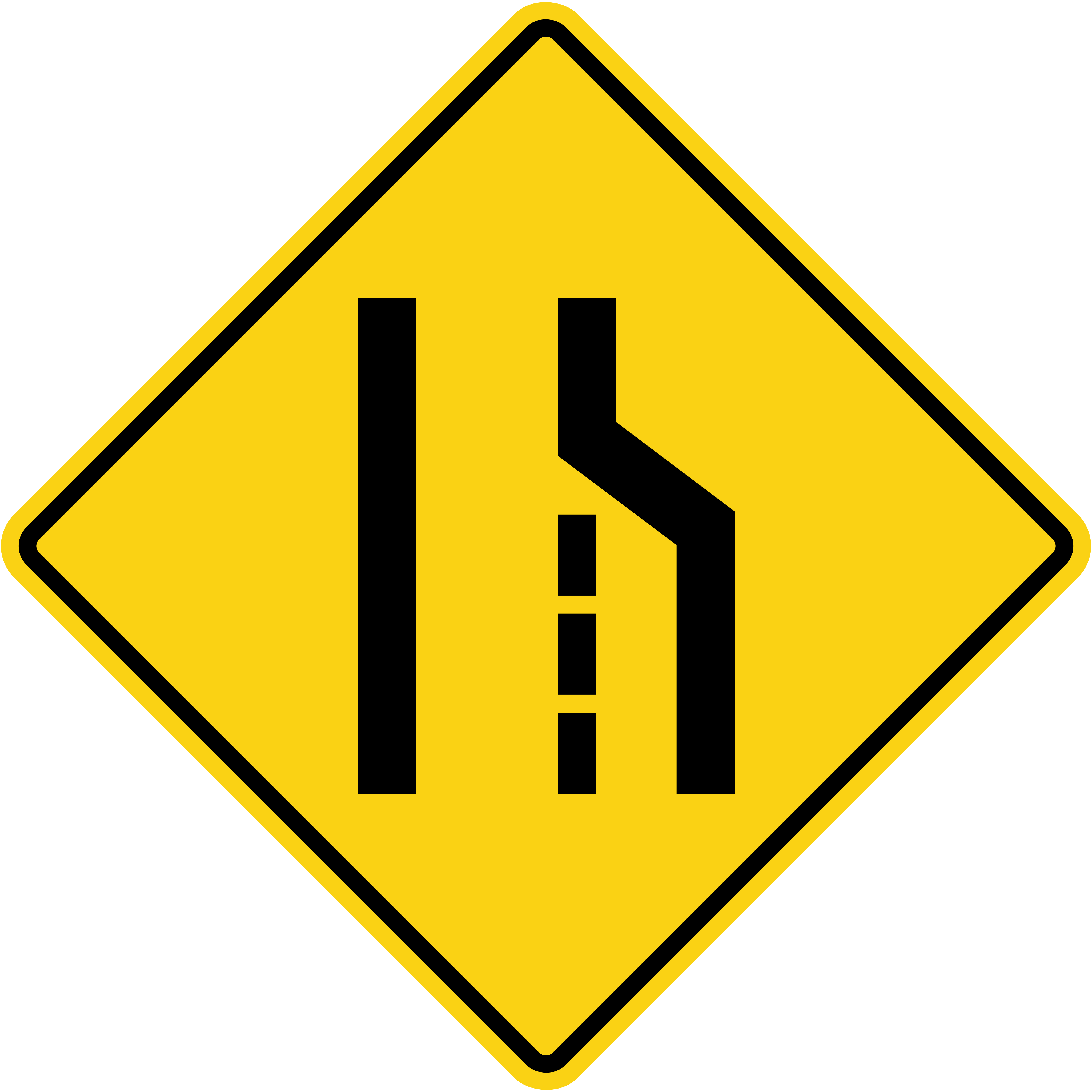
Lane Ends
Your lane is ending ahead.
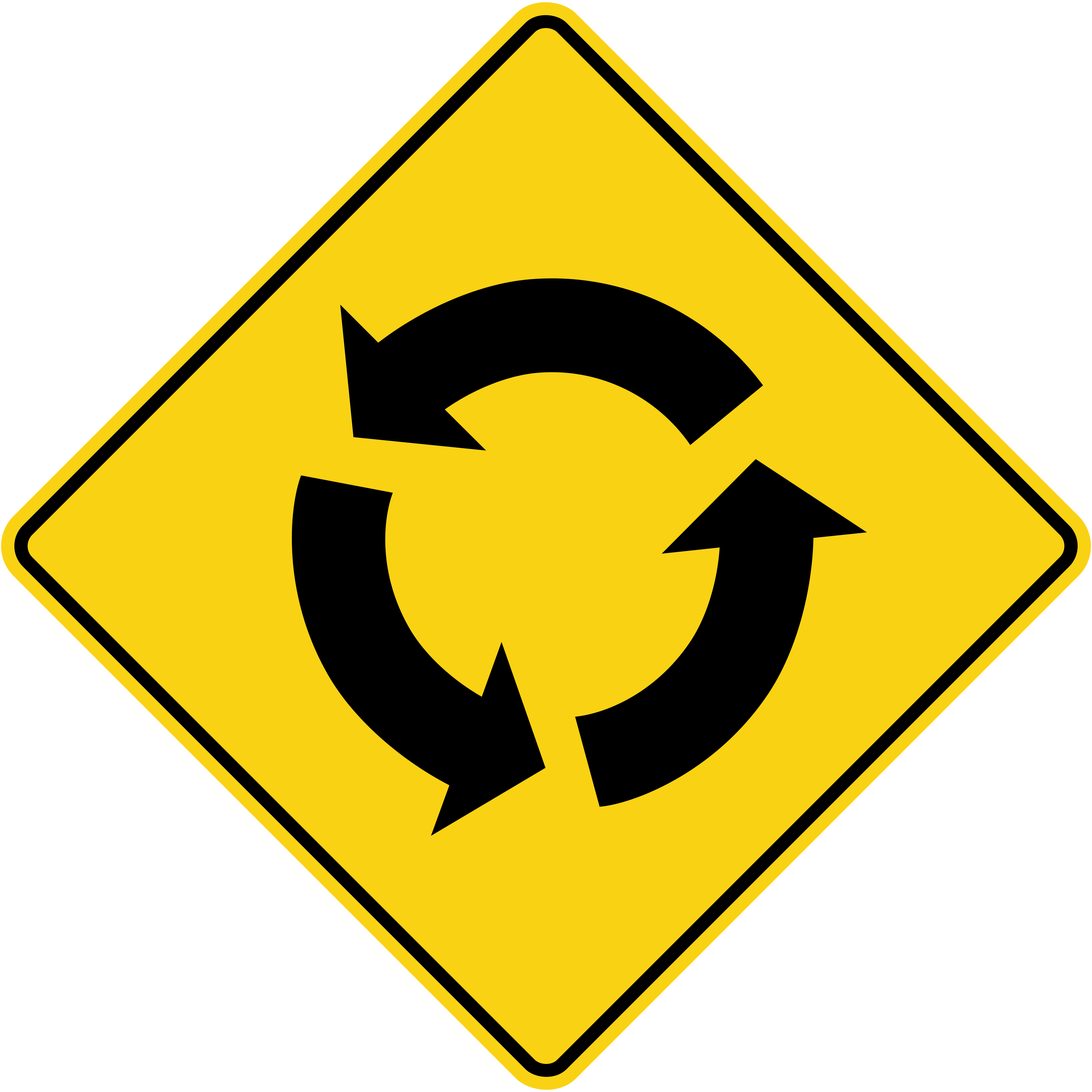
Roundabout Ahead
A roundabout is ahead.
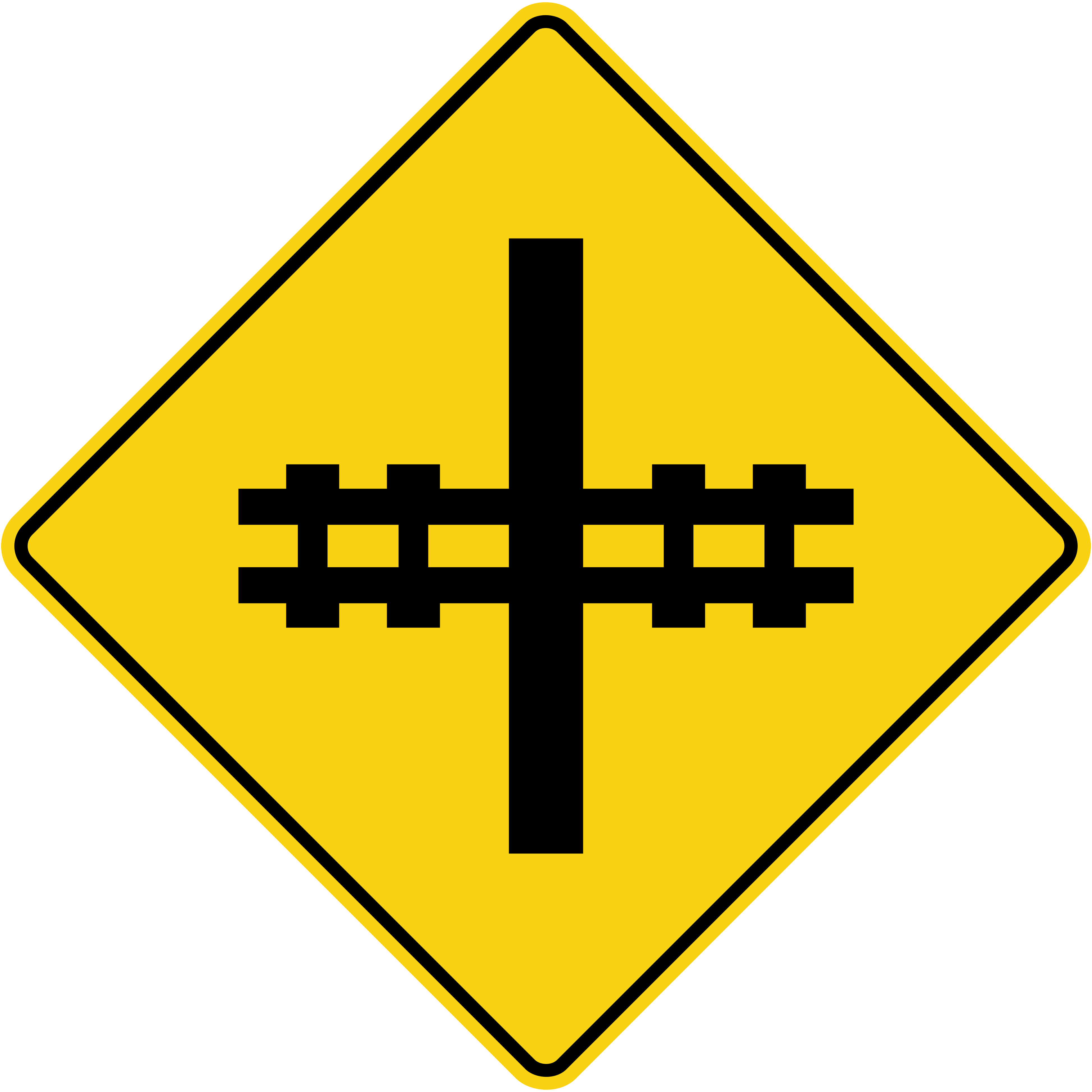
Railway Crossing Ahead
A railway crossing is ahead.
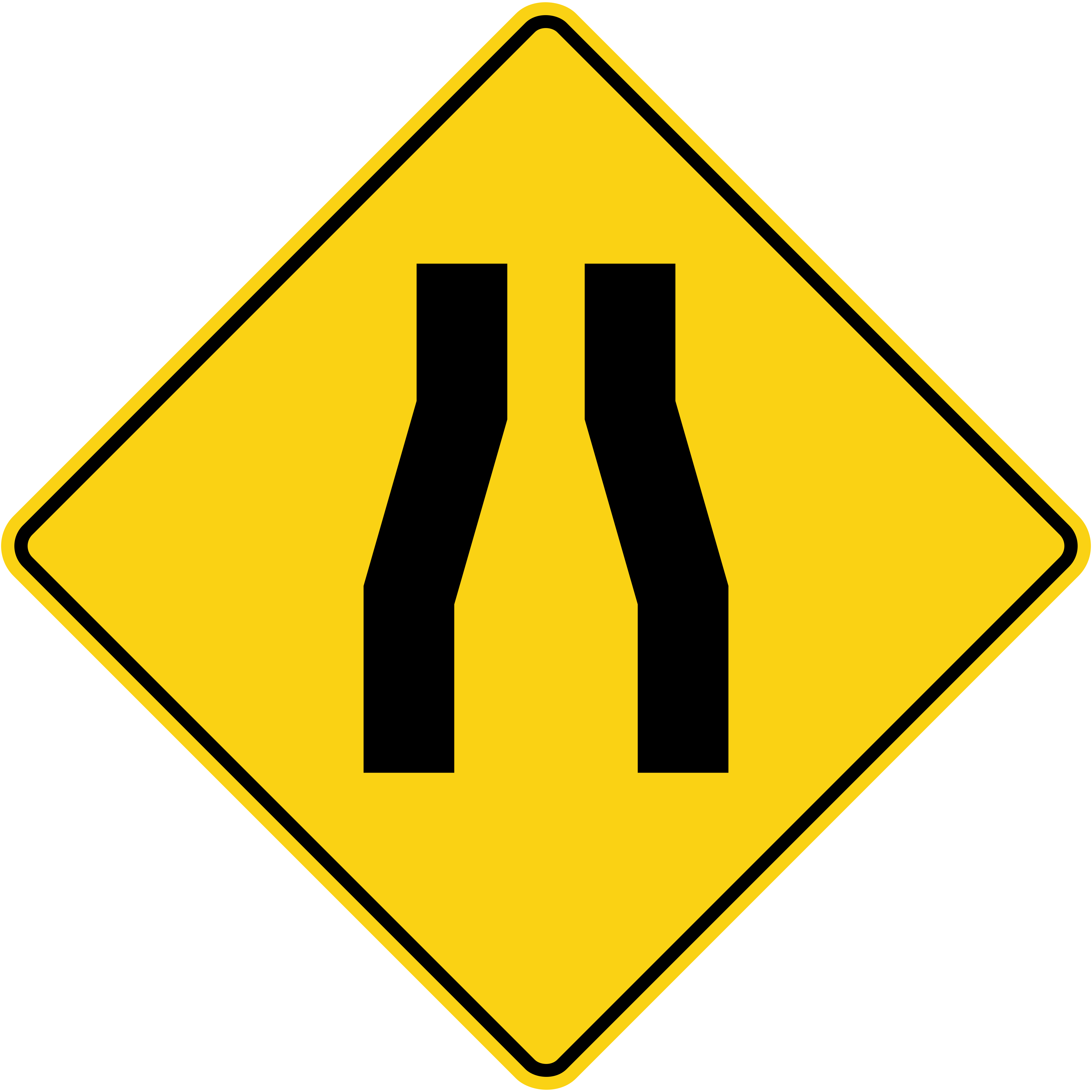
Road Narrows Ahead
The road ahead becomes narrower.
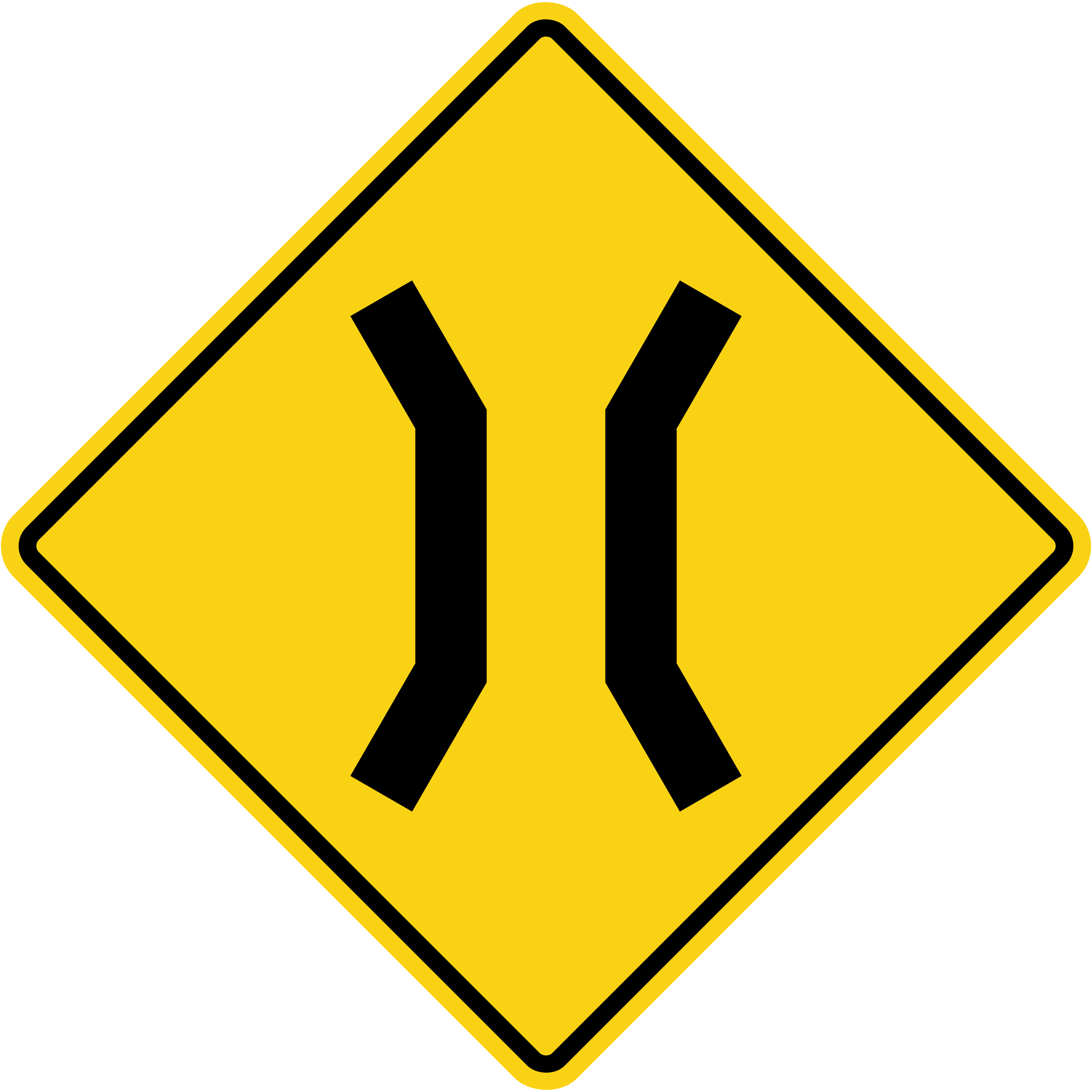
Narrow Bridge Ahead
A bridge or structure ahead is narrower than the road.
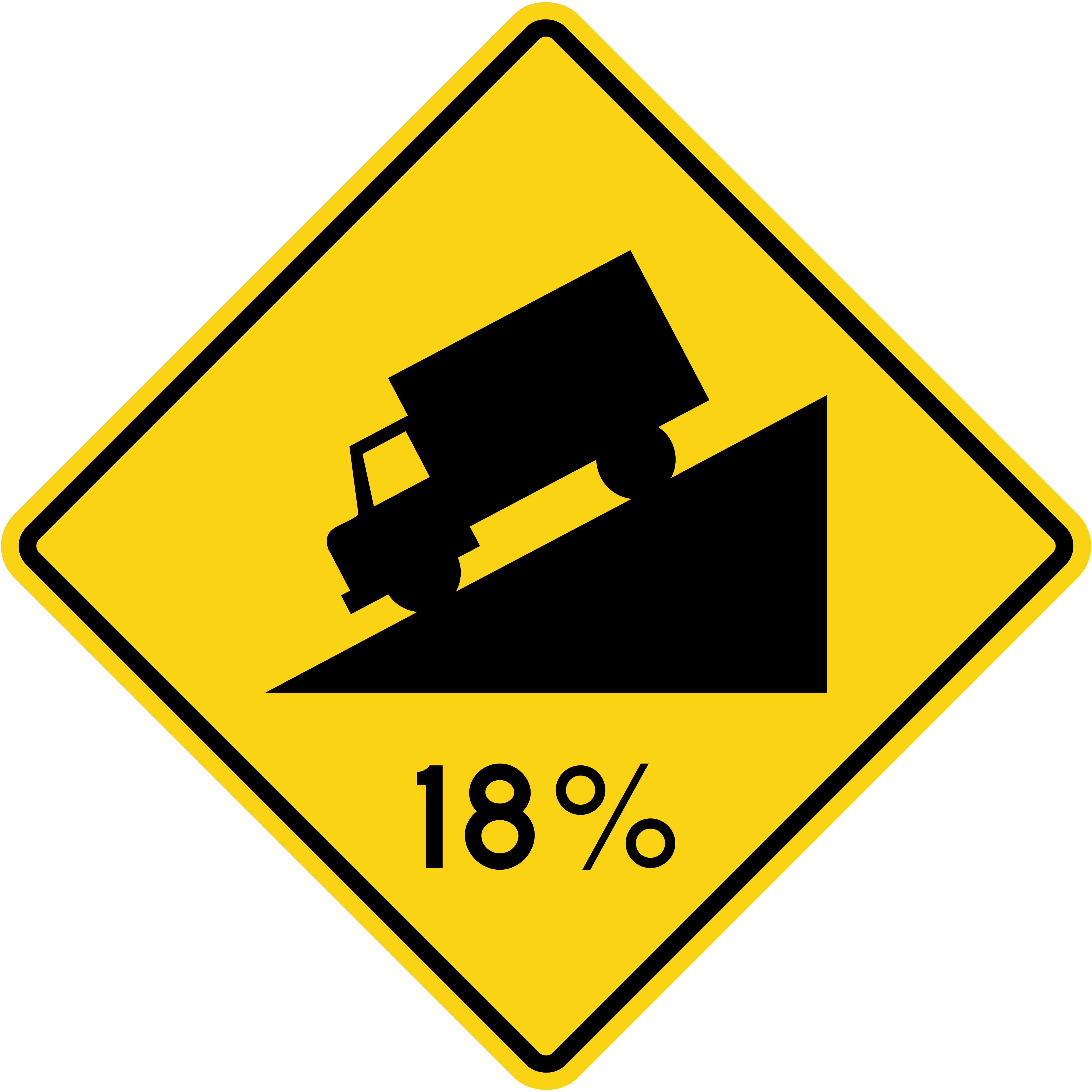
Steep Hill
A steep grade is ahead.
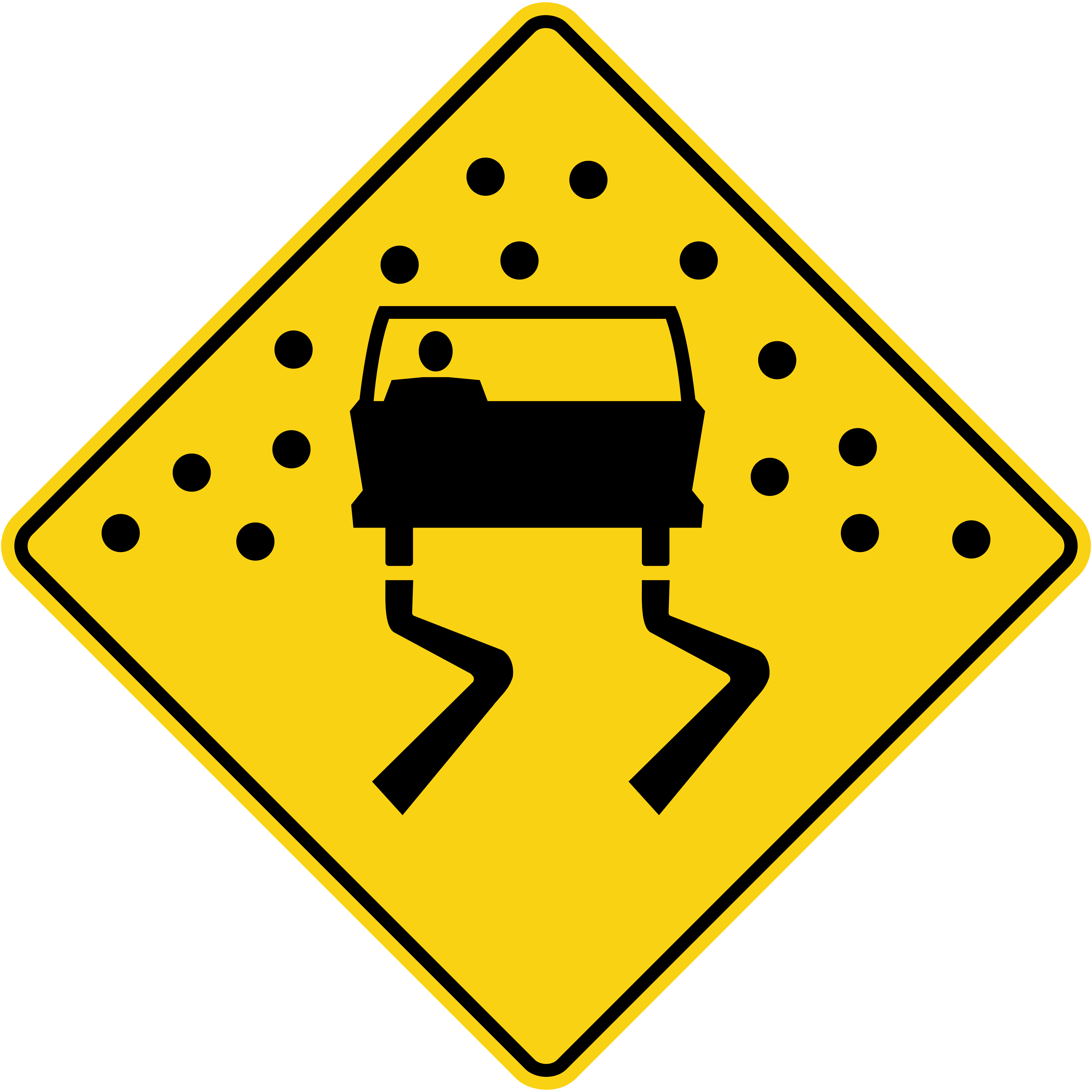
Slippery When Wet
The road surface can be slippery in wet conditions.
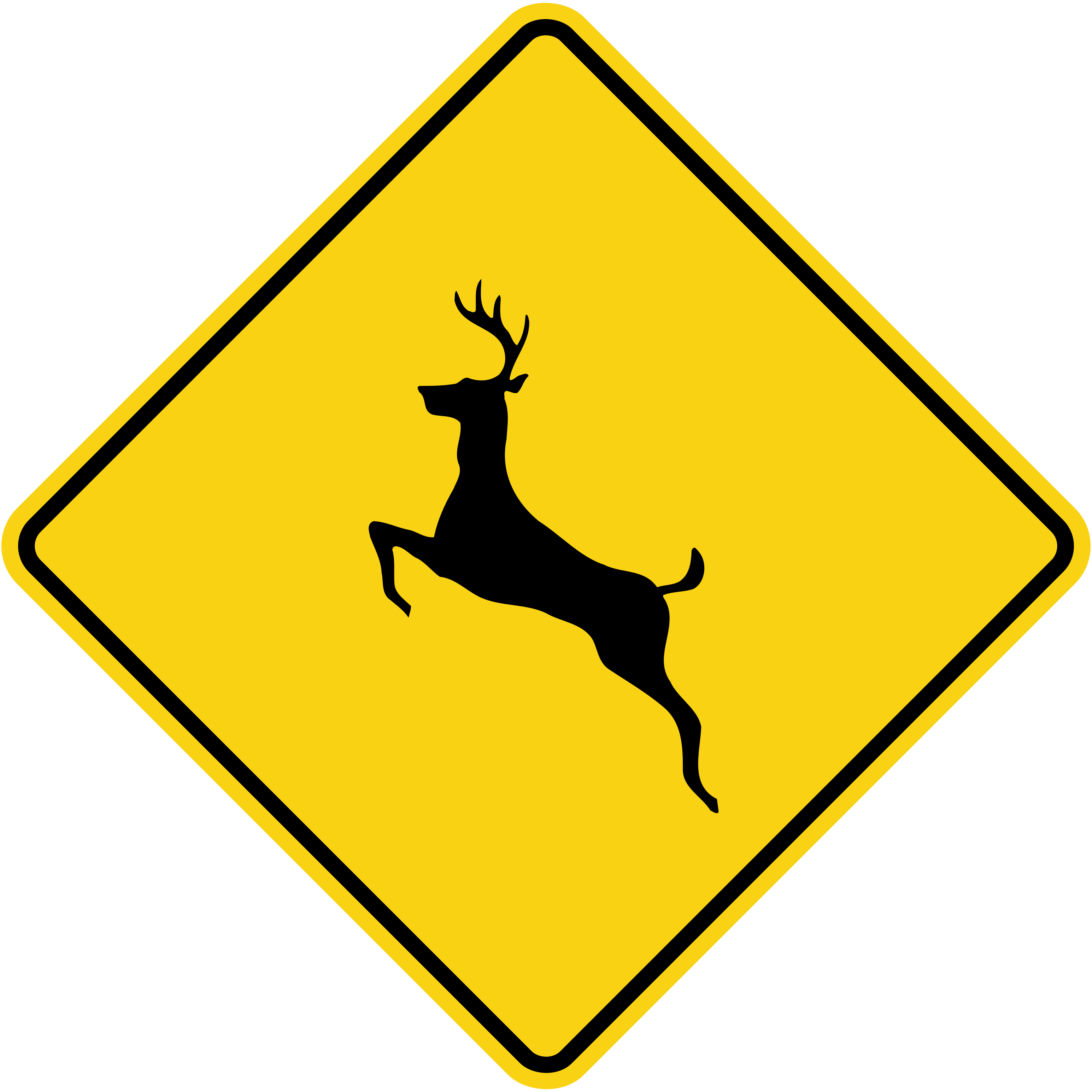
Deer / Moose Crossing
Wildlife may cross the road here, especially at dawn and dusk.
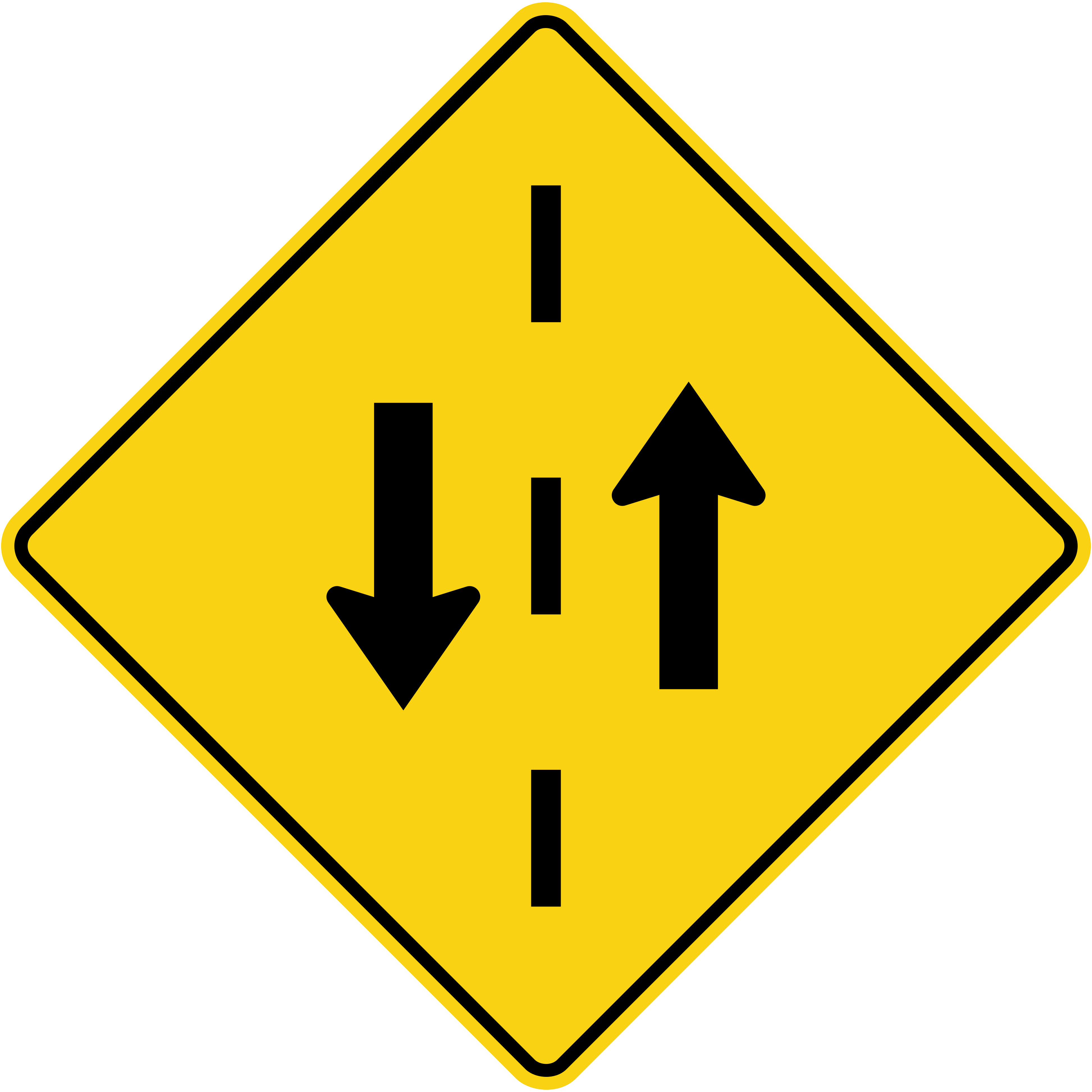
Two-Way Traffic Ahead
You’re returning to a two-way road after a divided or one-way stretch.
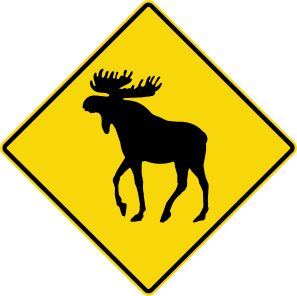
Moose Presence
Warns that moose may be present on or near the road.
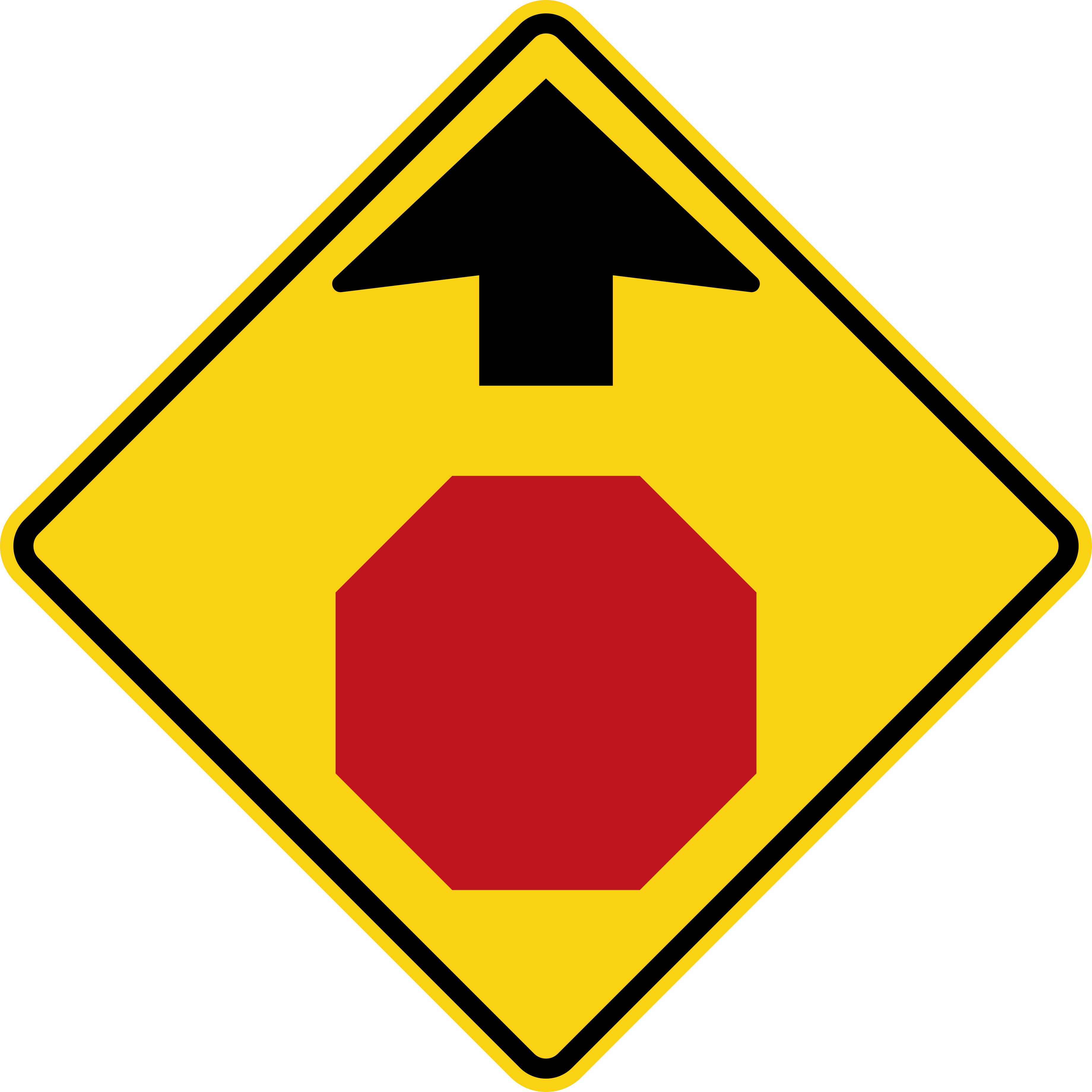
Stop Ahead
A stop sign is coming up. Start slowing down and be ready to stop.
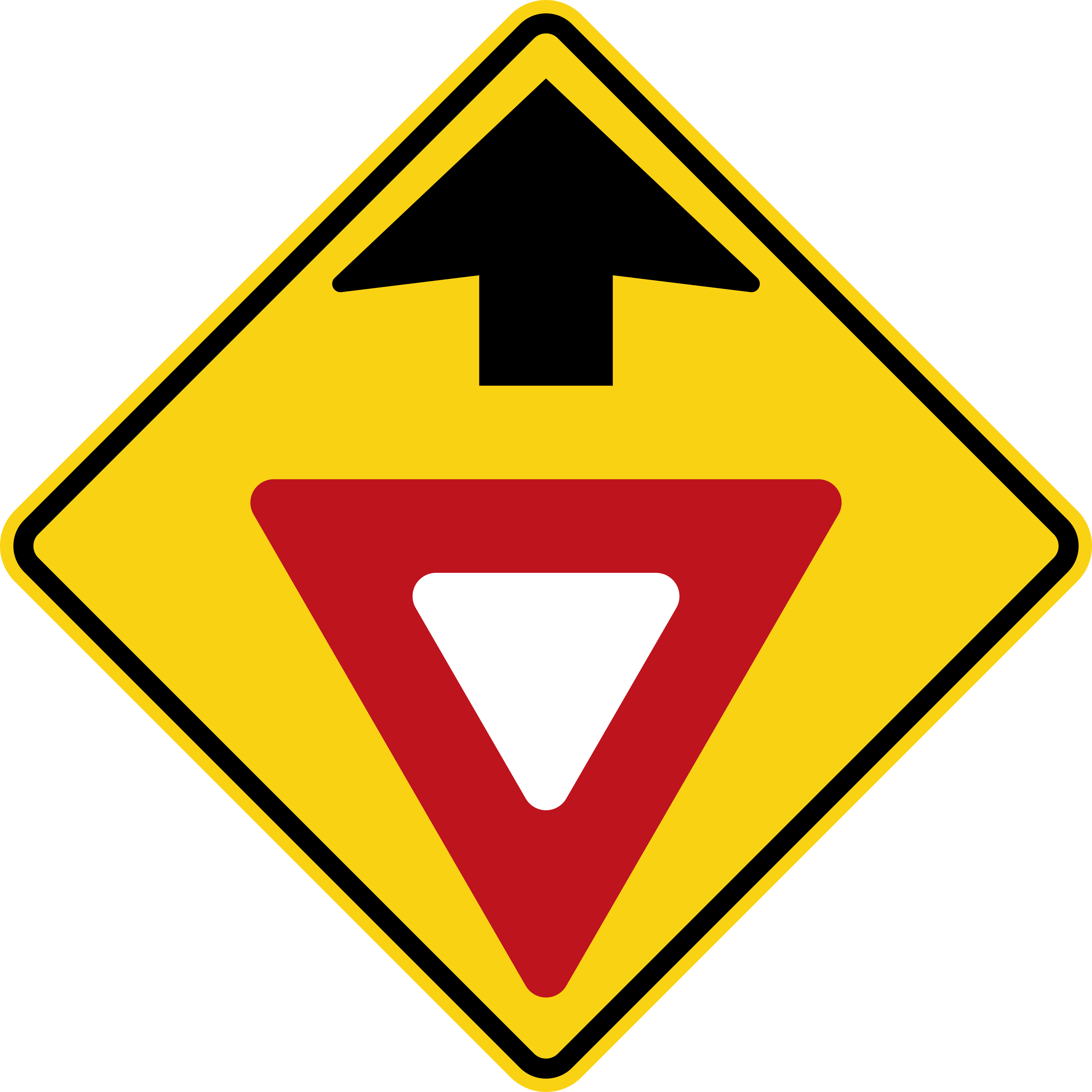
Yield Ahead
A yield sign is coming up. Slow down and be ready to give way.
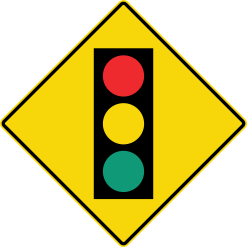
Traffic Light Ahead
A traffic signal is ahead. Be ready to stop.
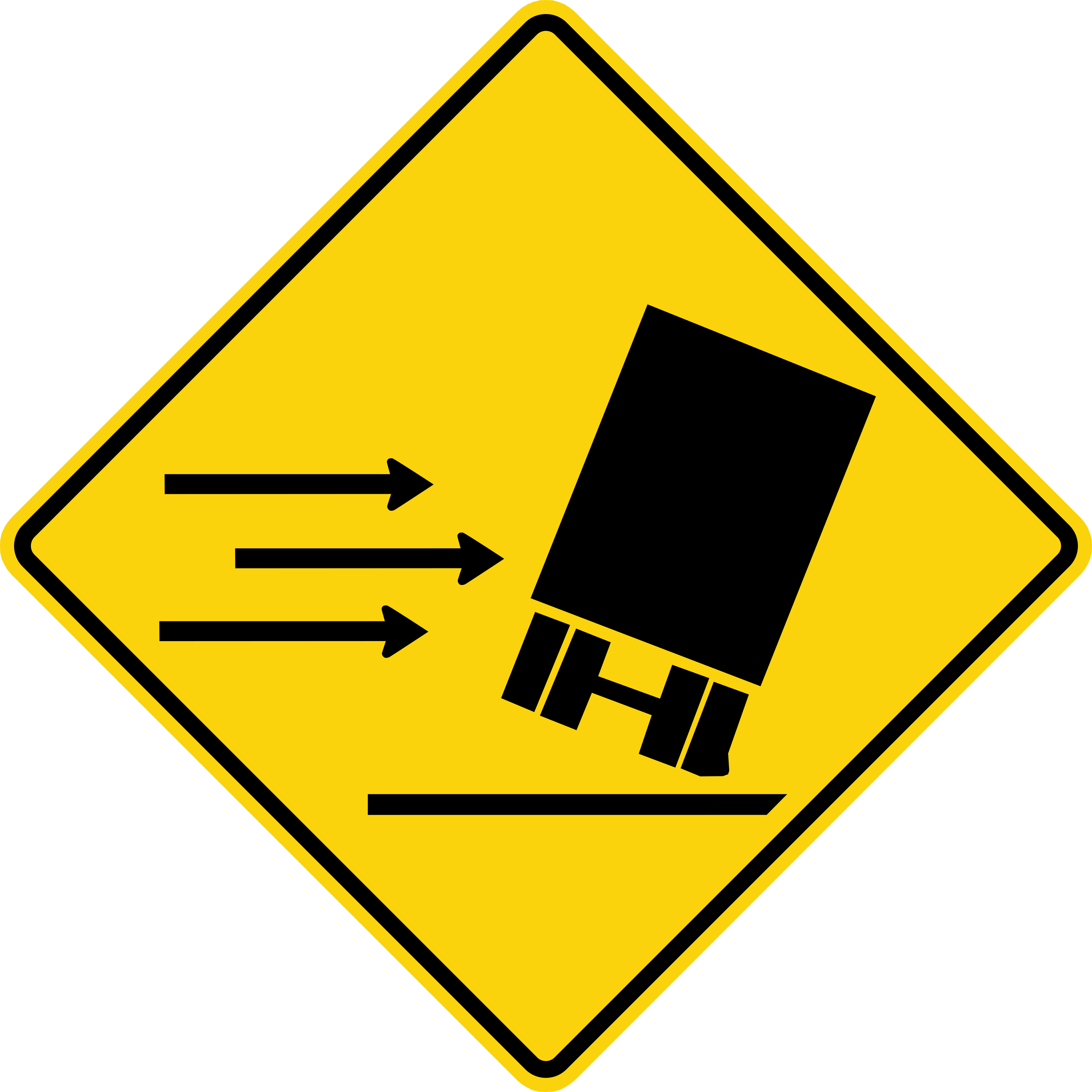
Strong Crosswind
Strong side winds are common here and can push your vehicle. Hold the wheel firmly, especially in a tall vehicle or when towing.
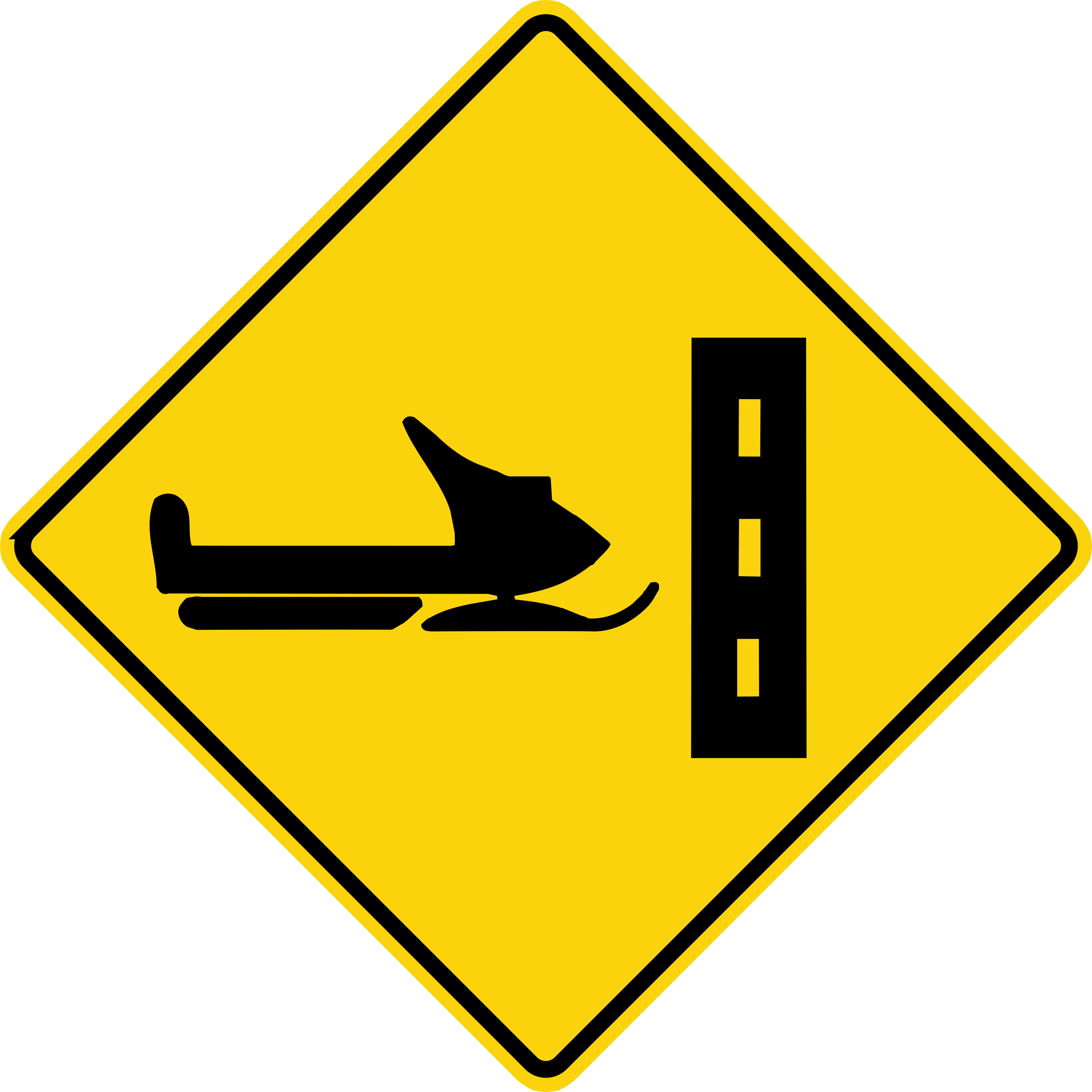
Snowmobile Crossing
Snowmobiles may cross the road ahead. Slow down and watch for them.
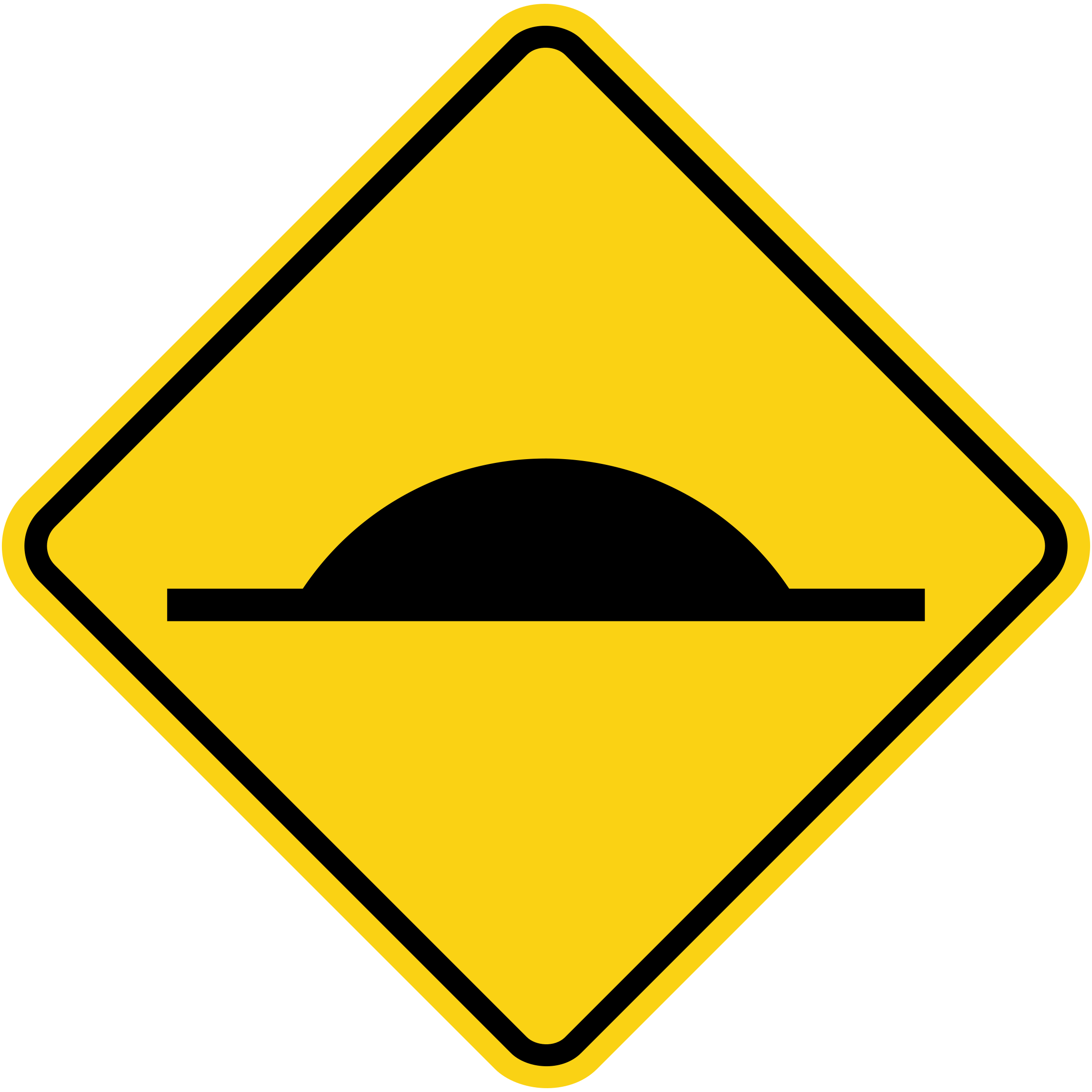
Speed Hump
A raised hump in the road is ahead. Slow down to cross it smoothly.
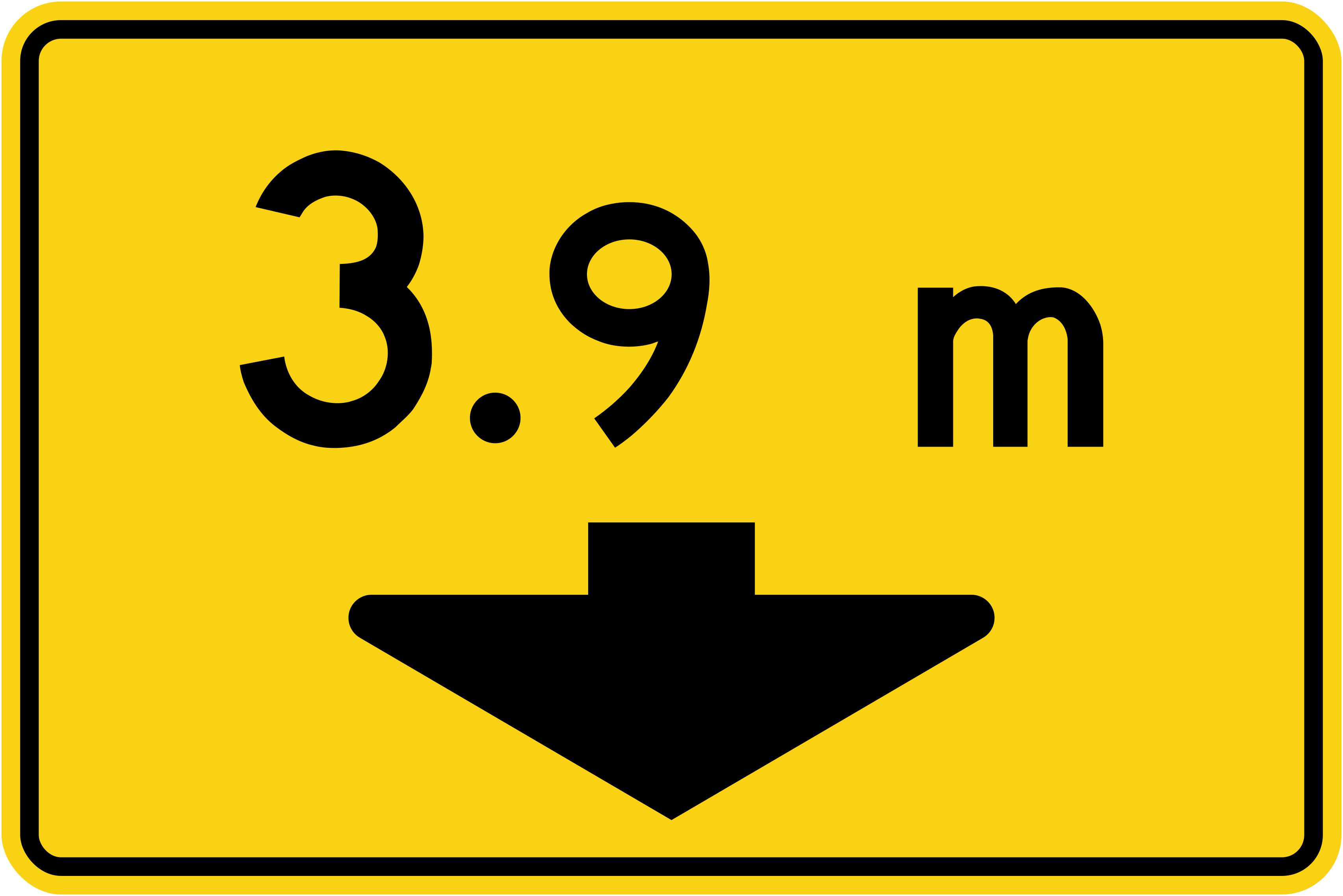
Low Clearance
A structure ahead has a limited height, shown here as 3.9 m. Do not continue if your vehicle and load are taller.
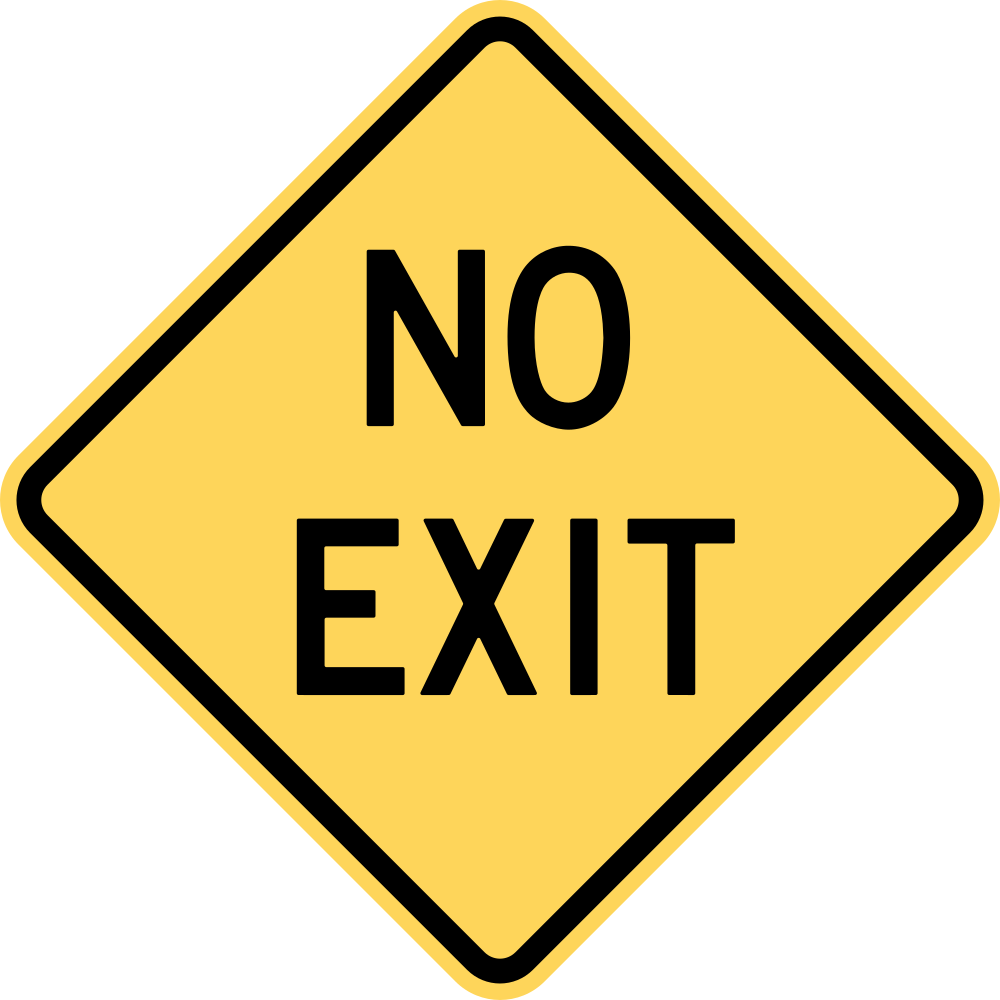
No Exit
The road ahead does not lead anywhere, such as a dead end. Choose another route.
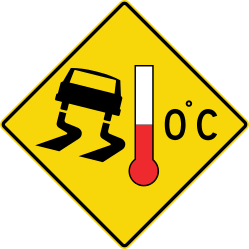
Icy Road Near 0°C
The road can be slippery when temperatures are near 0°C. Slow down and leave extra distance.
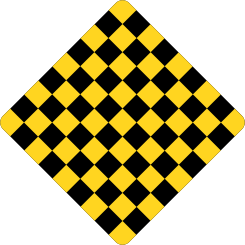
Hazard Marker (Checkerboard)
A black-and-yellow checkerboard marks an obstacle or hazard ahead. Slow down and stay clear of it.
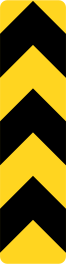
Alignment Chevrons
Black-and-yellow chevrons mark a hazard or a sharp change in direction. Keep away from them.
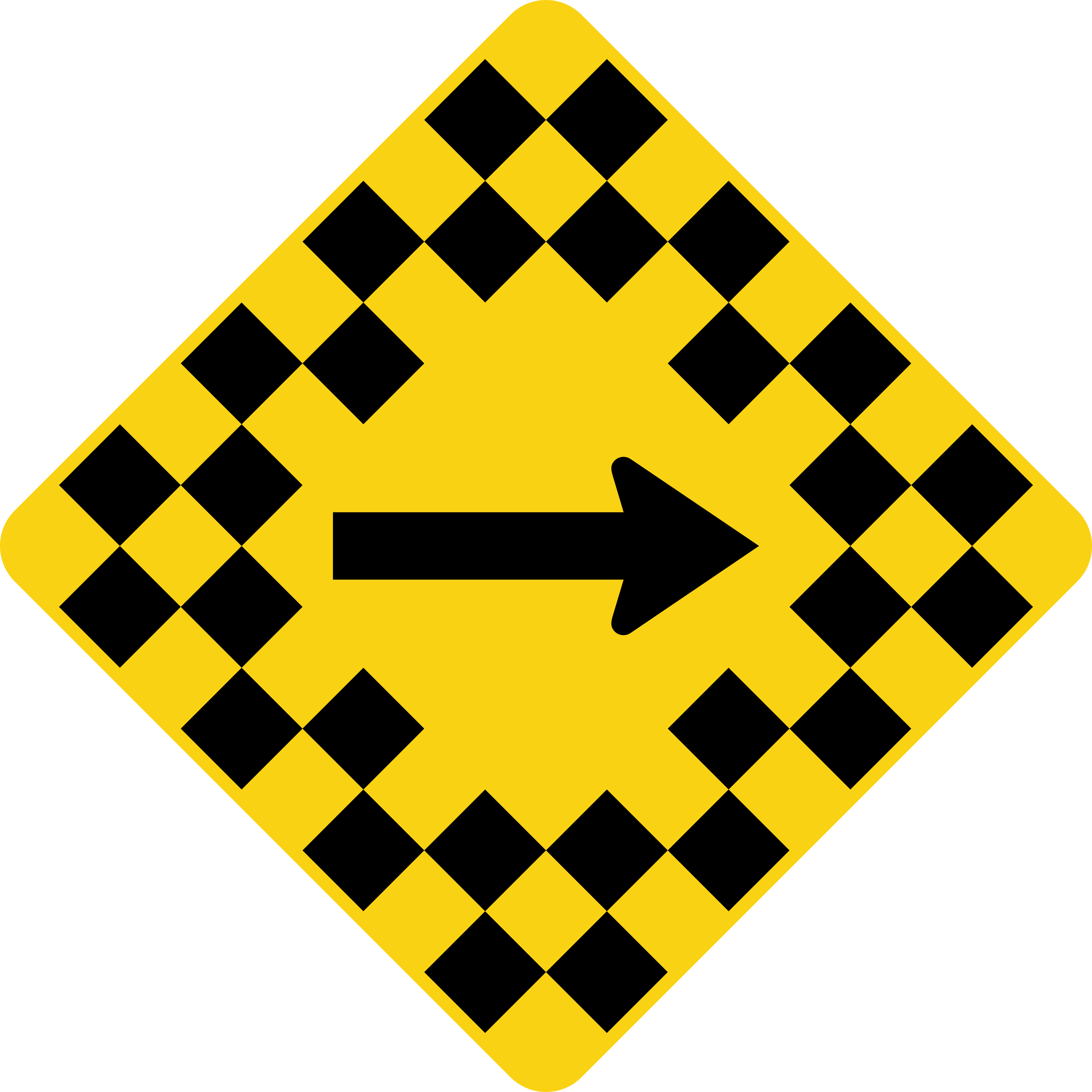
Road Ends, Sharp Right
The road ends or turns sharply to the right ahead. Slow down and be ready to turn.
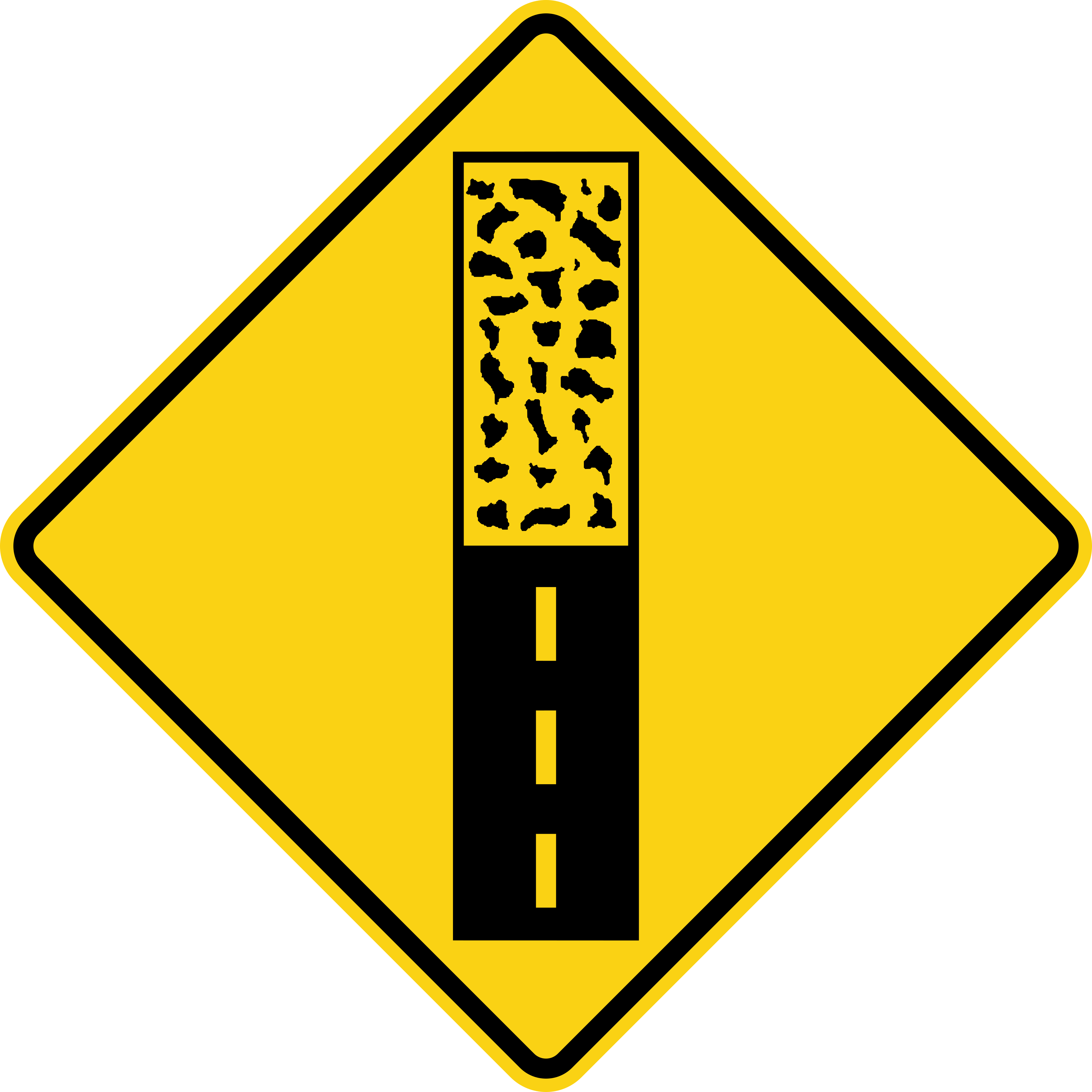
Pavement Ends (Permanent)
The paved surface ends ahead and the road changes to gravel or another surface. Slow down.

New Traffic Control
A traffic control, such as a stop sign or signal, has recently been installed here. Do not rely on habit.
Signs that tell you what you must or must not do: speed, turns, parking and more. Many are white rectangles, but some use other colours and shapes.
Stop
Come to a complete stop, yield to all traffic and pedestrians, then go only when it’s safe.
Yield
Slow down and give the right-of-way to traffic on the road you’re entering.
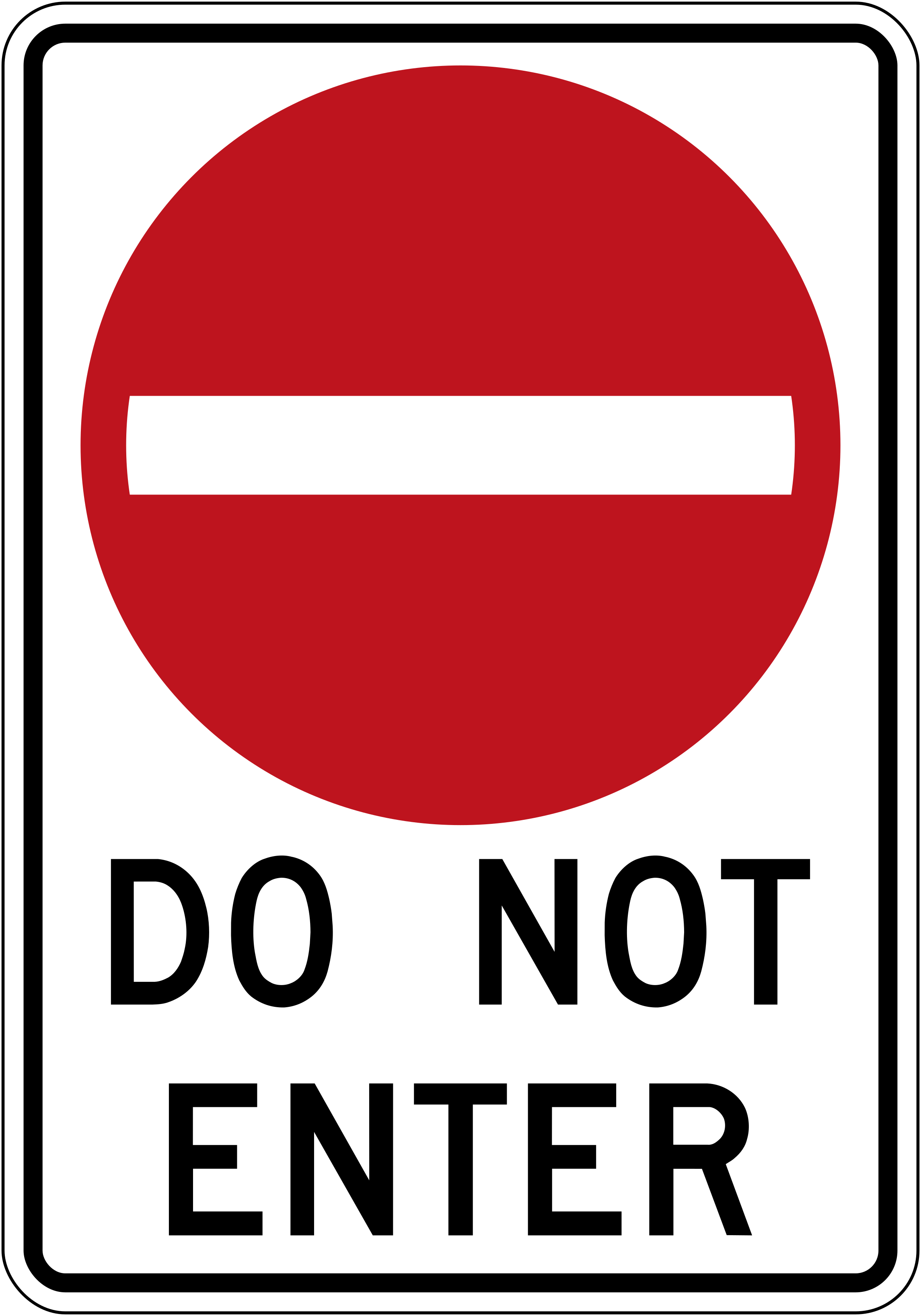
Do Not Enter
You can’t enter this road from this direction — often the wrong end of a one-way street or ramp.
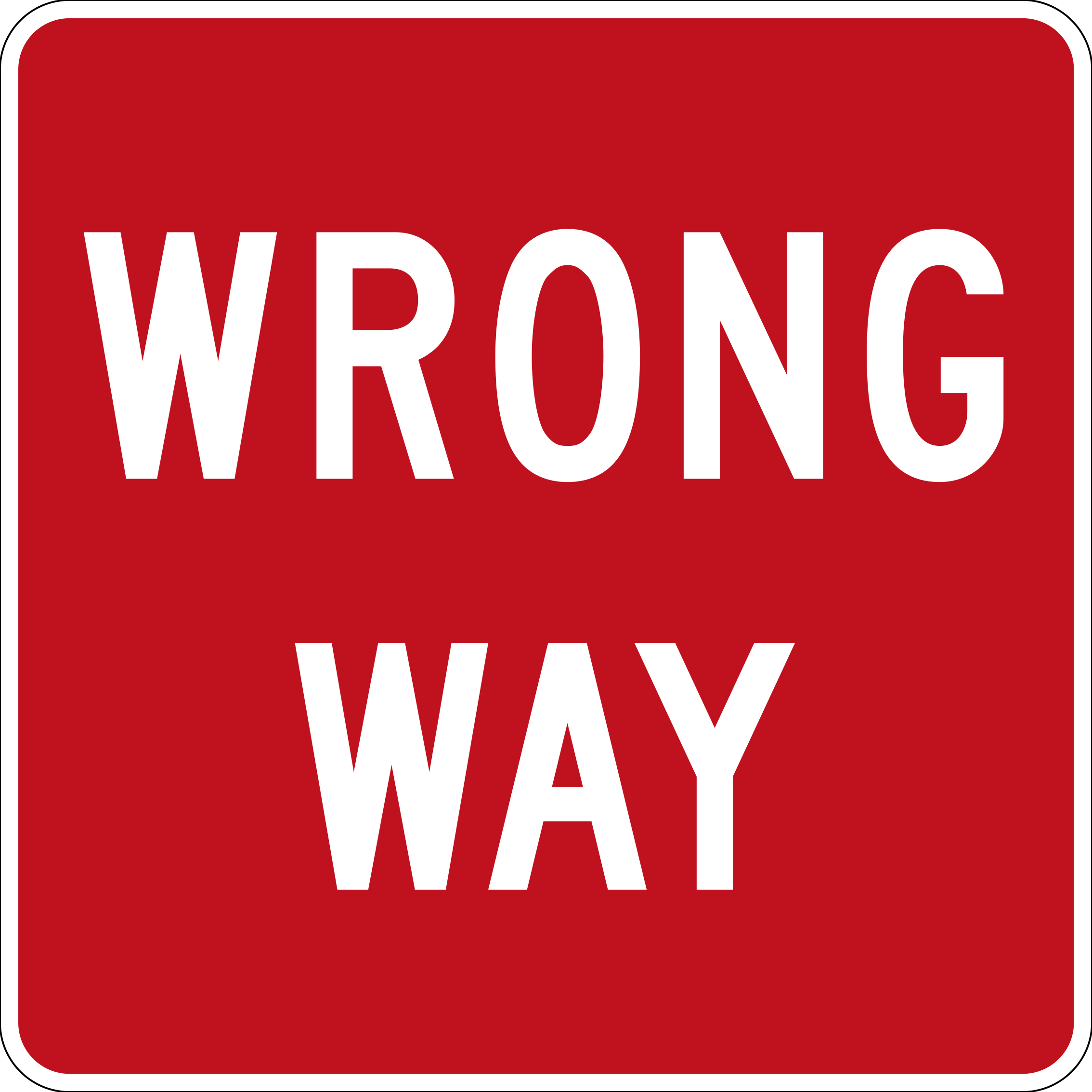
Wrong Way
You’re heading the wrong direction on a one-way road.
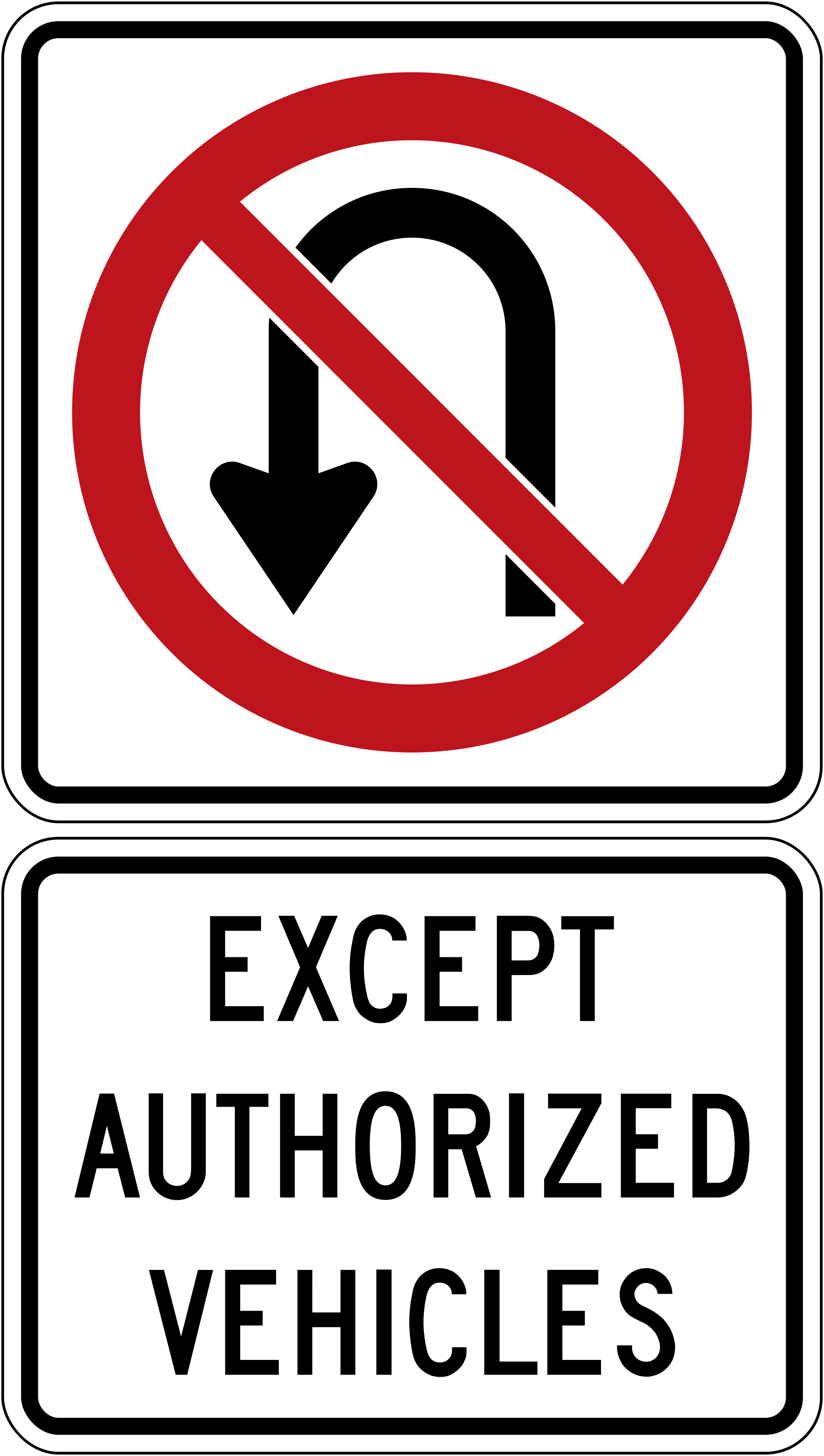
No U-Turn
U-turns are prohibited at this location.
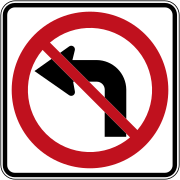
No Left Turn
Left turns are not allowed here.
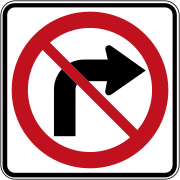
No Right Turn
Right turns are not allowed here.
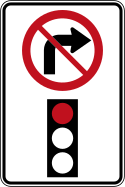
No Right Turn on Red
You may not turn right on a red light at this location.
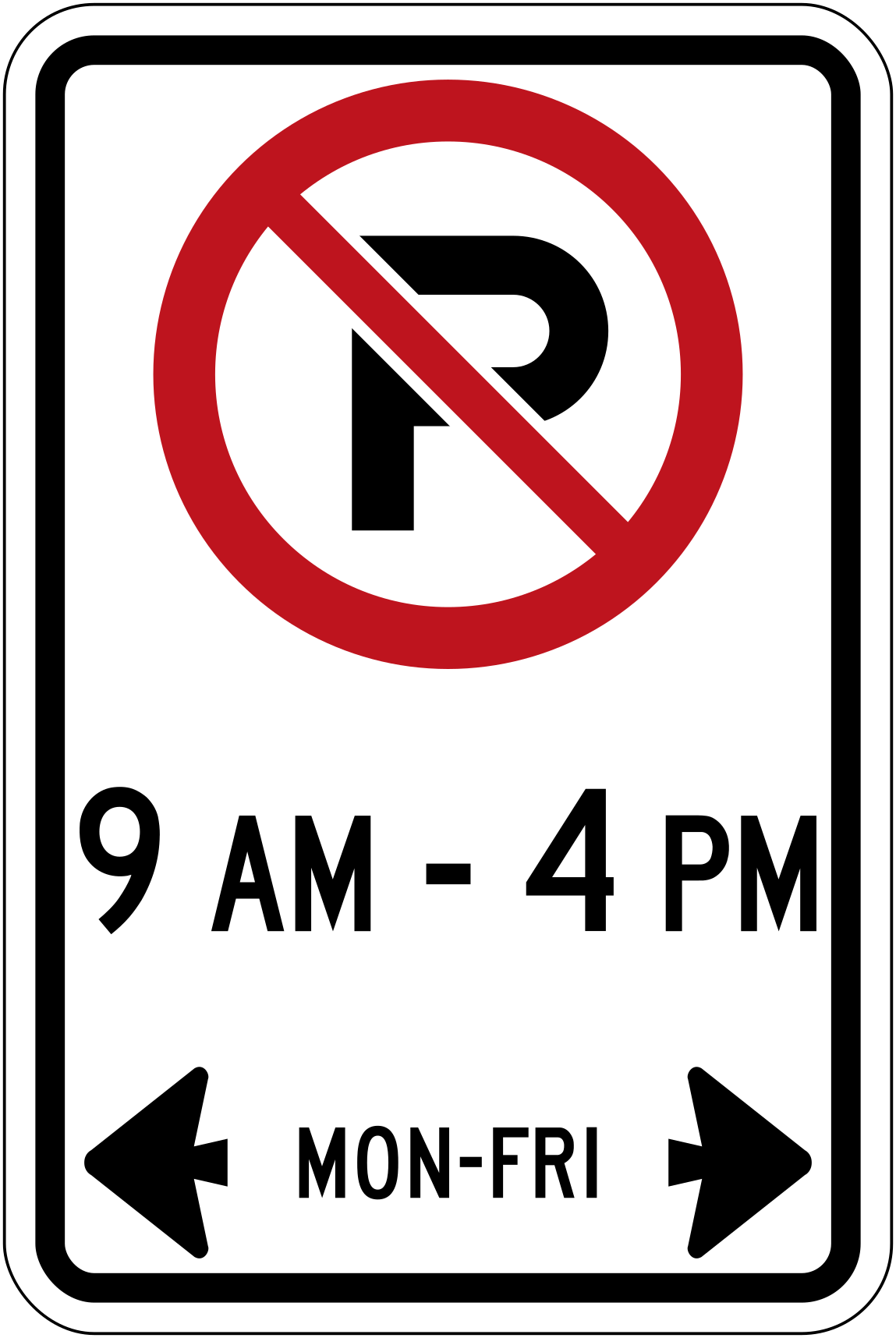
No Parking
Parking is prohibited here, at the times shown on the sign (or at all times if none are shown).
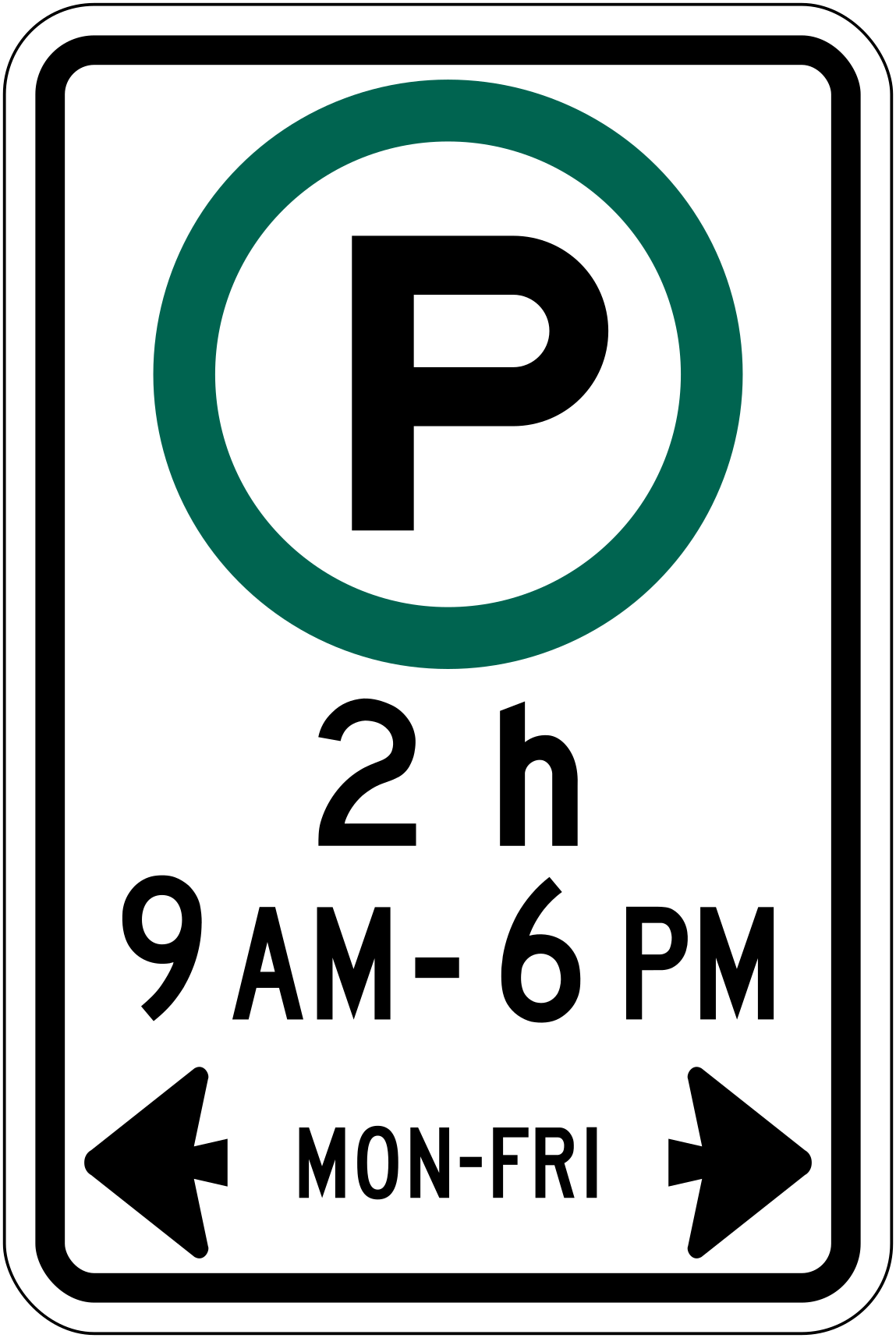
Parking Restricted
Parking is only allowed during the specific days and times shown on the sign.
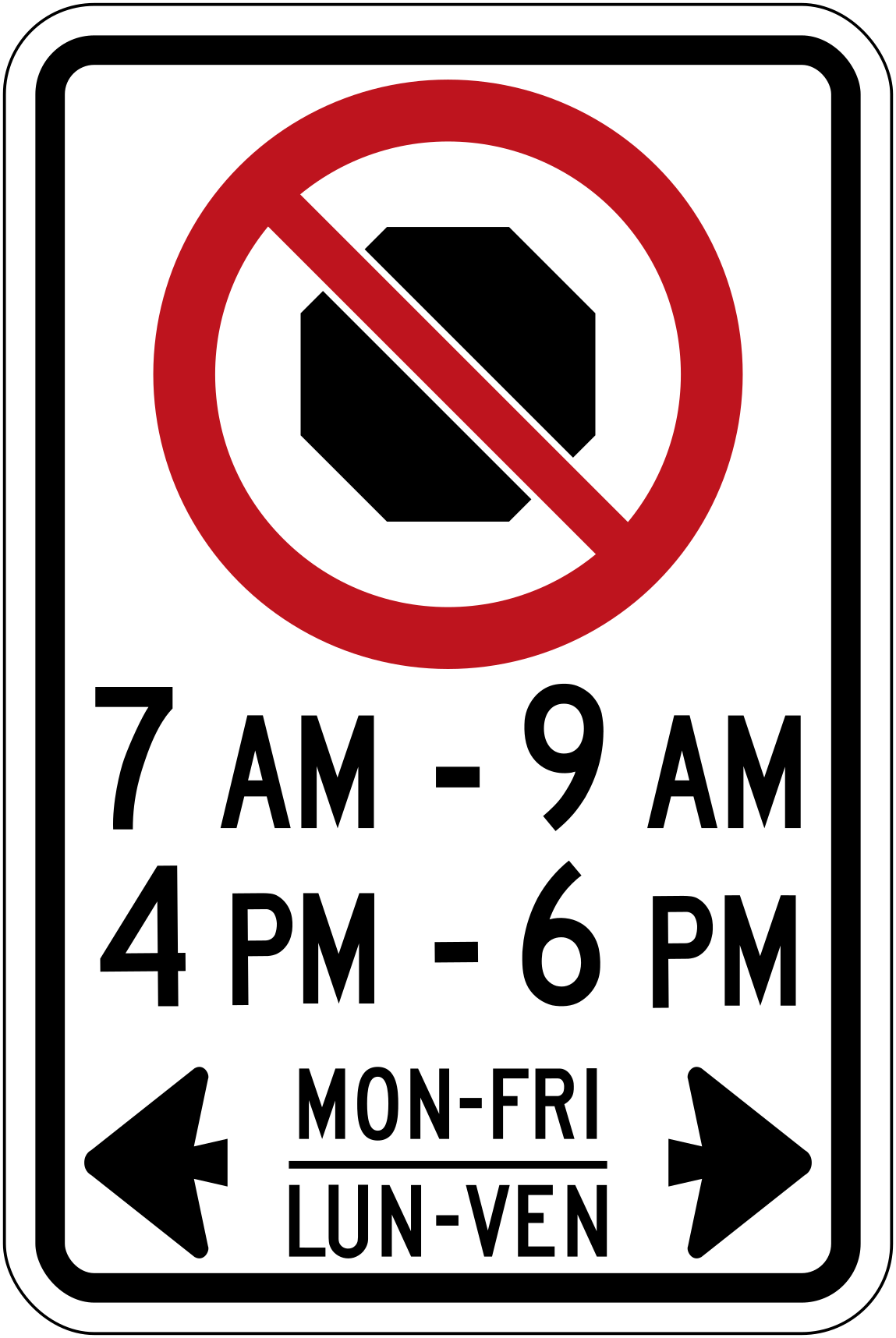
No Stopping
You can’t stop here at all, even briefly — stricter than a “No Parking” sign.
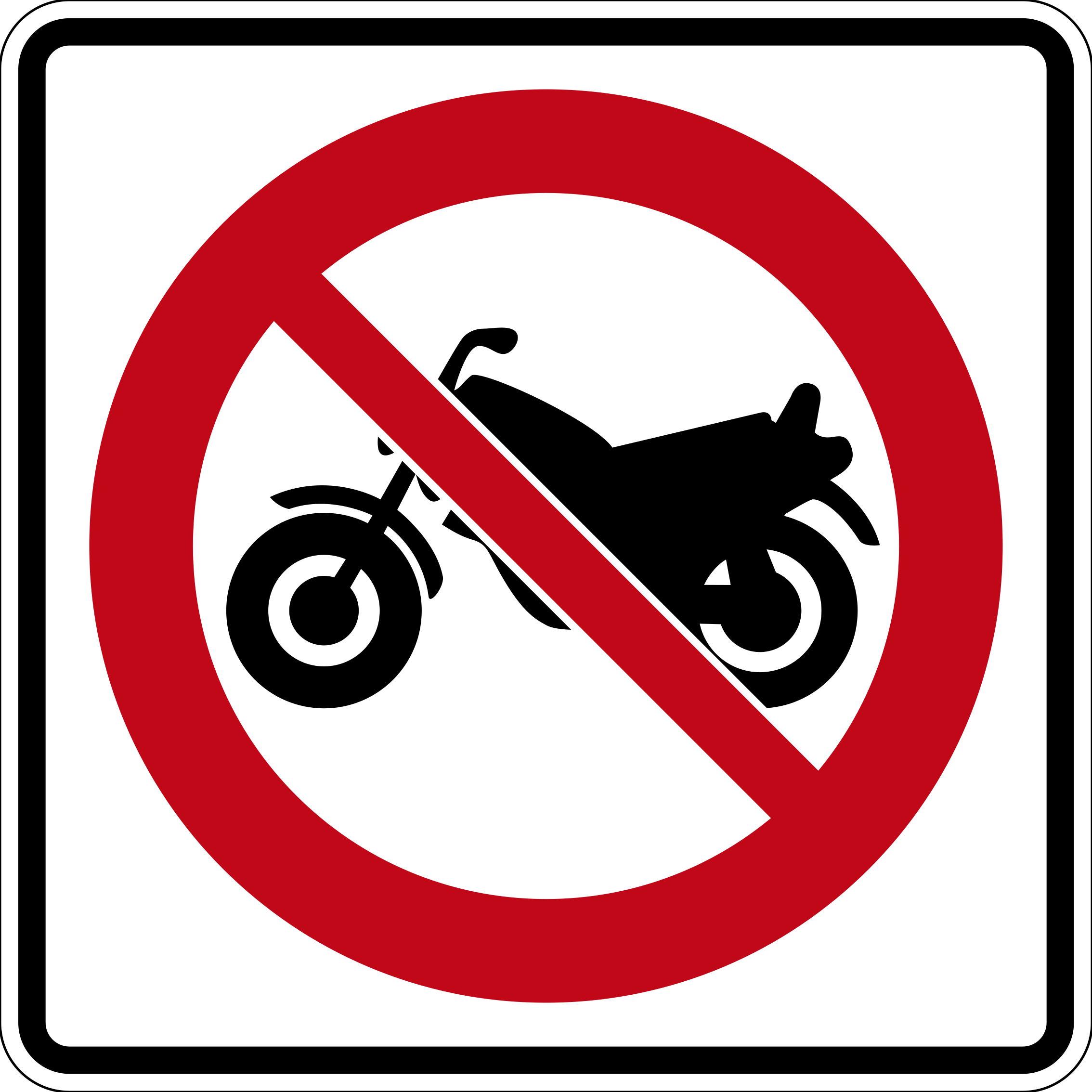
No Motorcycles
Motorcycles are not allowed on this road or lane.
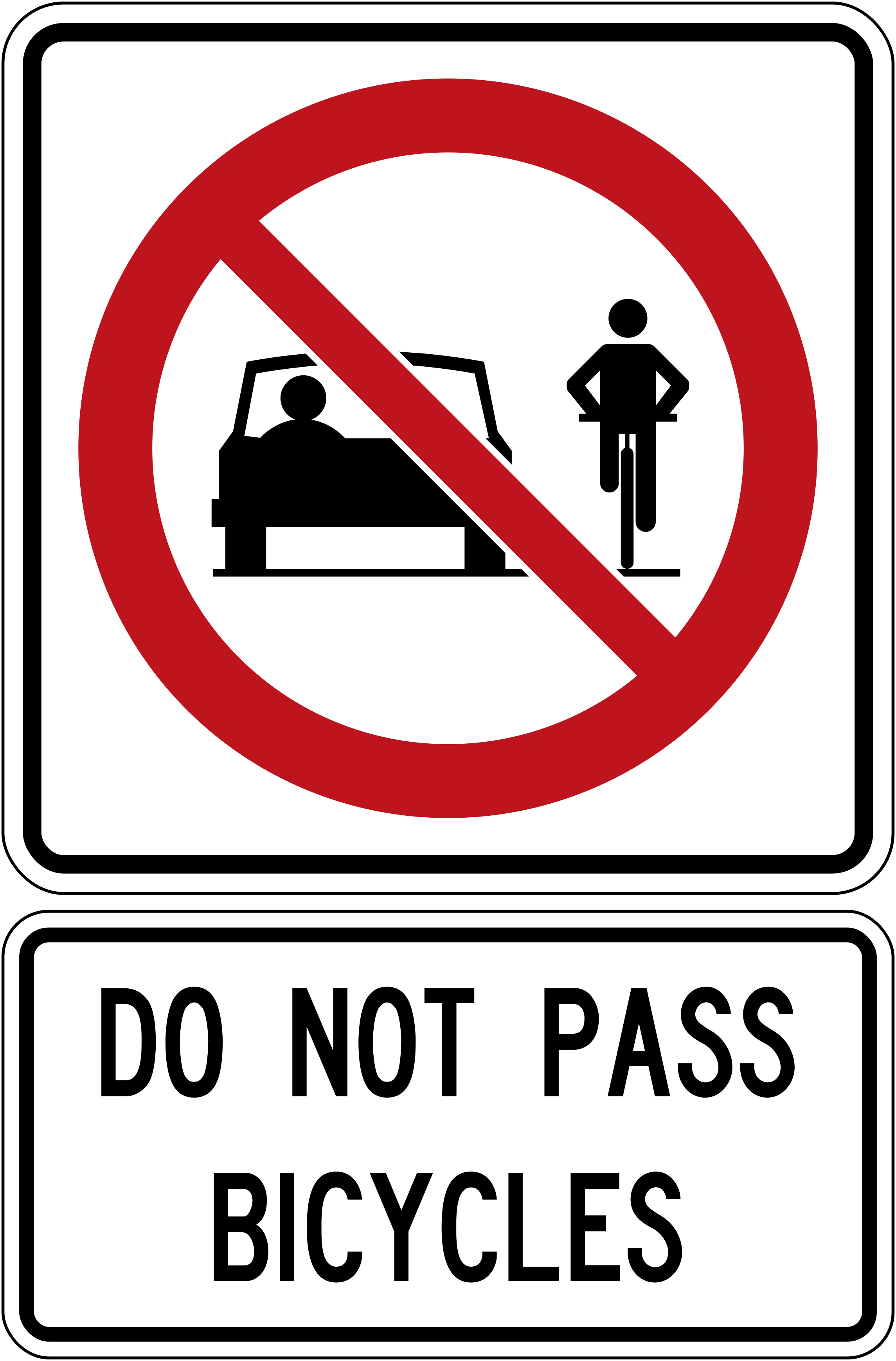
Do Not Pass Bicycles
Drivers may not overtake cyclists within this zone, usually due to narrow lanes or poor sightlines.
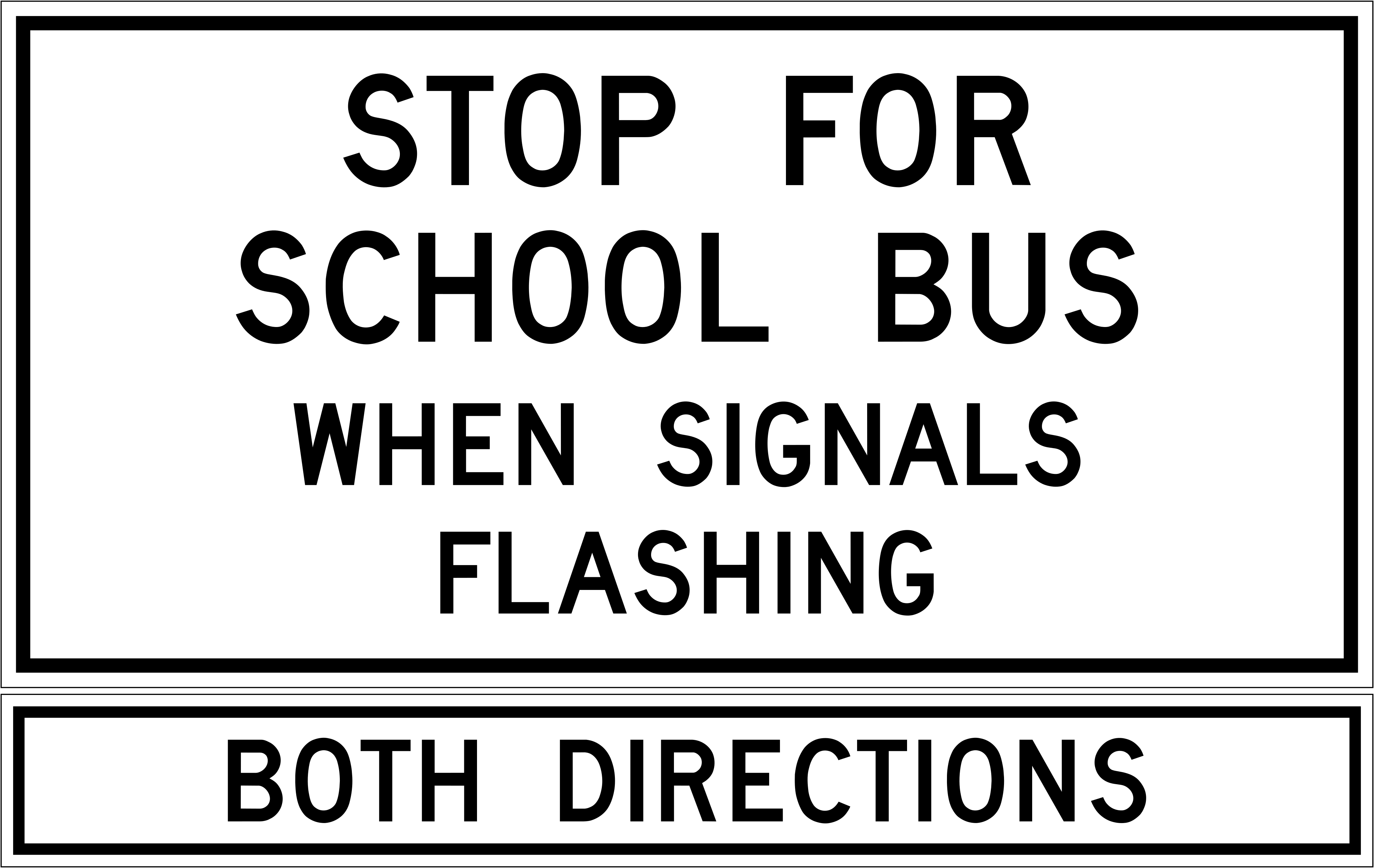
Stop for School Bus
When a school bus’s red lights are flashing, stop — from both directions on most roads — until they stop.
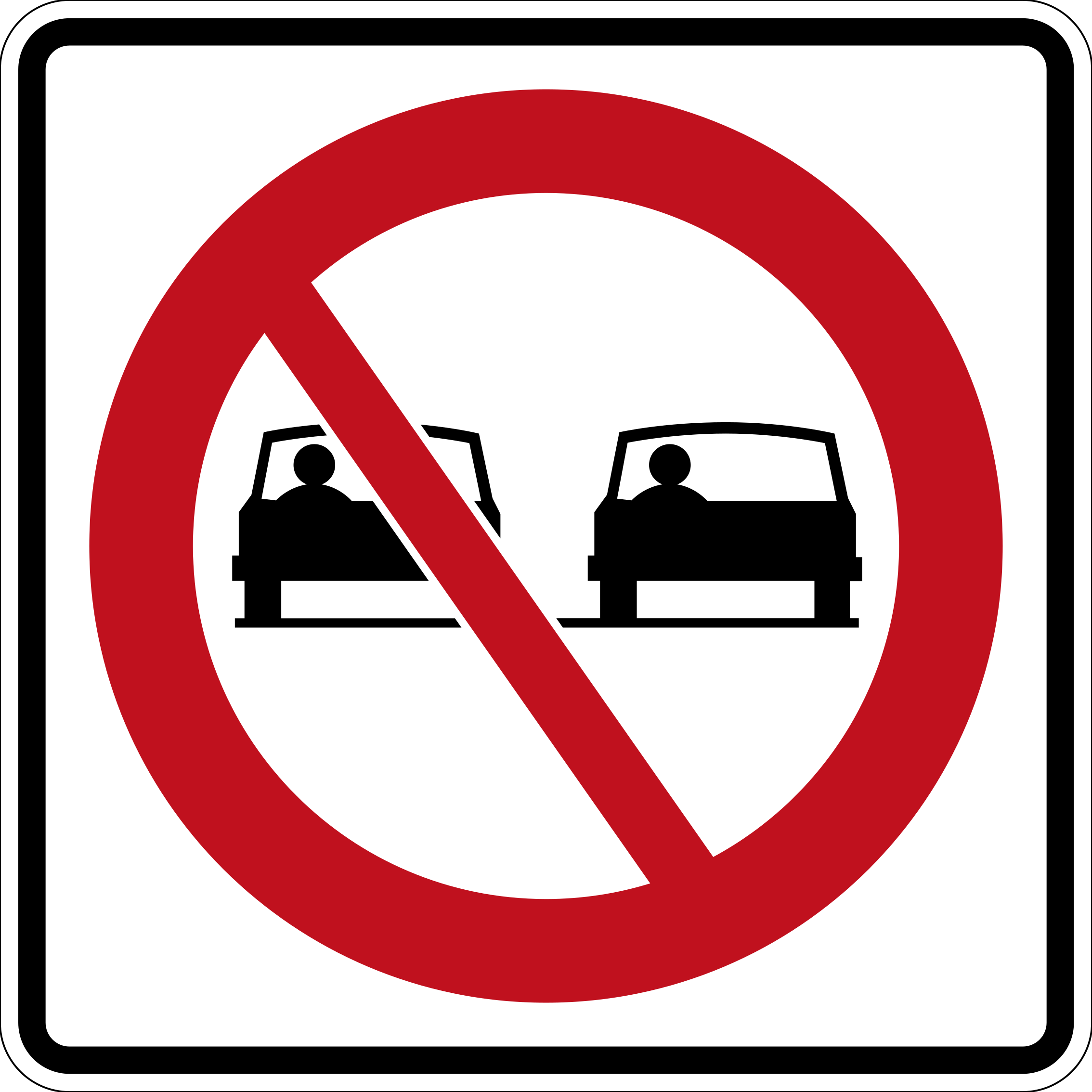
Do Not Pass
Passing is prohibited here — usually because of limited sightlines or oncoming traffic risk.
Maximum Speed Limit
The fastest you’re legally allowed to drive under good conditions.
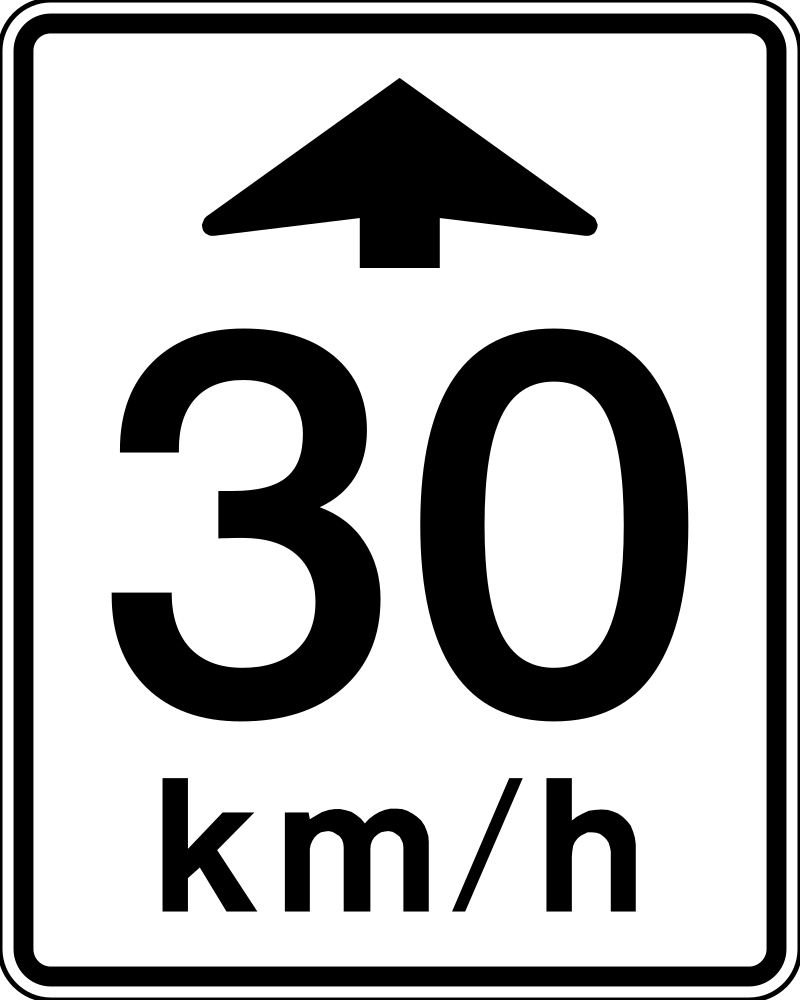
Reduced Speed Ahead
The speed limit drops ahead, shown here as 30 km/h. Slow down before you reach the lower limit.
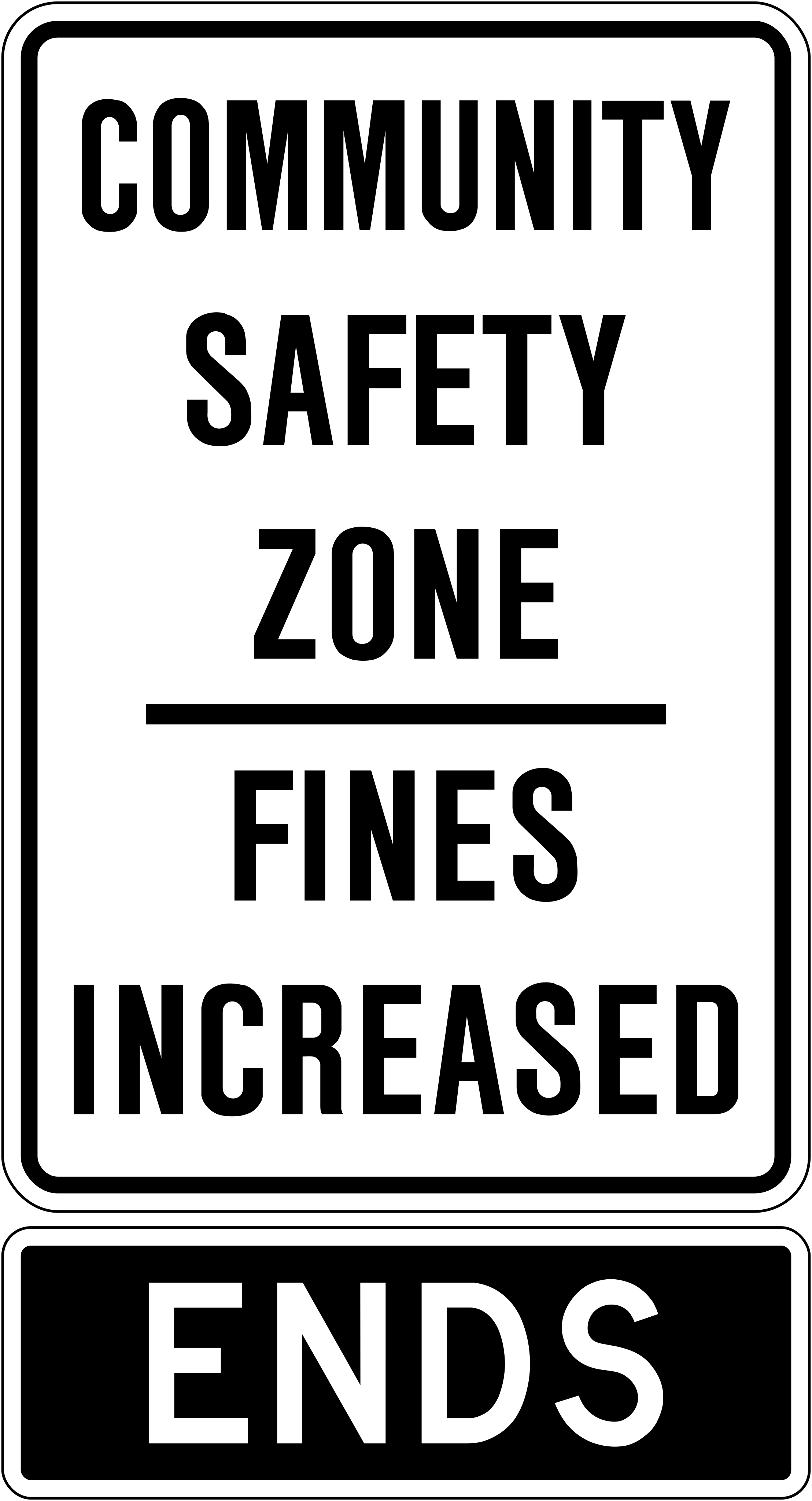
Community Safety Zone
Fines for speeding and other violations are increased here, often near schools or parks.
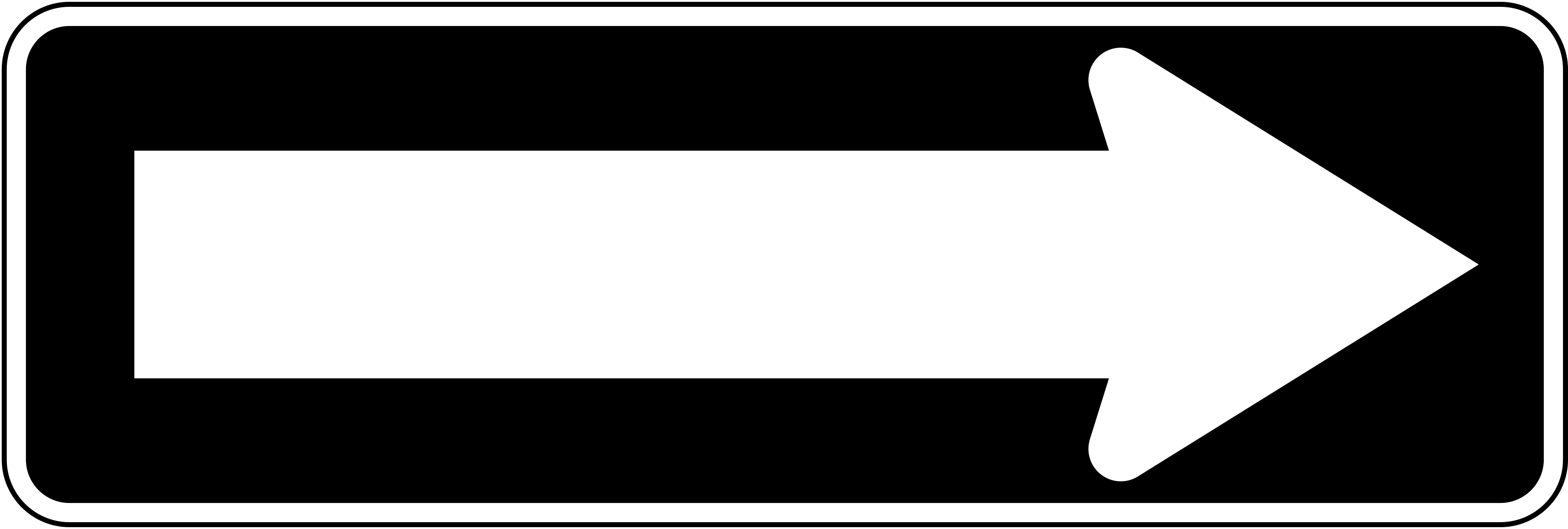
One Way
Traffic on this road moves in one direction only — the direction the arrow points.
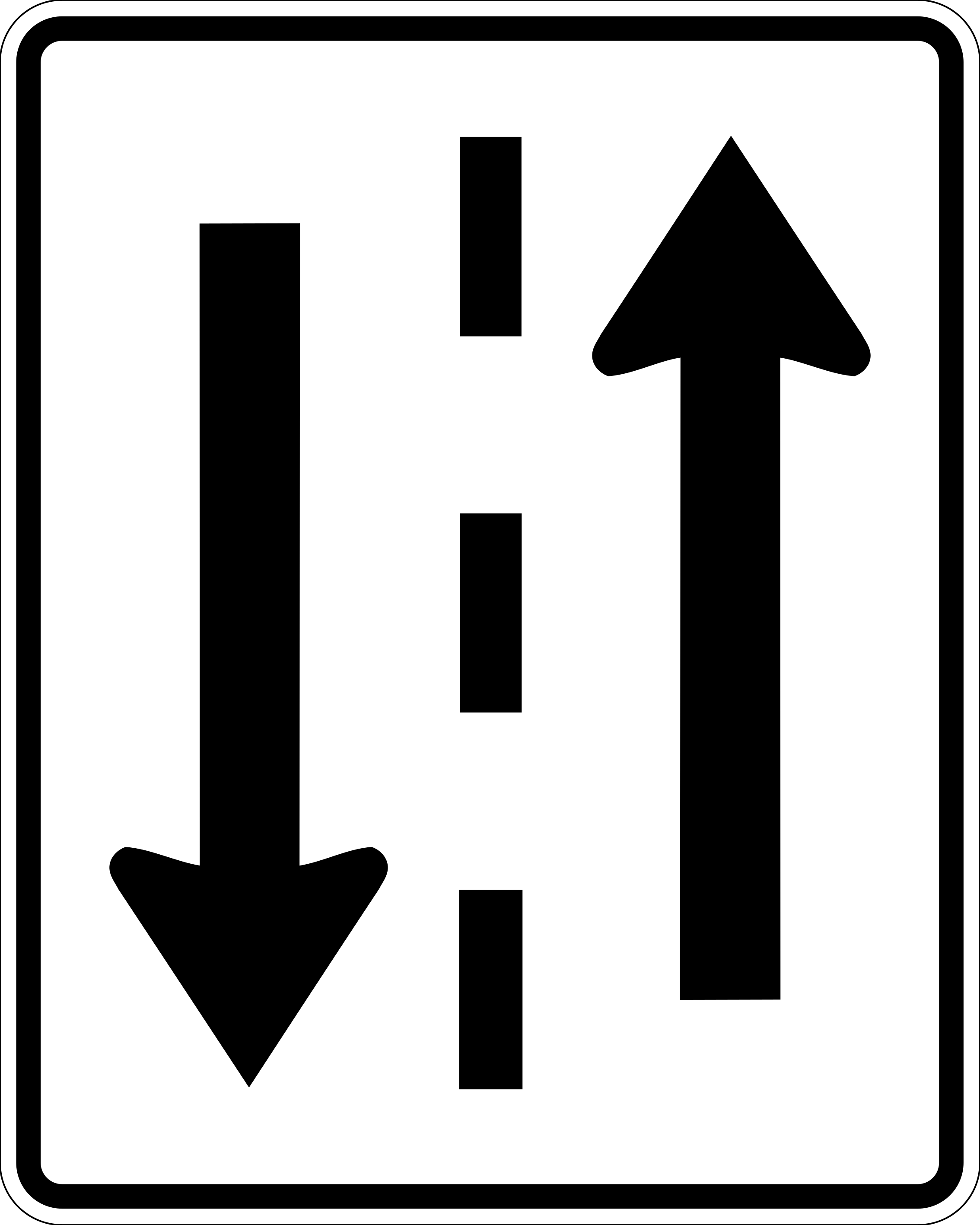
Two-Way Traffic
After a one-way or divided stretch, traffic now flows in both directions again.
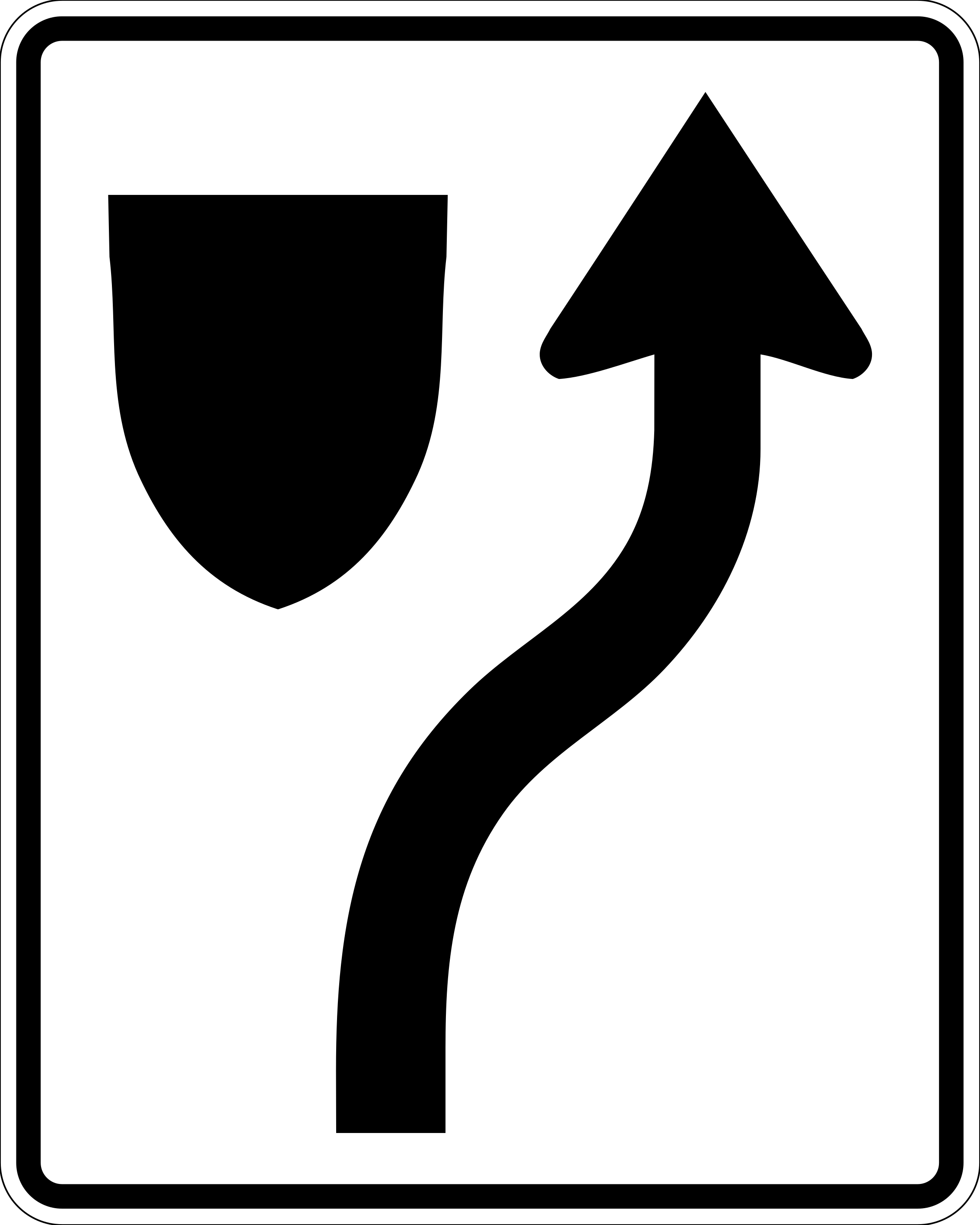
Keep Right
Keep to the right of a median, island, or obstruction ahead.
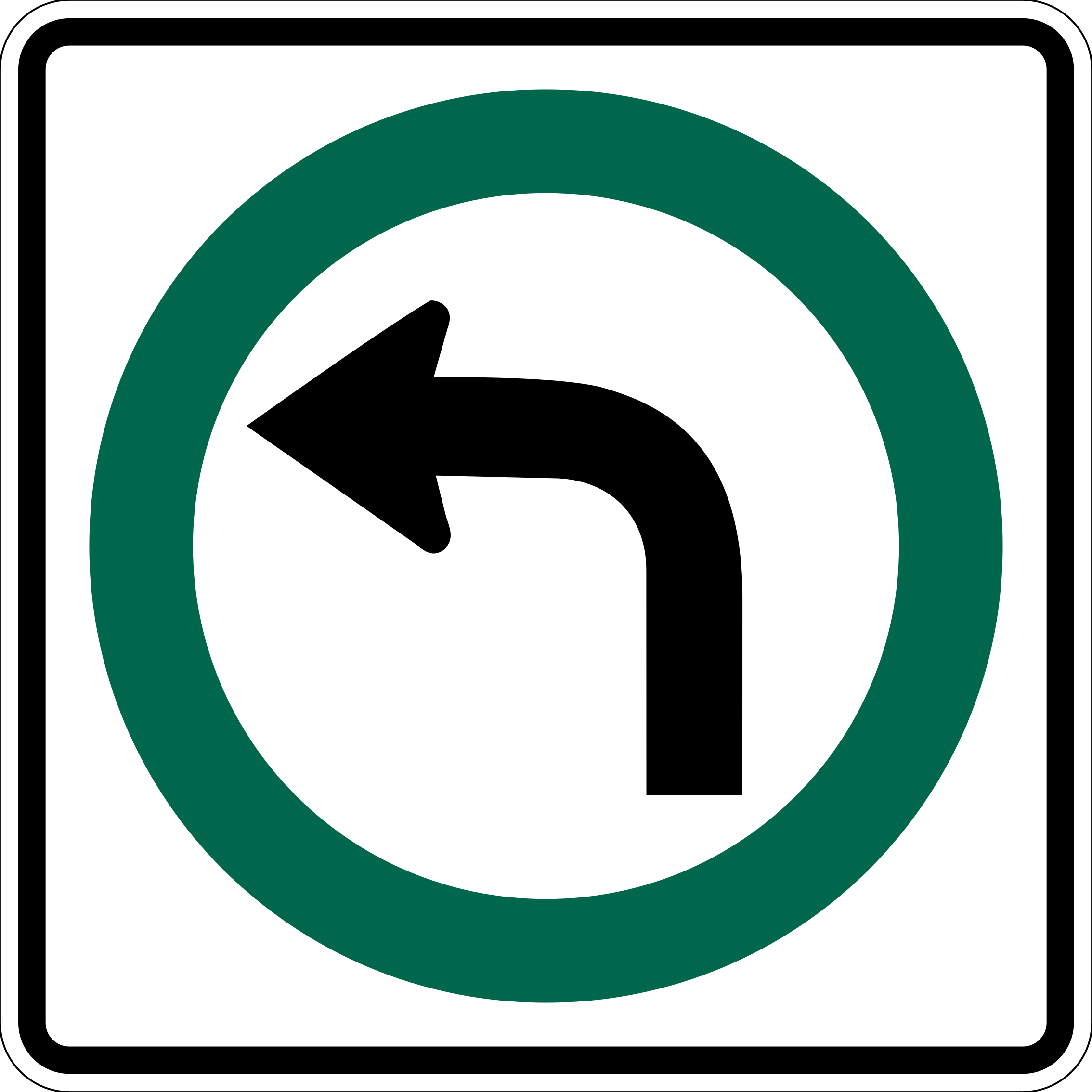
Left Turn Only
This lane must turn left — going straight or right from it isn’t permitted.
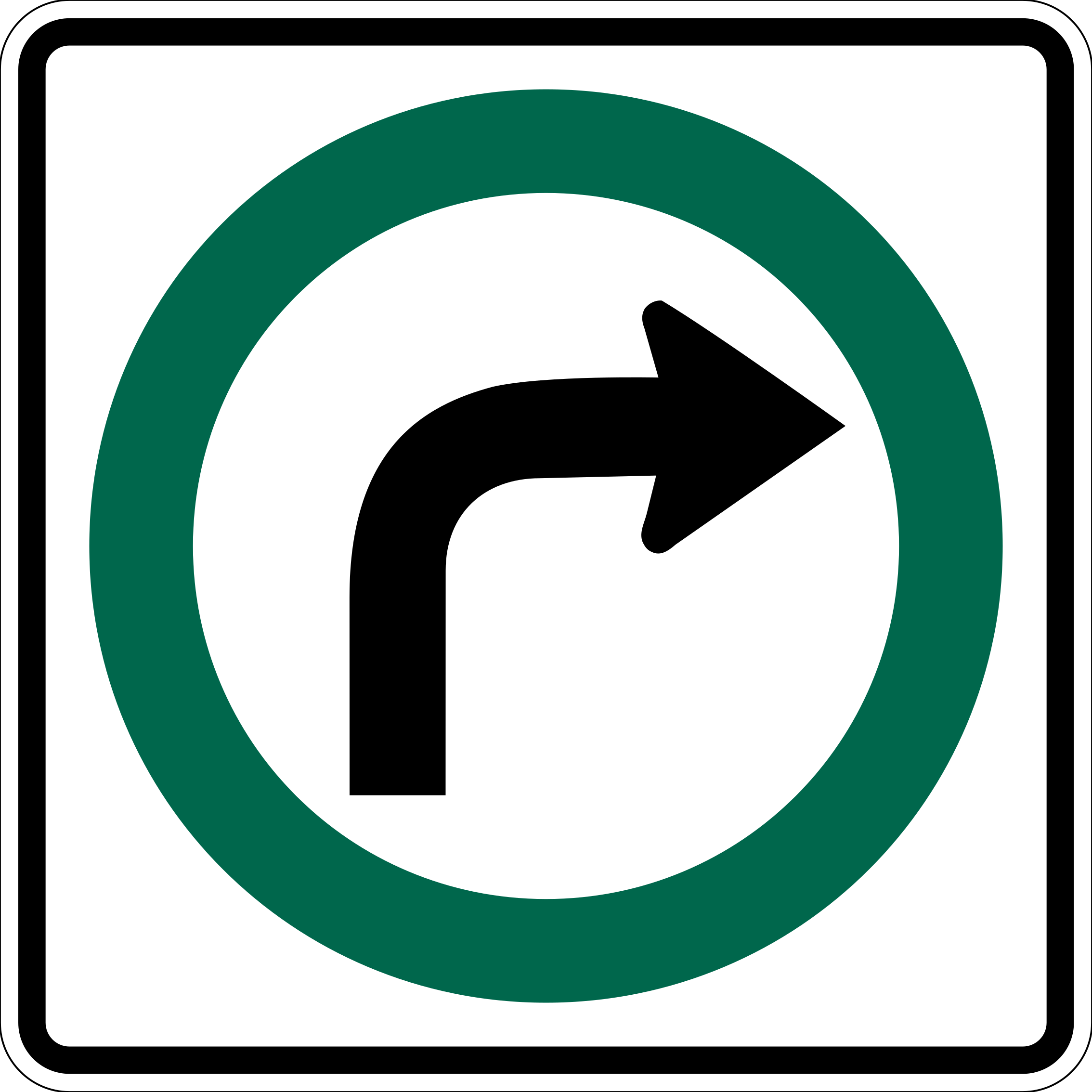
Right Turn Only
This lane must turn right — going straight or left from it isn’t permitted.
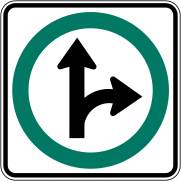
Straight or Right Only
Drivers in this lane may only go straight or turn right.
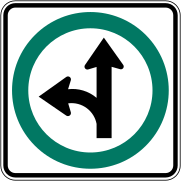
Straight or Left Only
Drivers in this lane may only go straight or turn left.
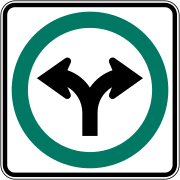
Left or Right Only
Drivers may only turn left or right. Going straight is not allowed.
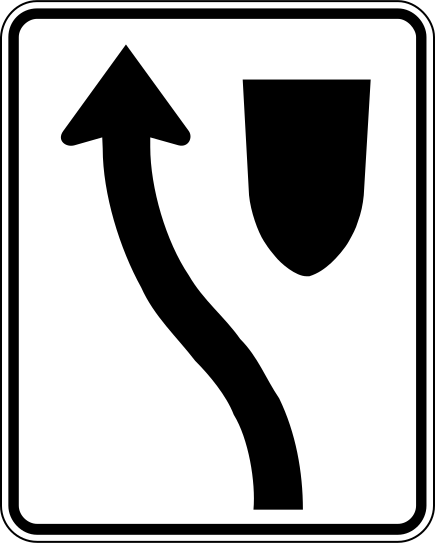
Keep Left of Obstruction
Keep to the left of the median or obstruction ahead.
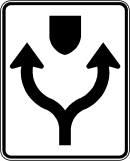
Pass Either Side
You may pass the median or obstruction ahead on either side.
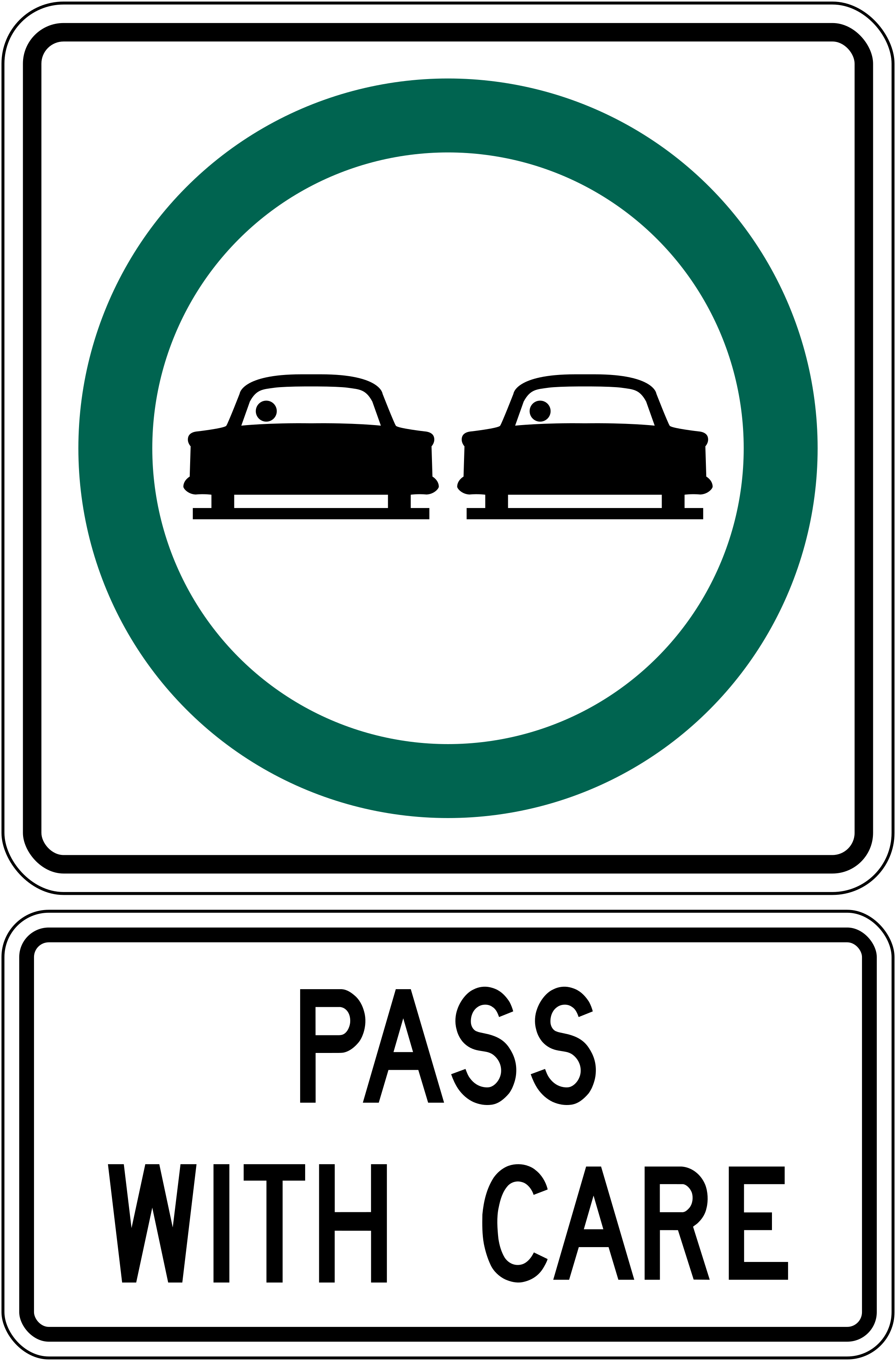
Passing Permitted
Marks the end of a no-passing zone.
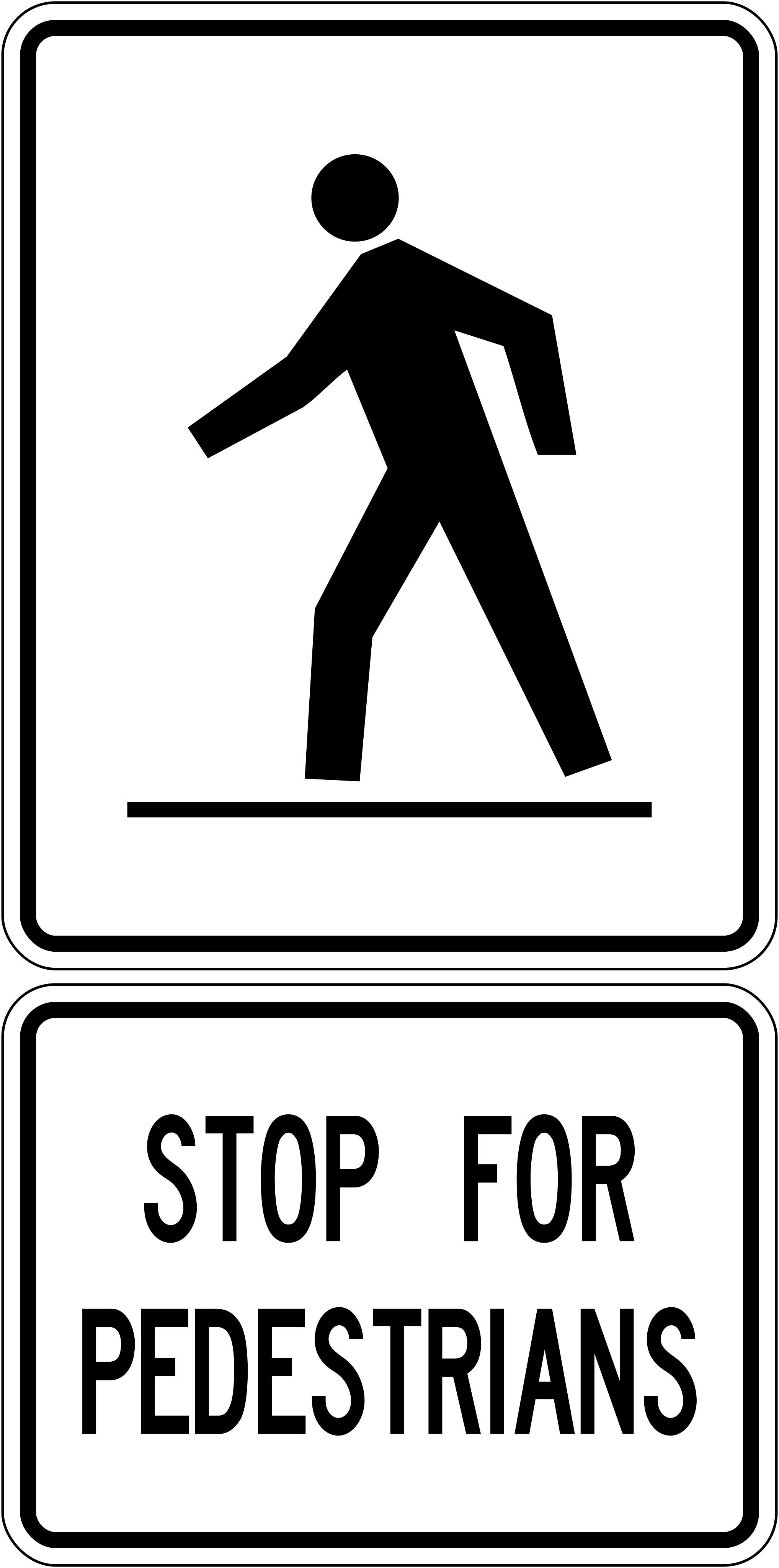
Pedestrian Crossover
Marks a protected crossing.
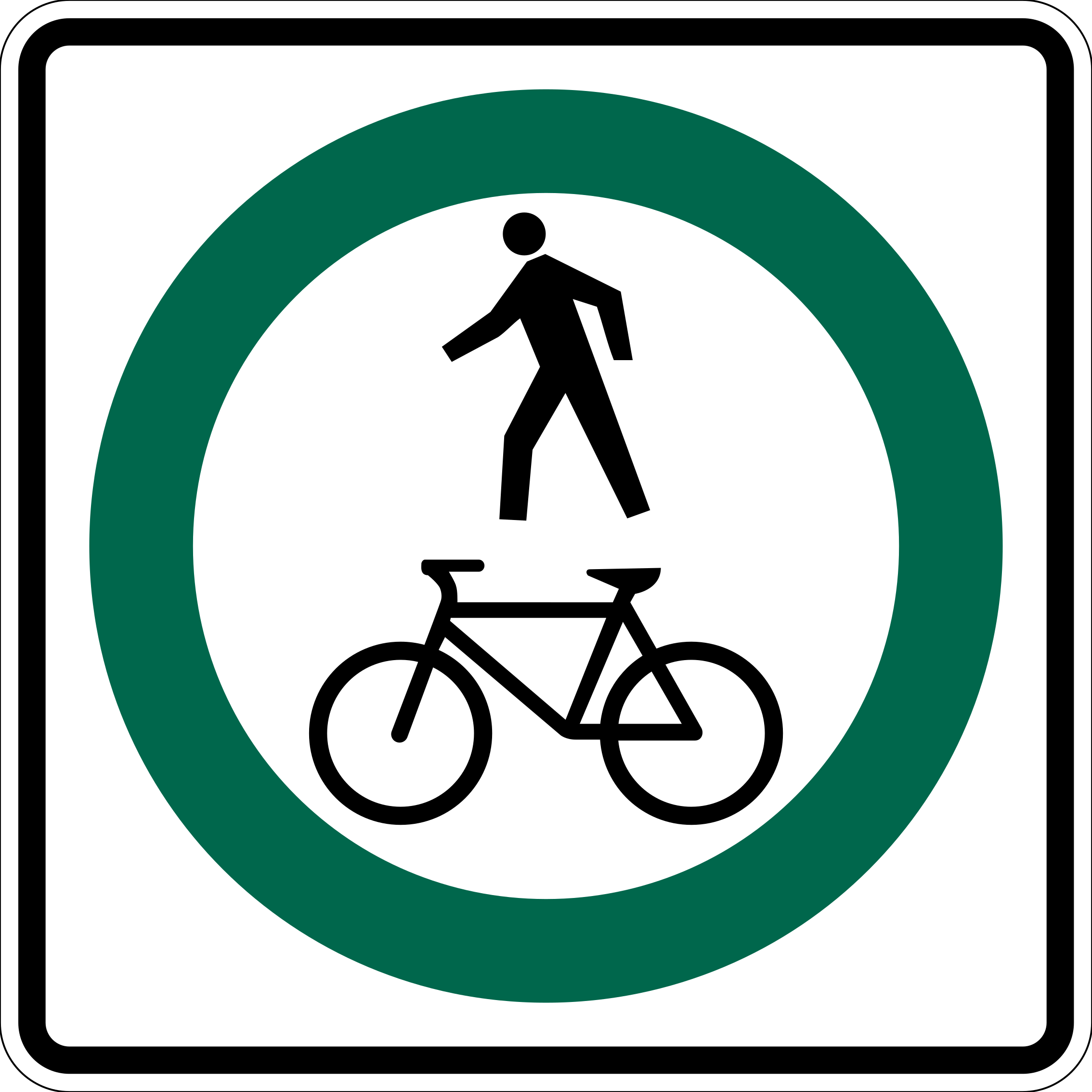
Accessible Parking Permit
This space is reserved for vehicles displaying a valid accessible parking permit.
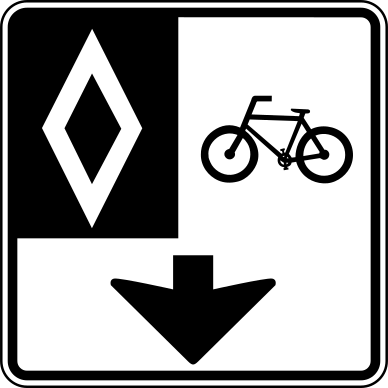
Reserved Bicycle Lane
This lane is reserved for cyclists only.
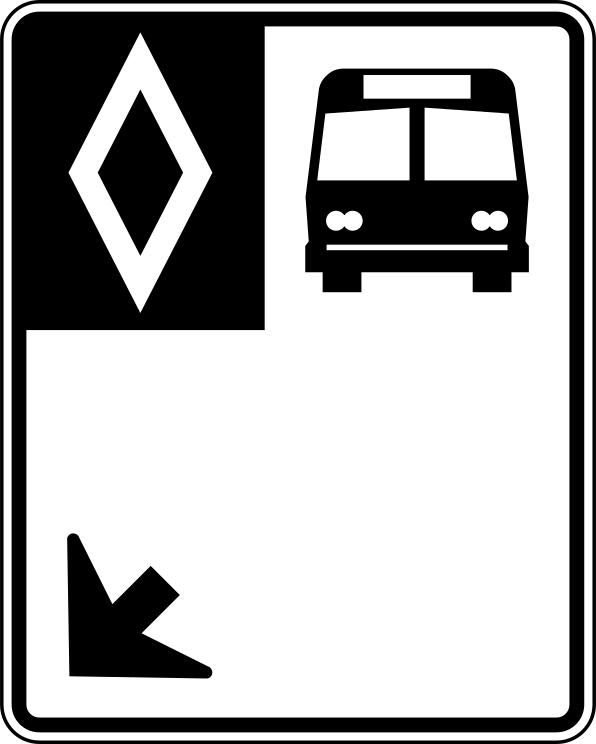
Reserved Bus Lane
This lane is reserved for buses, and sometimes other designated vehicles.
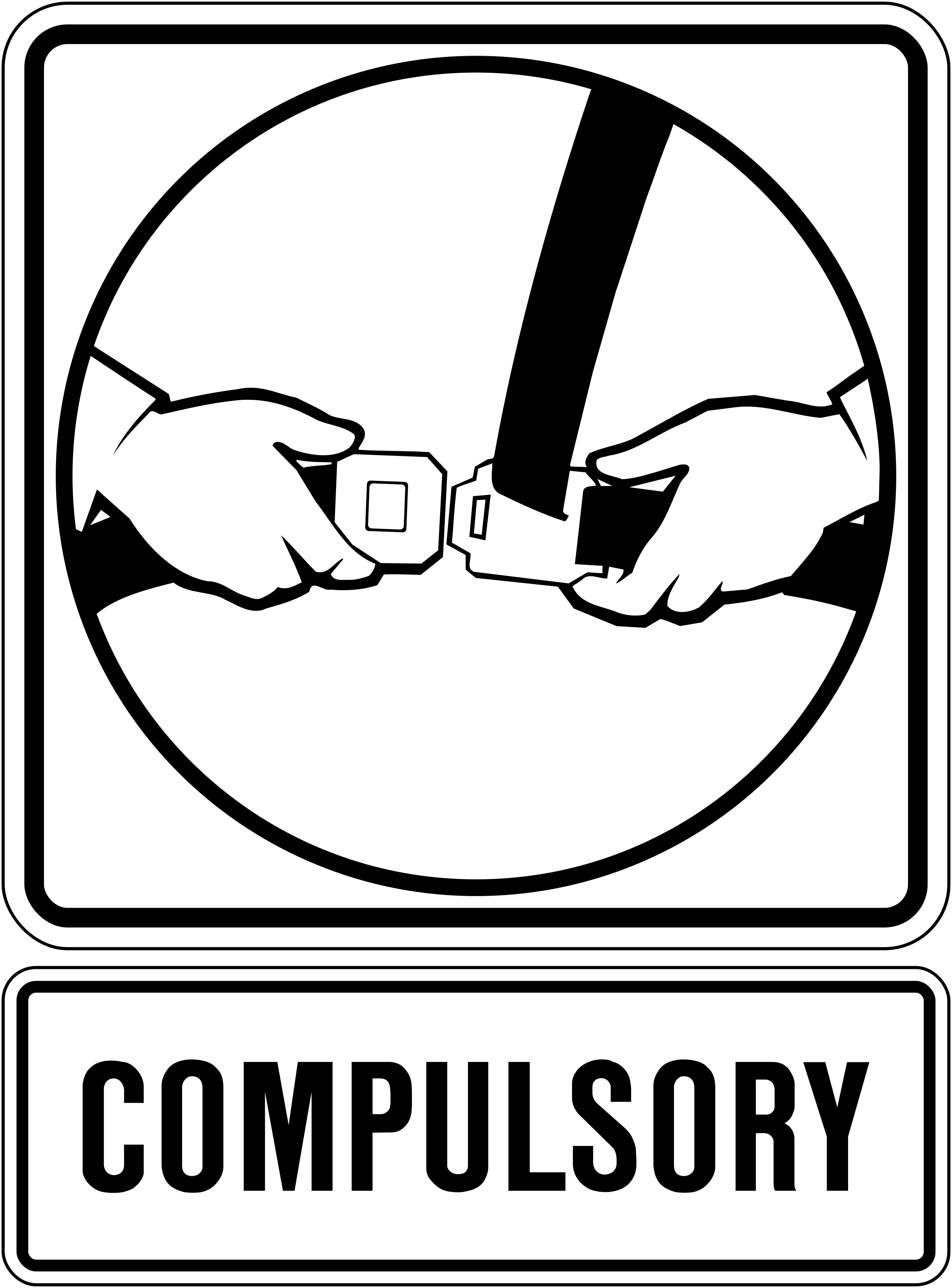
Fasten Seat Belt
A reminder that seat belt use is mandatory for everyone in the vehicle.
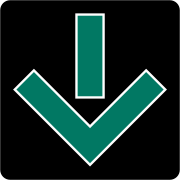
Lane Open (Green Arrow)
A green arrow above a lane means you may use that lane.
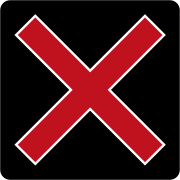
Lane Closed (Red X)
A red X above a lane means do not use that lane. It is closed to you.
Signs that help you find routes, services and destinations. Many are green or blue.
Bicycle Route
Marks a route designated for cyclists.
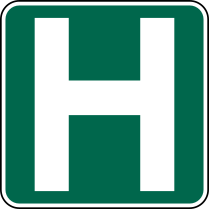
Hospital
Indicates a hospital is nearby — follow the sign to find emergency medical care.
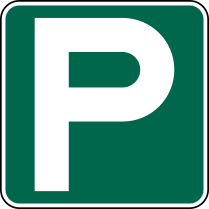
Parking
Indicates a parking area is available.
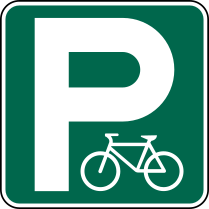
Bicycle Parking
Indicates parking set aside specifically for bicycles.
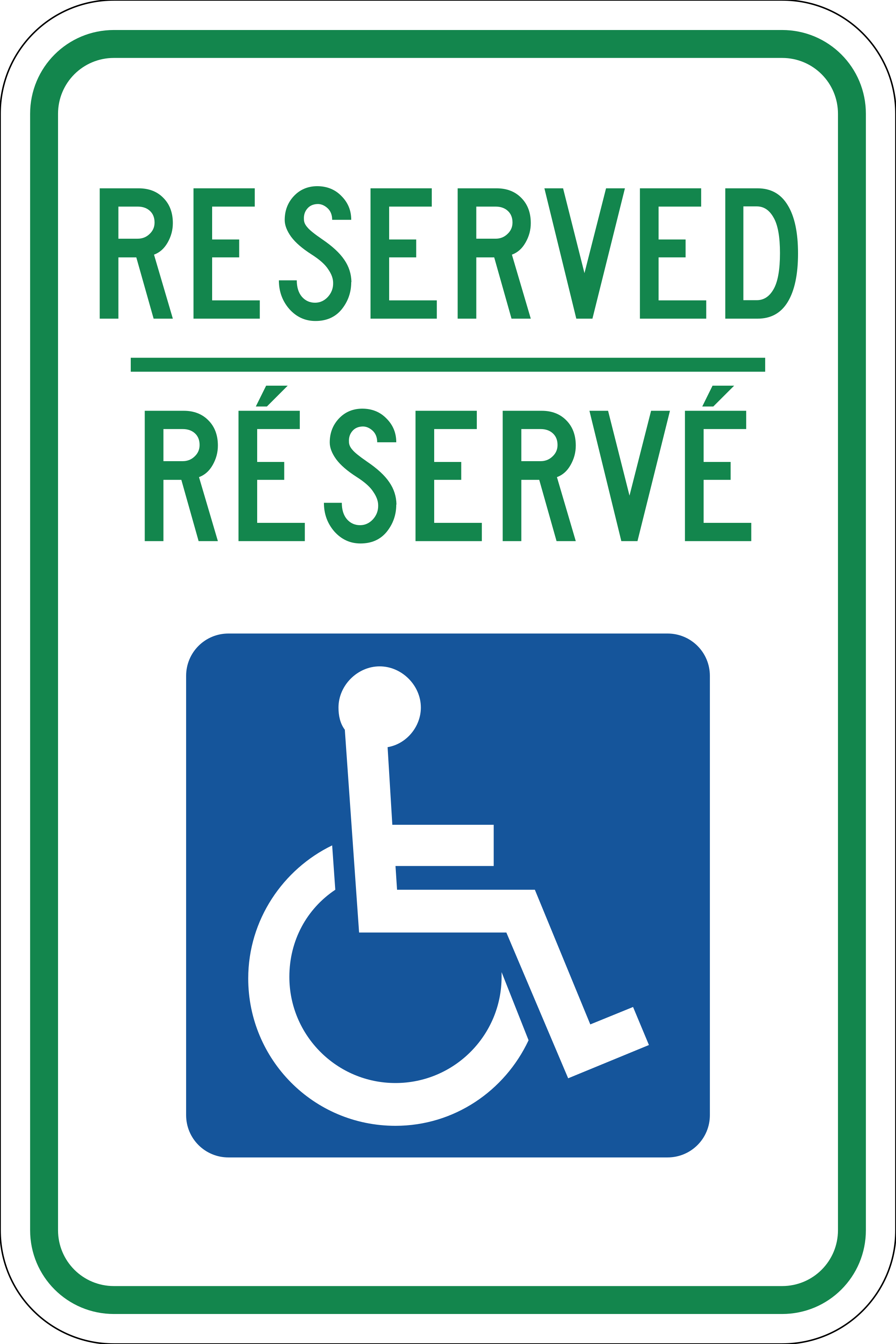
Accessible Parking
Reserved for vehicles displaying a valid accessible parking permit.
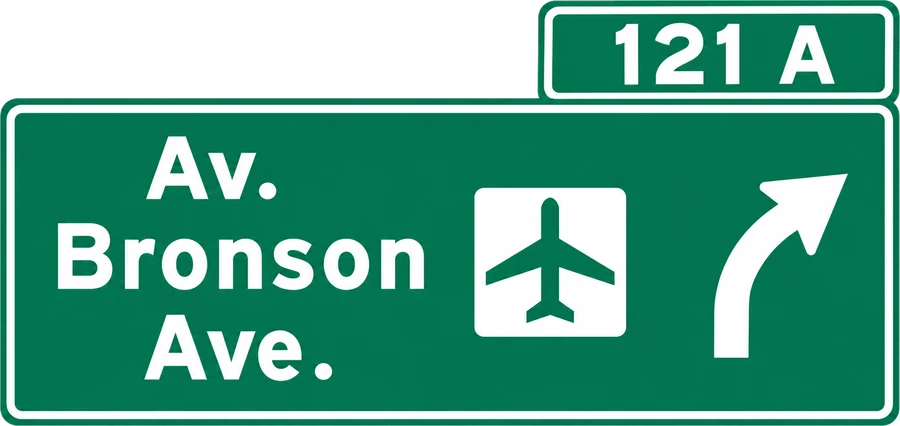
Exit Number
Marks a numbered exit, sometimes with destination icons like an airport.
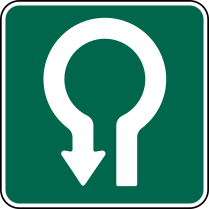
Cul-de-Sac
Indicates the road ahead ends in a circular dead end.
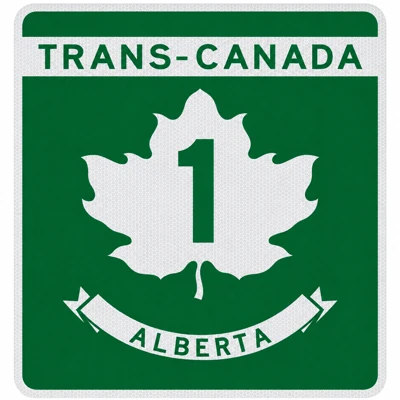
Trans-Canada Highway (Route Marker)
Marks the Trans-Canada Highway. The number is the highway number in that province, here Highway 1 in Alberta.
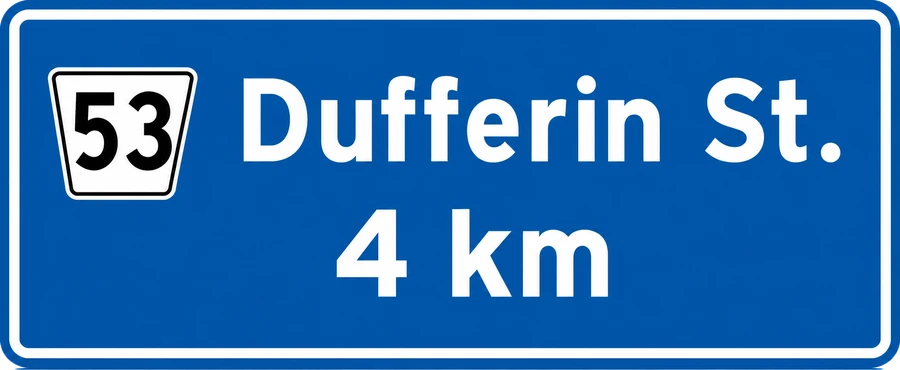
Distance to Destination
Shows the remaining distance to a place along your route.
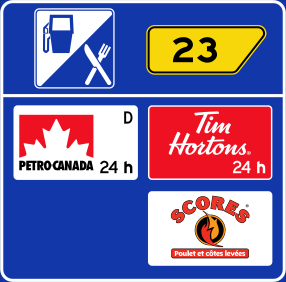
Fuel & Food Services
Shows what’s available at the next exit — gas stations, restaurants, and more.
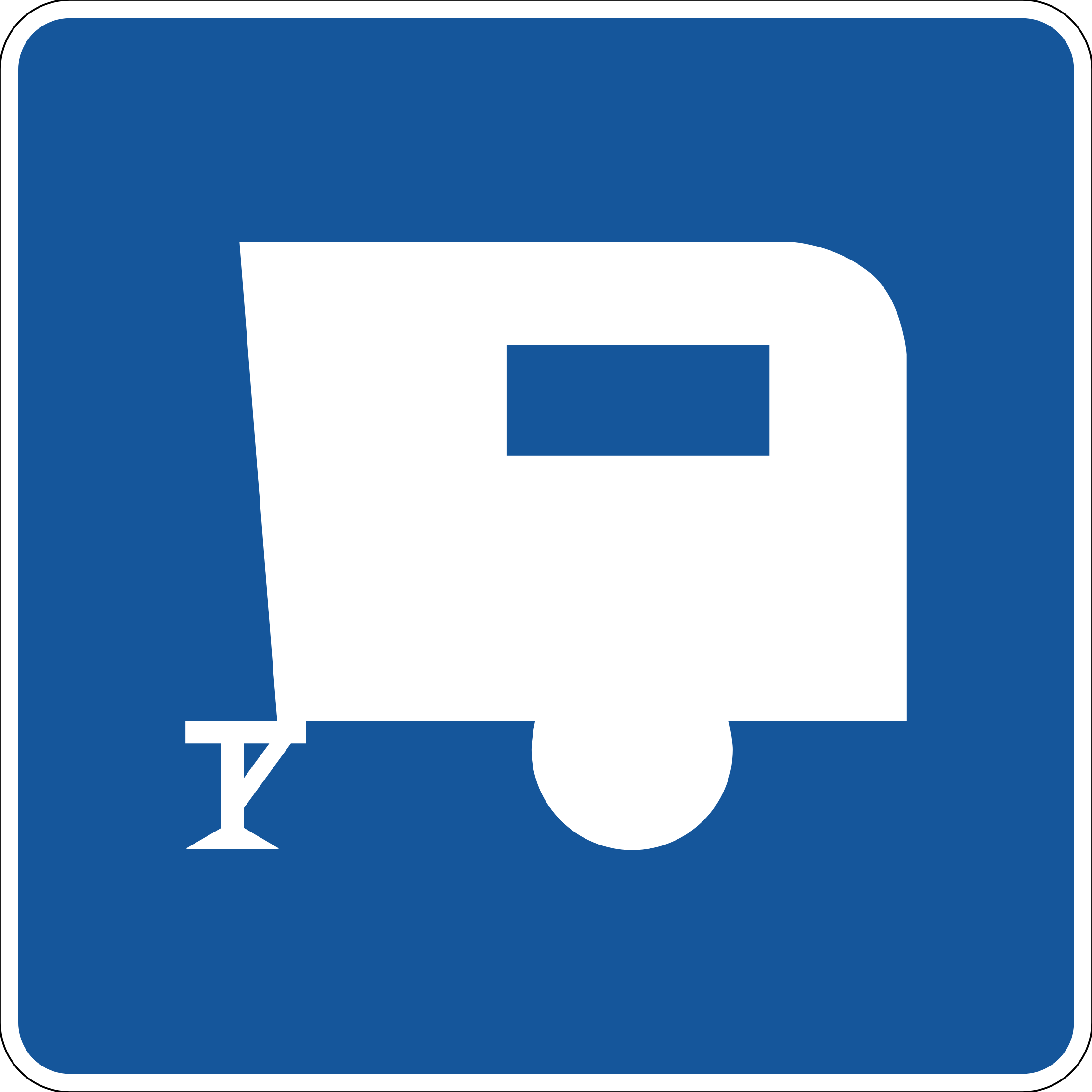
Trailer Campground
Indicates a campground ahead with facilities for trailers and RVs.
Accommodation
Indicates lodging — a hotel or motel — is available nearby.
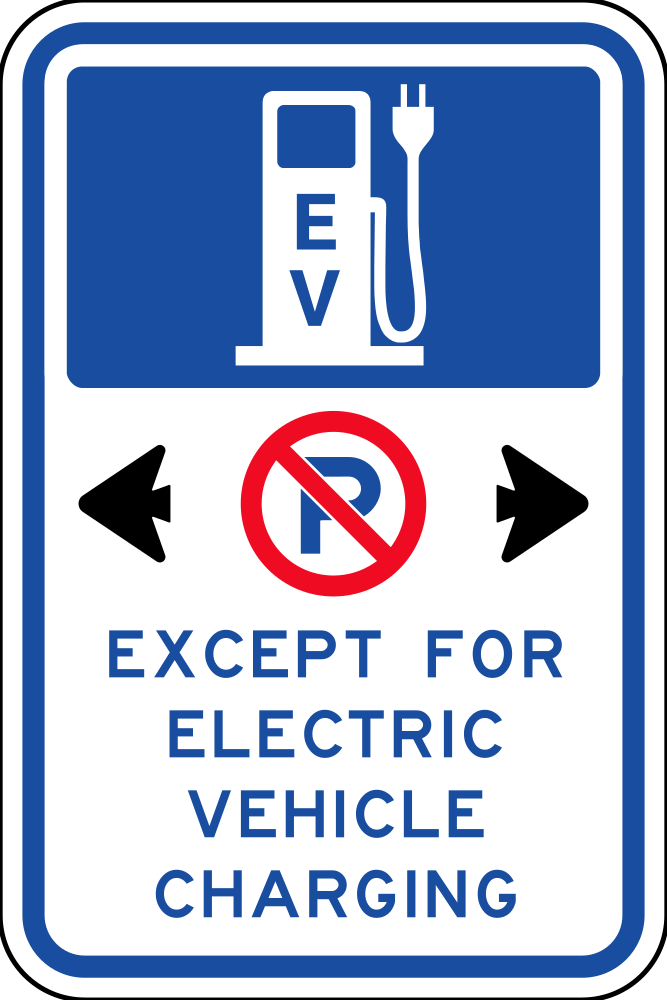
Electric Vehicle Charging Only
Parking here is only for electric vehicles that are charging.
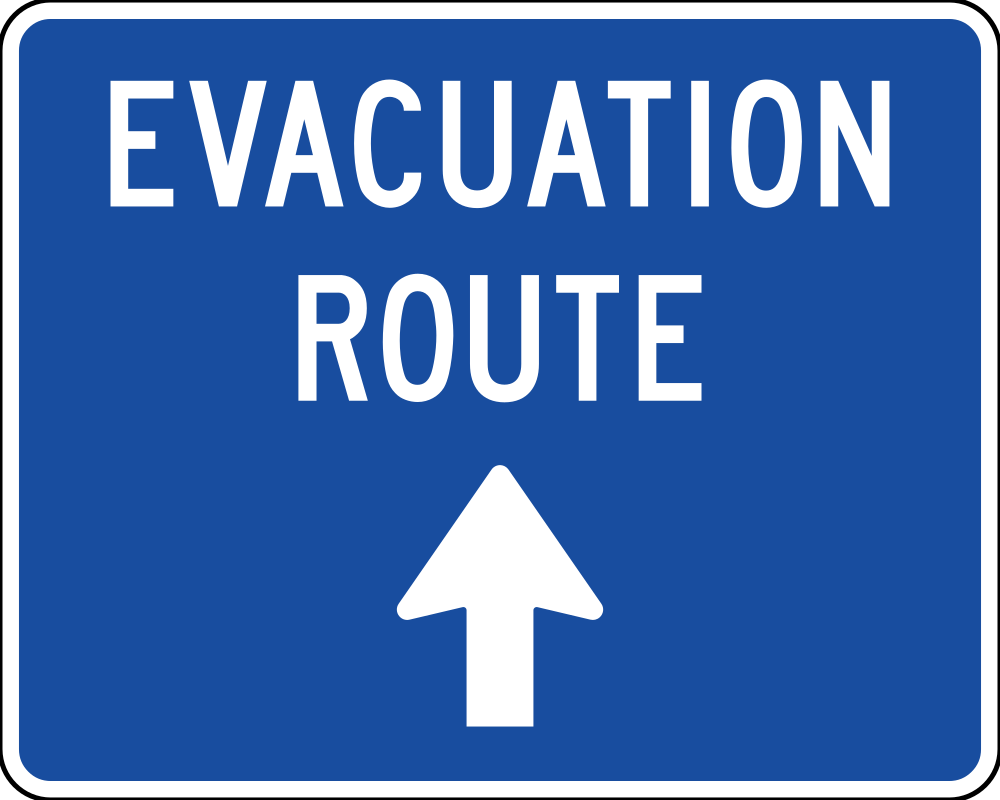
Evacuation Route
Marks a route to follow during an evacuation, such as a wildfire or flood. Follow the arrow.
Signs that protect children near schools, playgrounds and school buses. Many are fluorescent yellow-green.
School Area
Warns that you’re entering an area near a school.
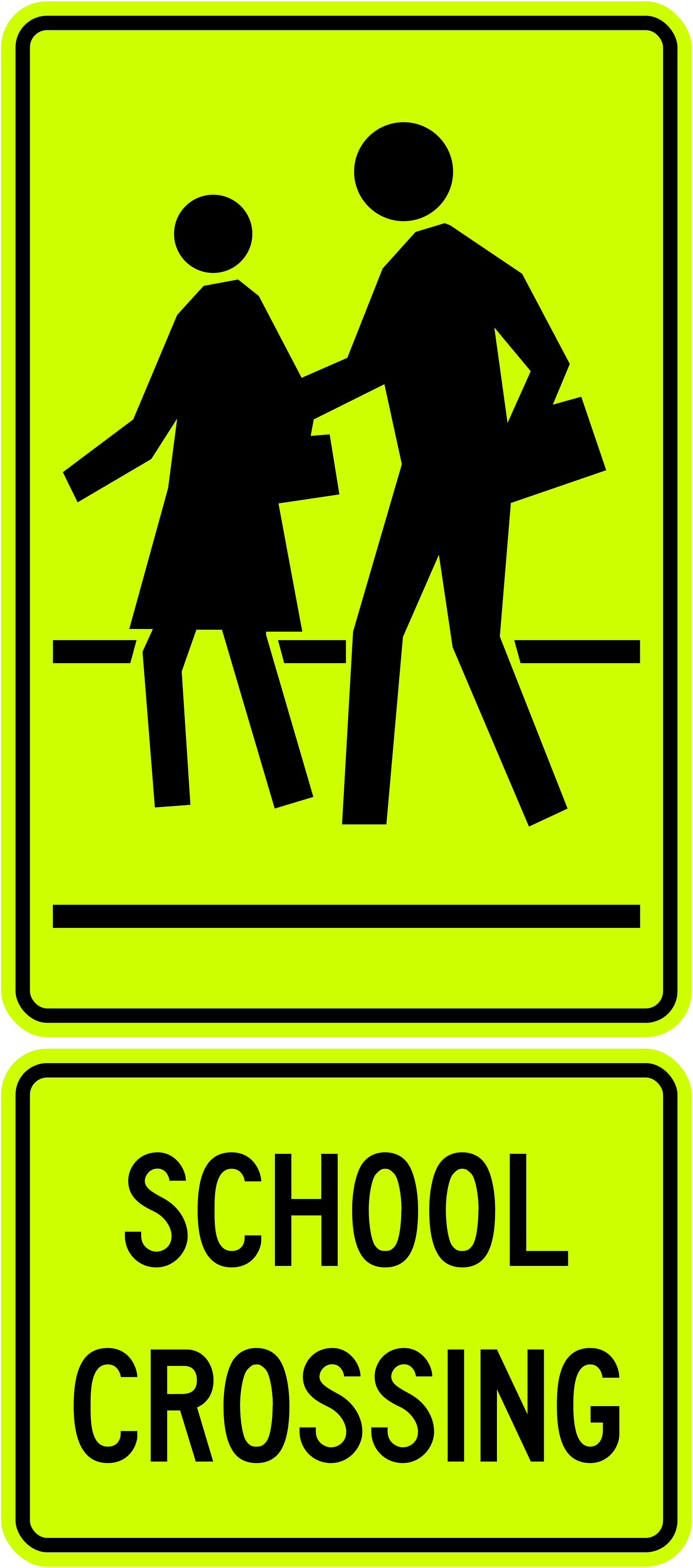
School Crossing
Marks a designated spot where children cross the road on their way to or from school.
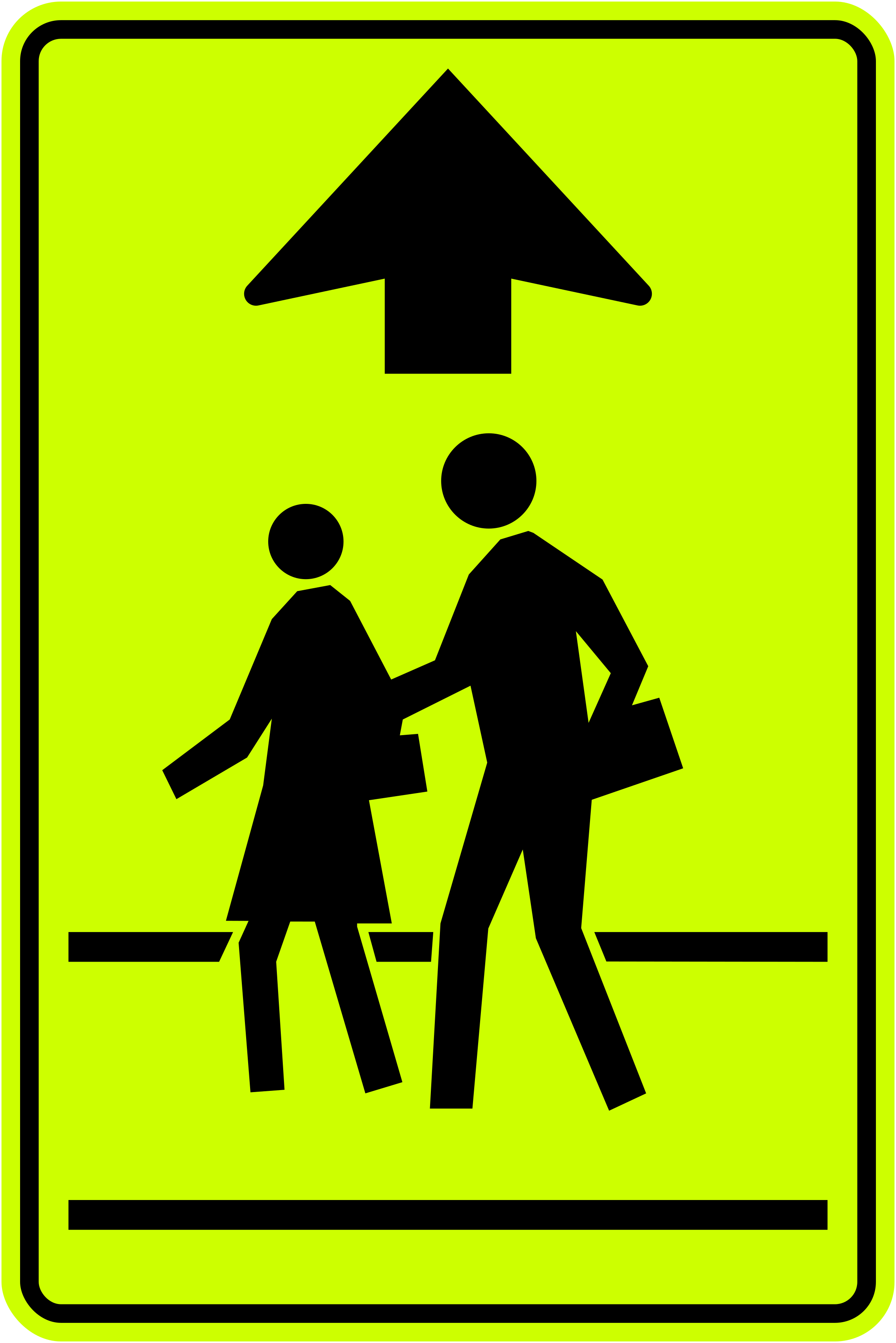
School Crossing Ahead
Warns that a school crossing is coming up.
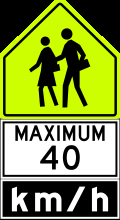
School Zone Speed Limit
Sets a lower maximum speed — often 30–40 km/h — in effect during posted school hours.

Playground Area Ahead
Warns that a playground is nearby.
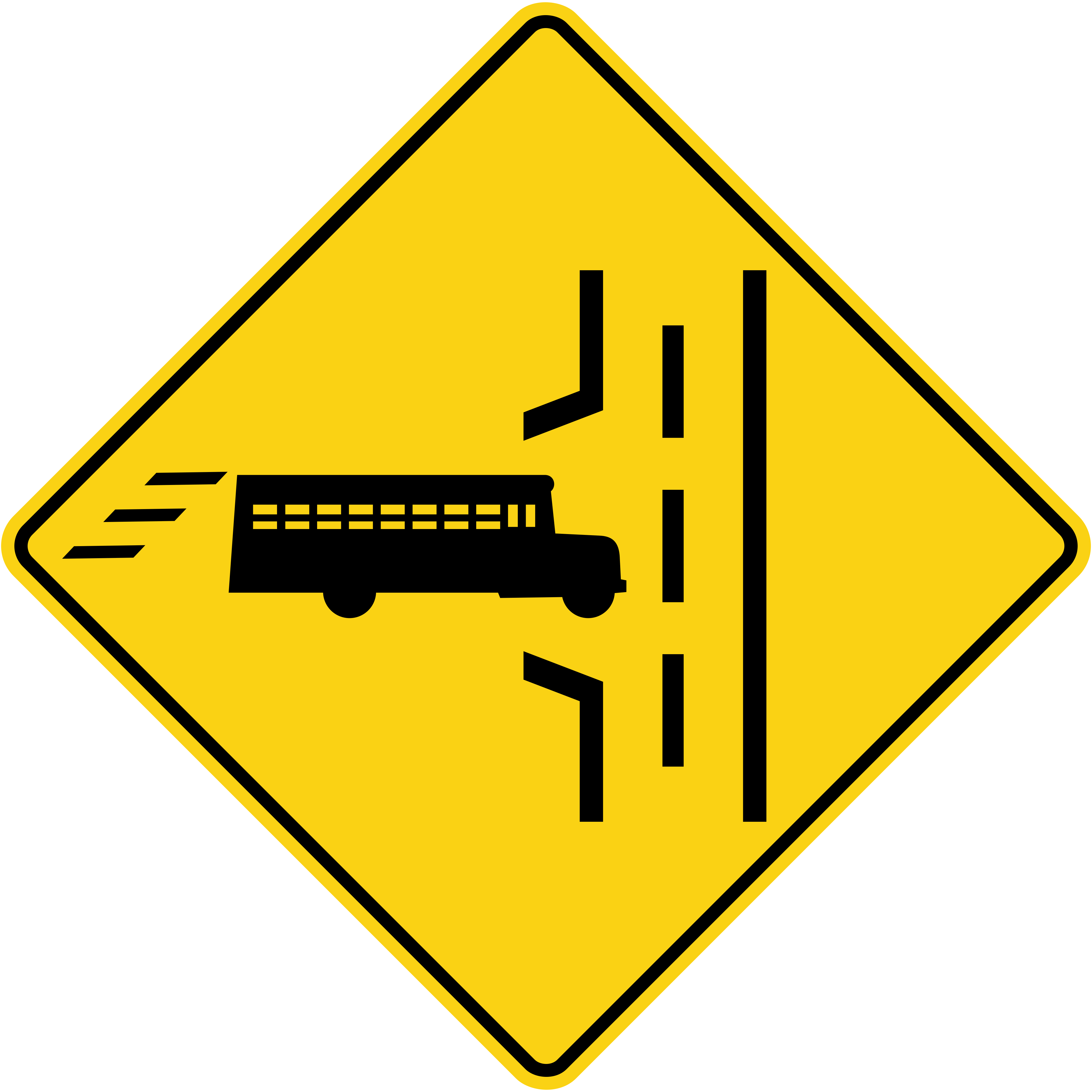
School Bus Entrance
Marks a driveway or lane where school buses enter or exit the roadway.
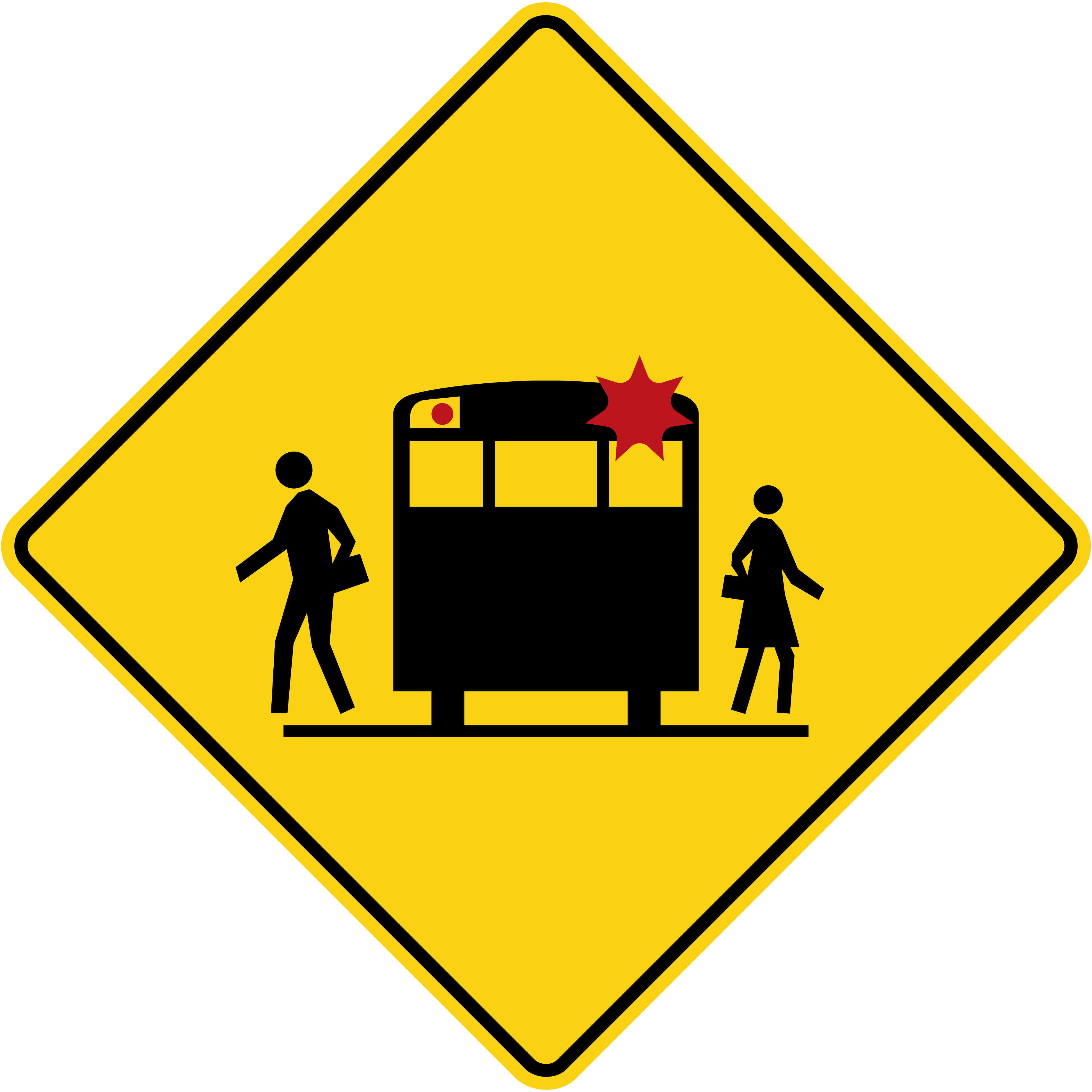
School Bus Stop Ahead
Warns that a school bus makes a stop ahead.
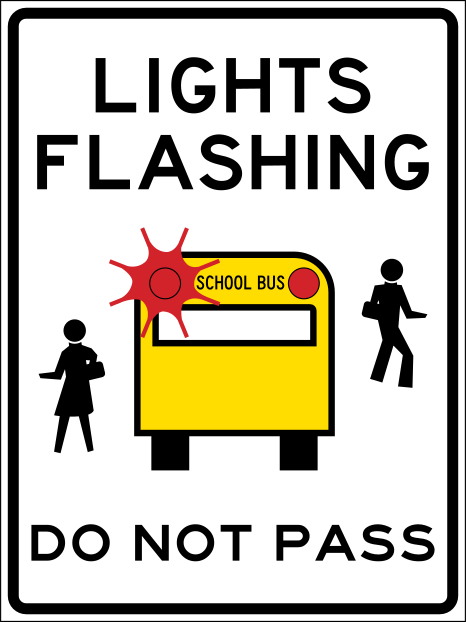
Do Not Pass School Bus
When a school bus’s lights are flashing, stop and do not pass — from both directions in most cases — until the lights stop.
Signs for temporary work zones: workers, detours, lane closures and rough pavement. Many are orange.
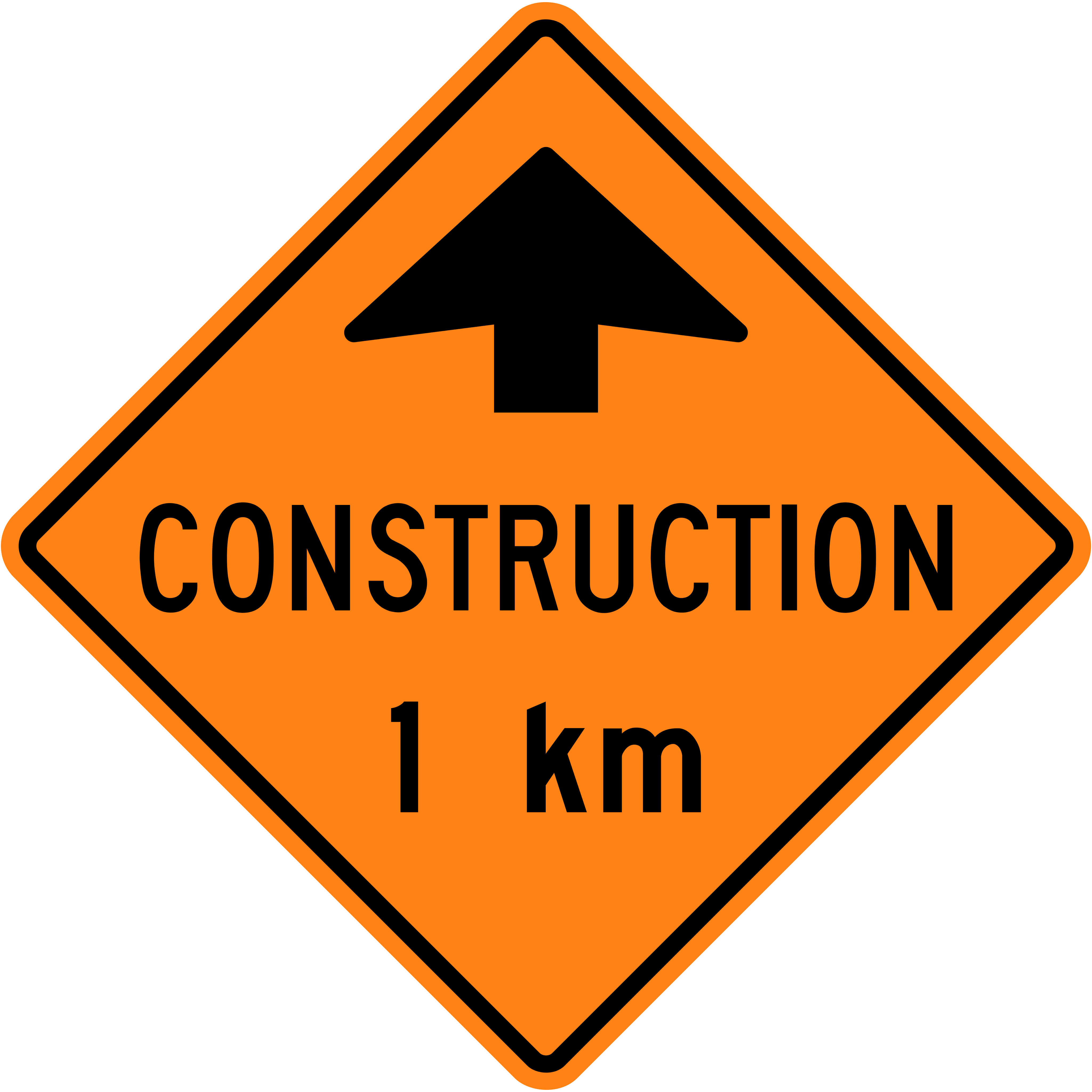
Construction Ahead
Warns that a construction zone is ahead, often with a distance shown.
Road Work Ahead
Warns of road work in progress ahead.
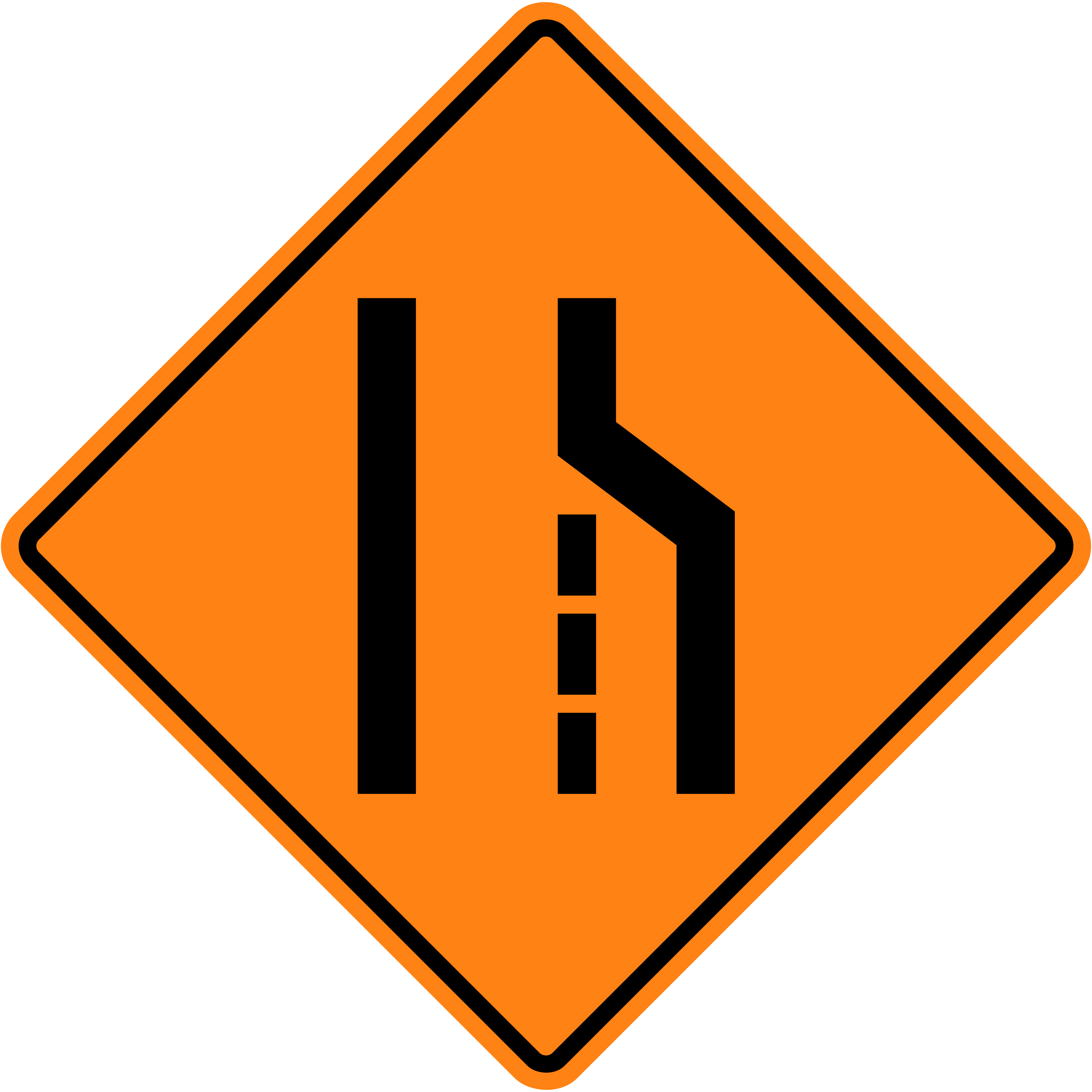
Lane Closure Ahead
Indicates a lane ahead is closed.
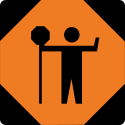
Flagger Ahead
A worker ahead is directing traffic through the work zone.
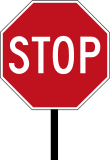
Stop/Slow Paddle Sign
Held by a flagger.
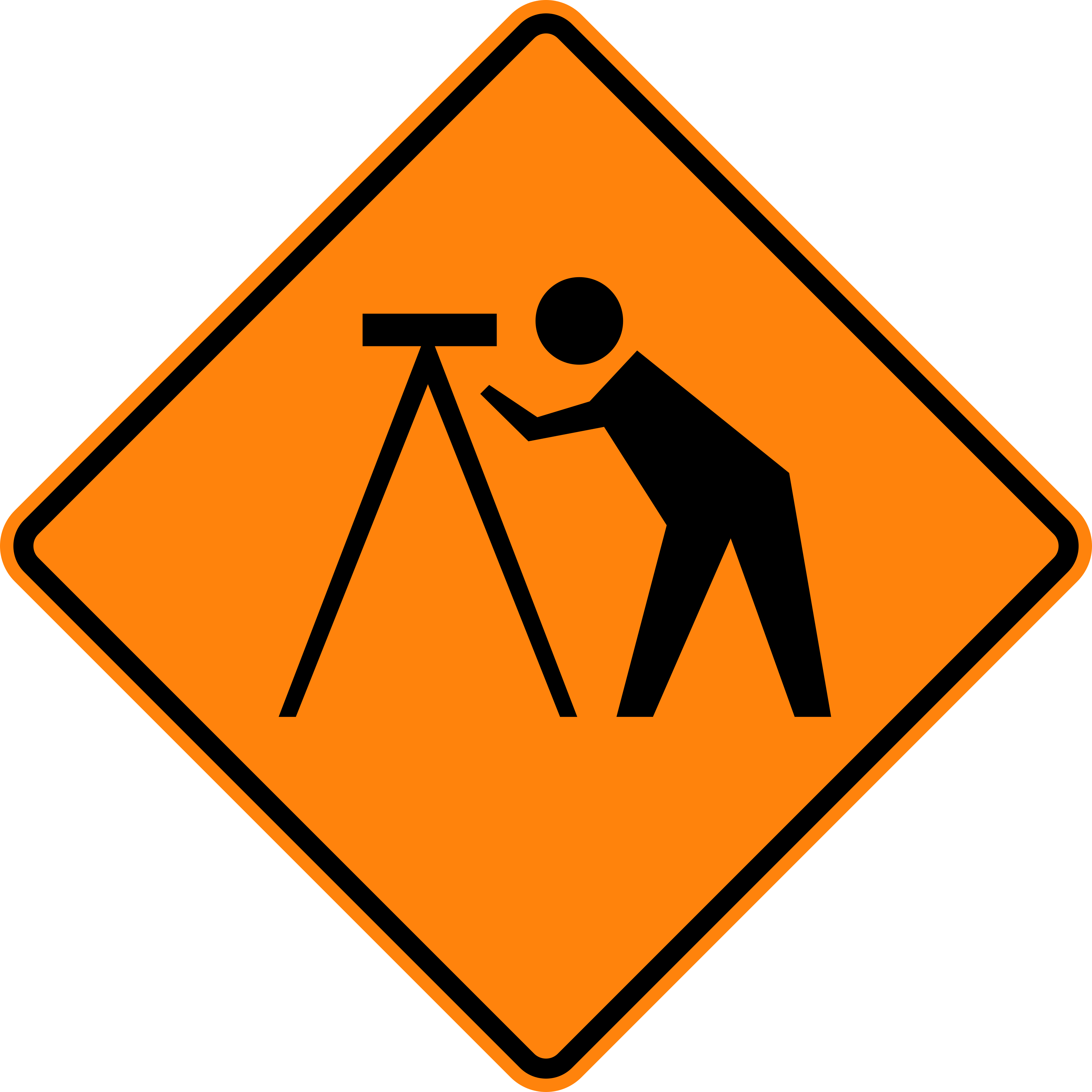
Survey Crew Ahead
Warns that survey workers are on or near the road ahead.
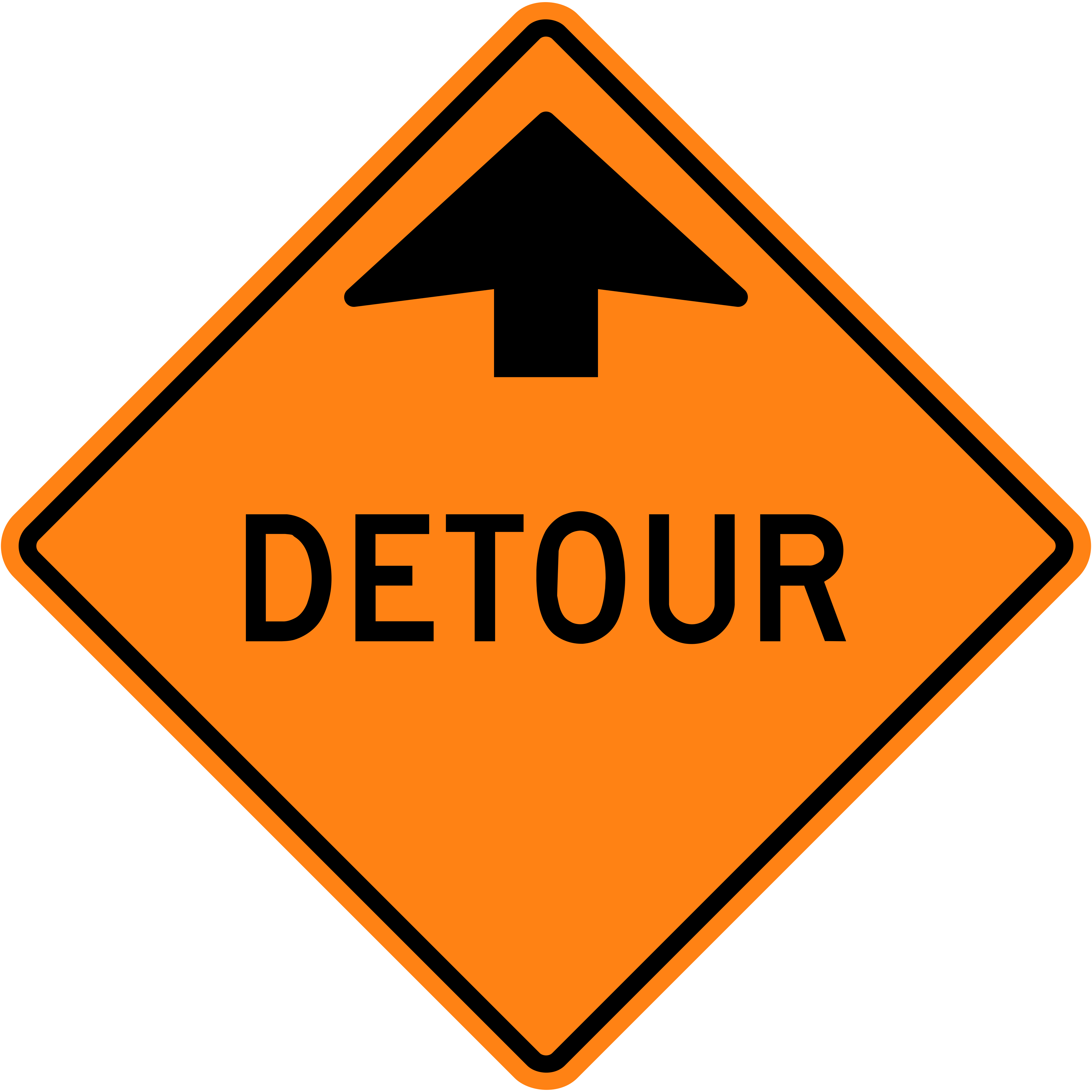
Detour Ahead
Marks a temporary alternate route around a closed section of road.

Diversion Warning
Warns that traffic ahead is being diverted from its normal path, often around construction.
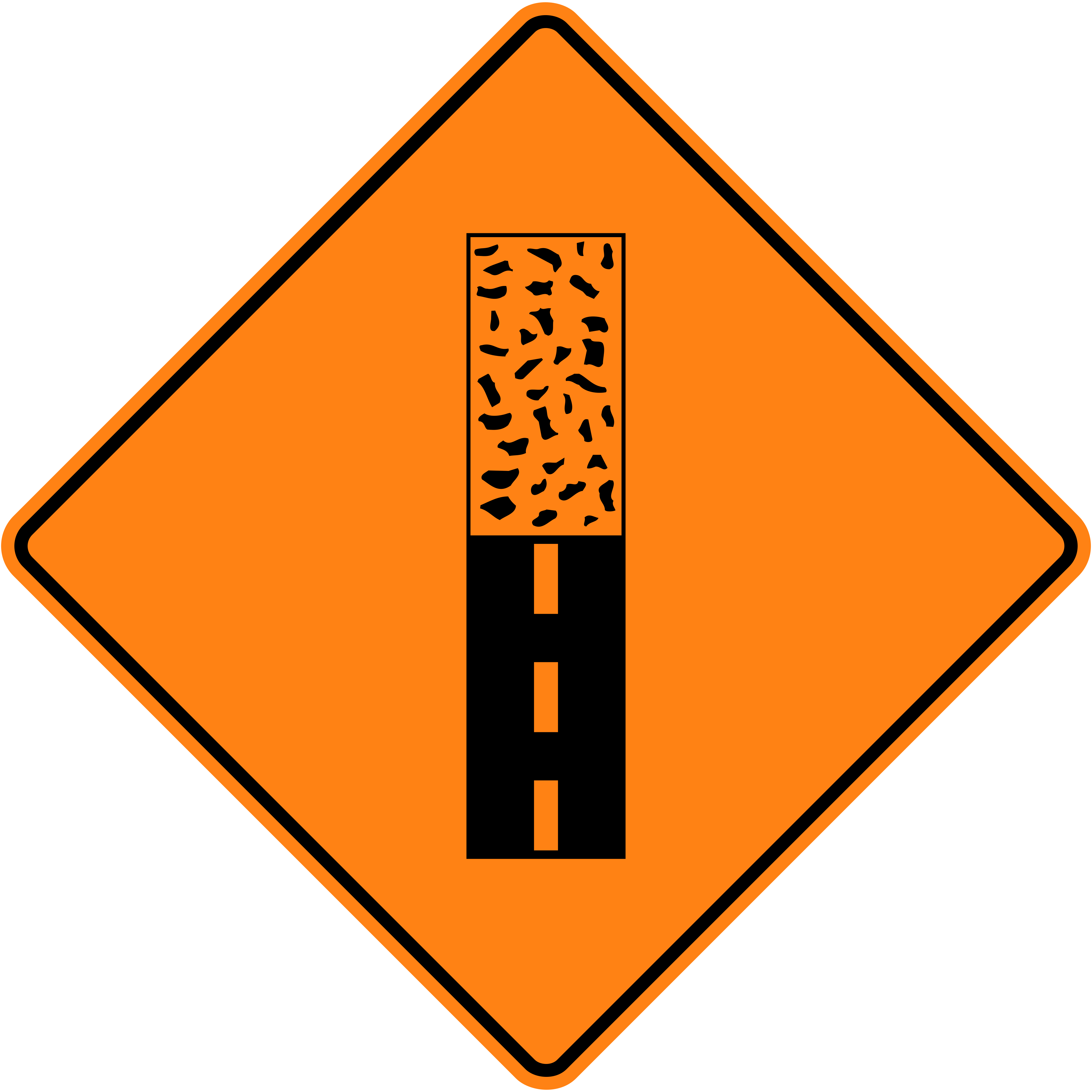
Pavement Ends
Warns that the paved surface ends ahead, often changing to gravel.

Bump Ahead
Warns of a bump or uneven surface ahead, often where construction meets existing pavement.

Uneven Lanes
Warns that adjacent lanes are at different heights — common where old and new pavement meet.
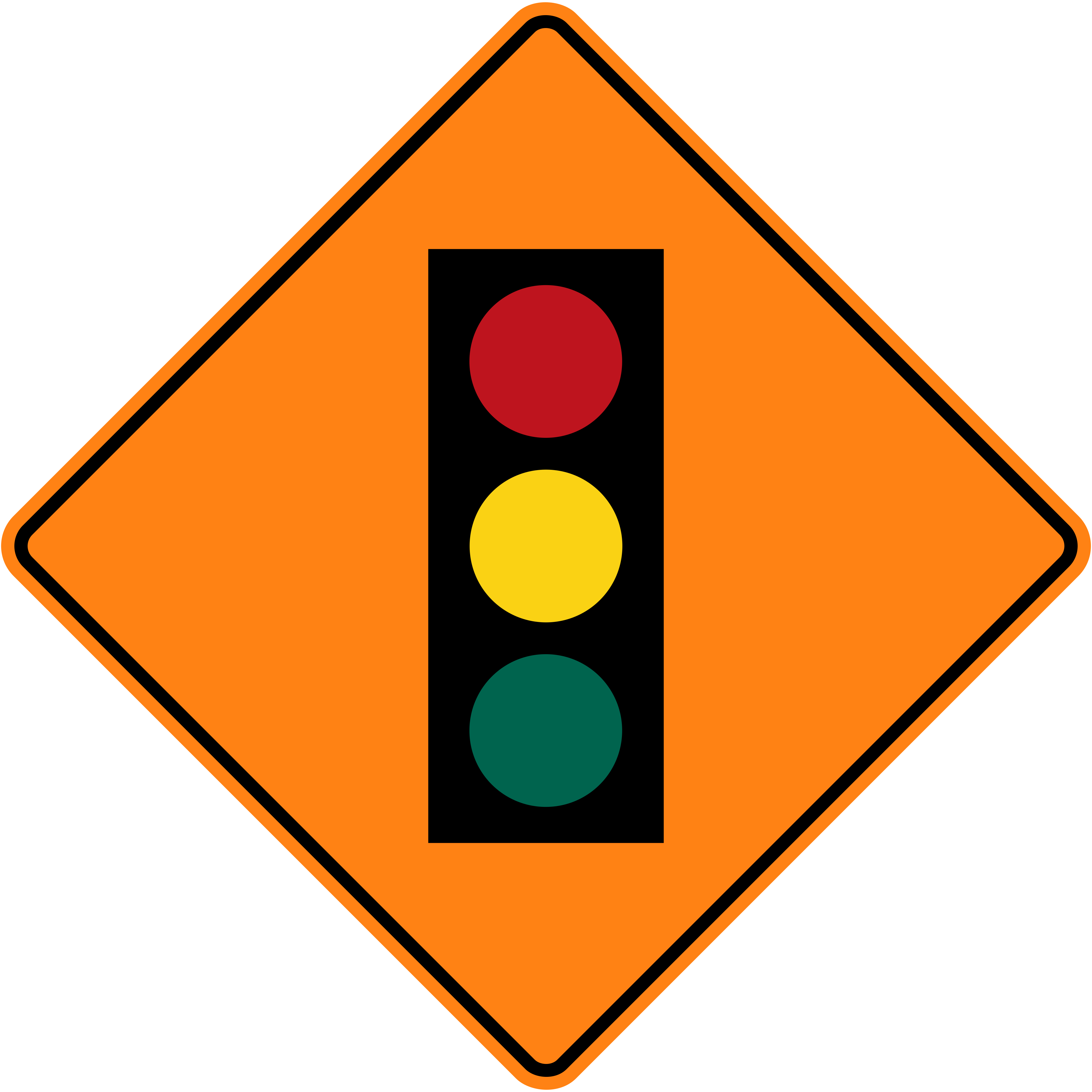
Temporary Signals Ahead
Warns of temporary traffic lights controlling traffic through a work zone.
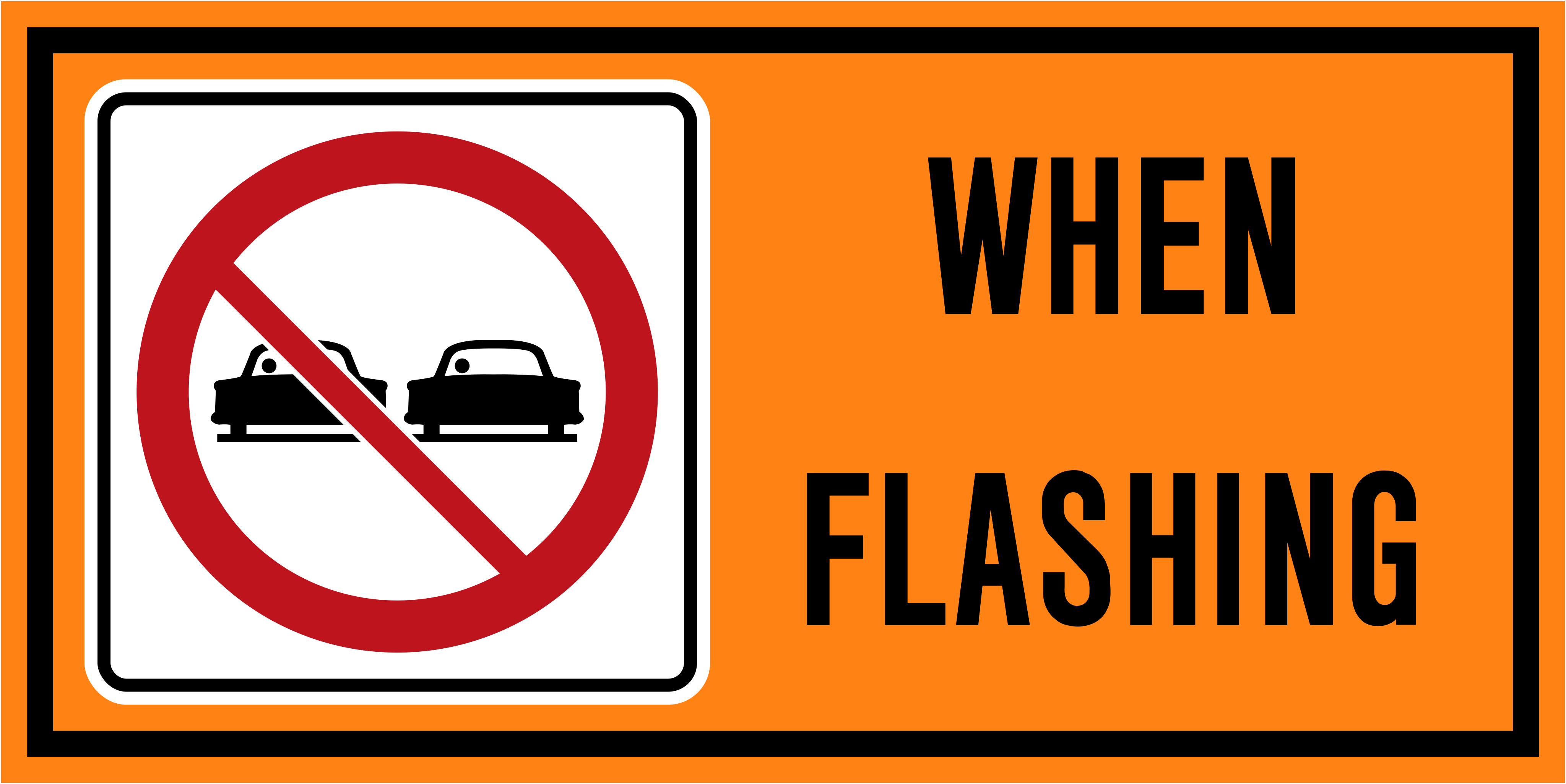
Do Not Pass When Flashing
Prohibits passing while accompanying lights are flashing — common in single-lane work zones led by a pilot vehicle.
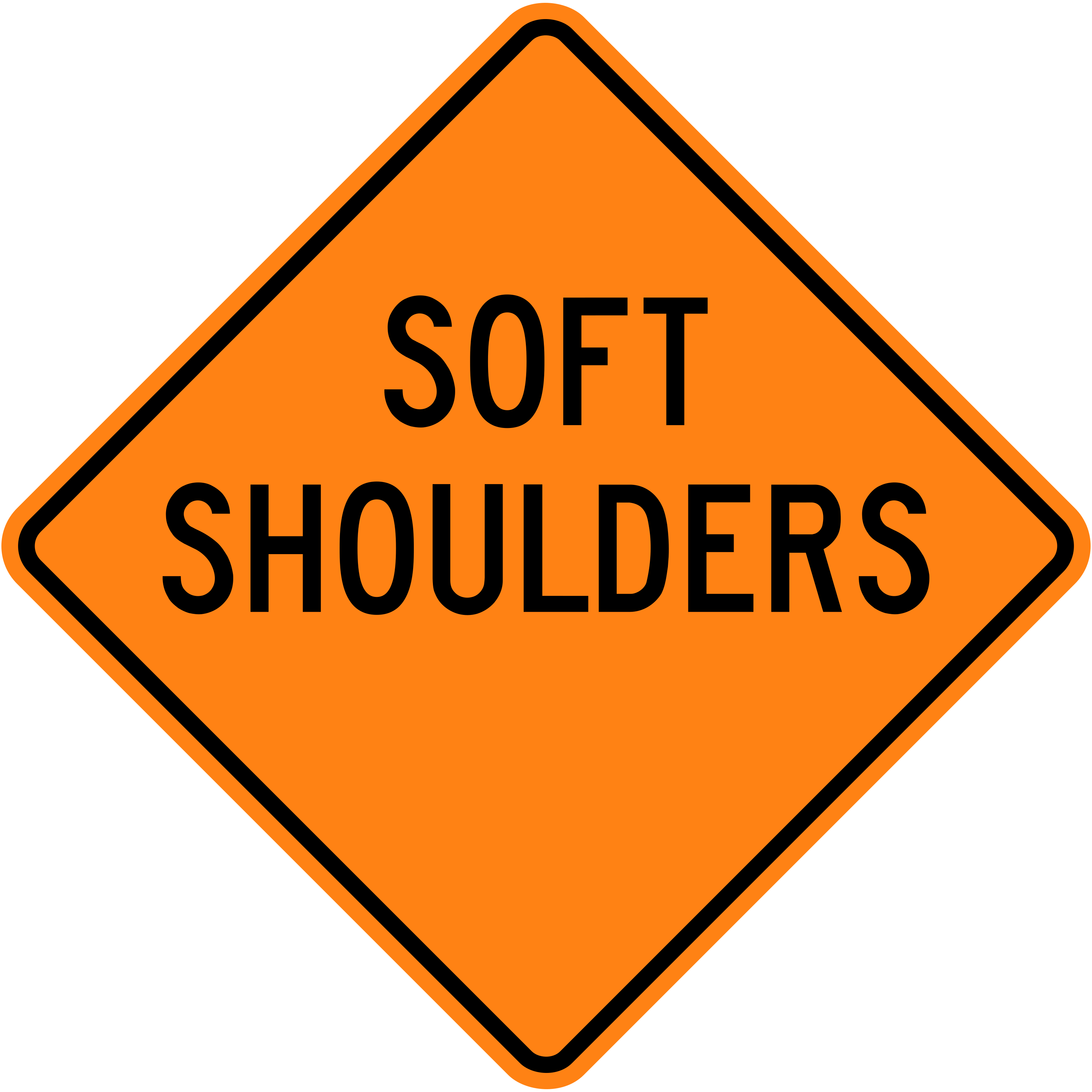
Soft Shoulders
Warns that the road shoulder is soft, often due to recent work, and may not support a vehicle’s weight.
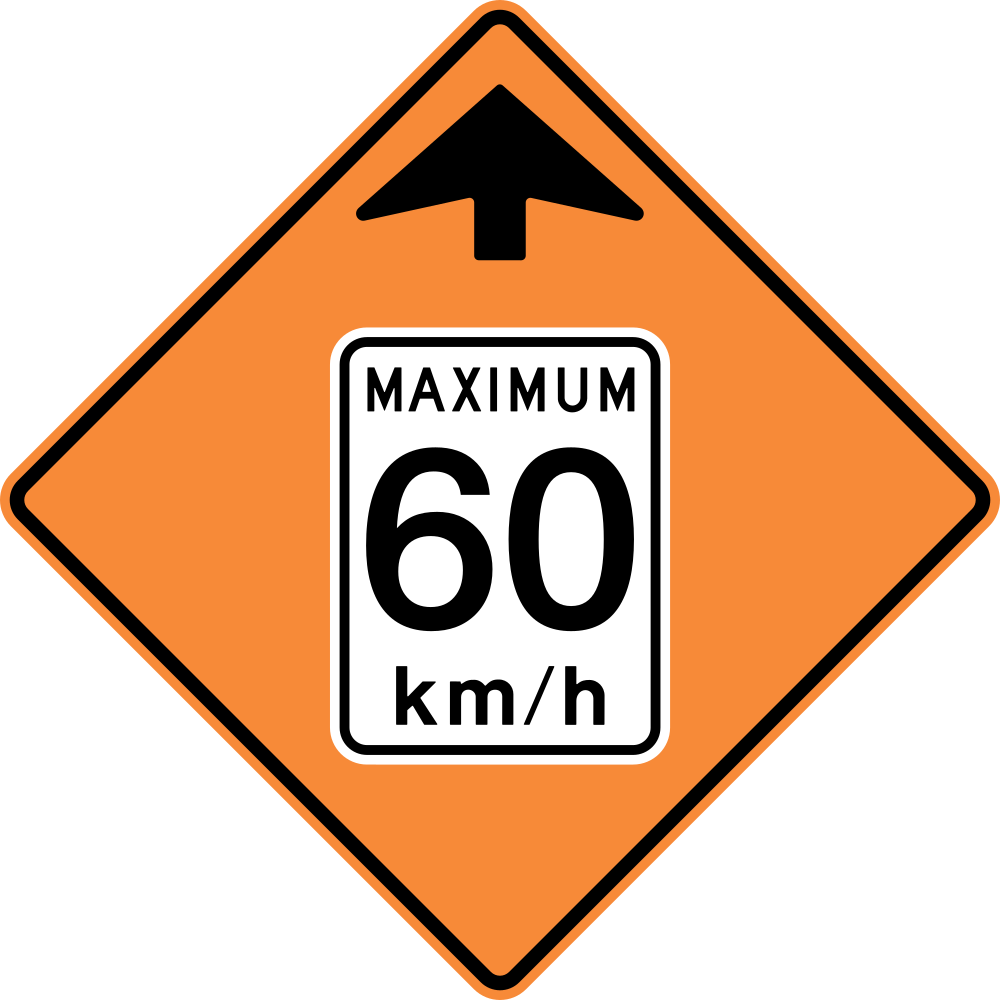
Reduced Speed Ahead (Construction)
A lower construction-zone speed limit is ahead, shown here as 60 km/h.
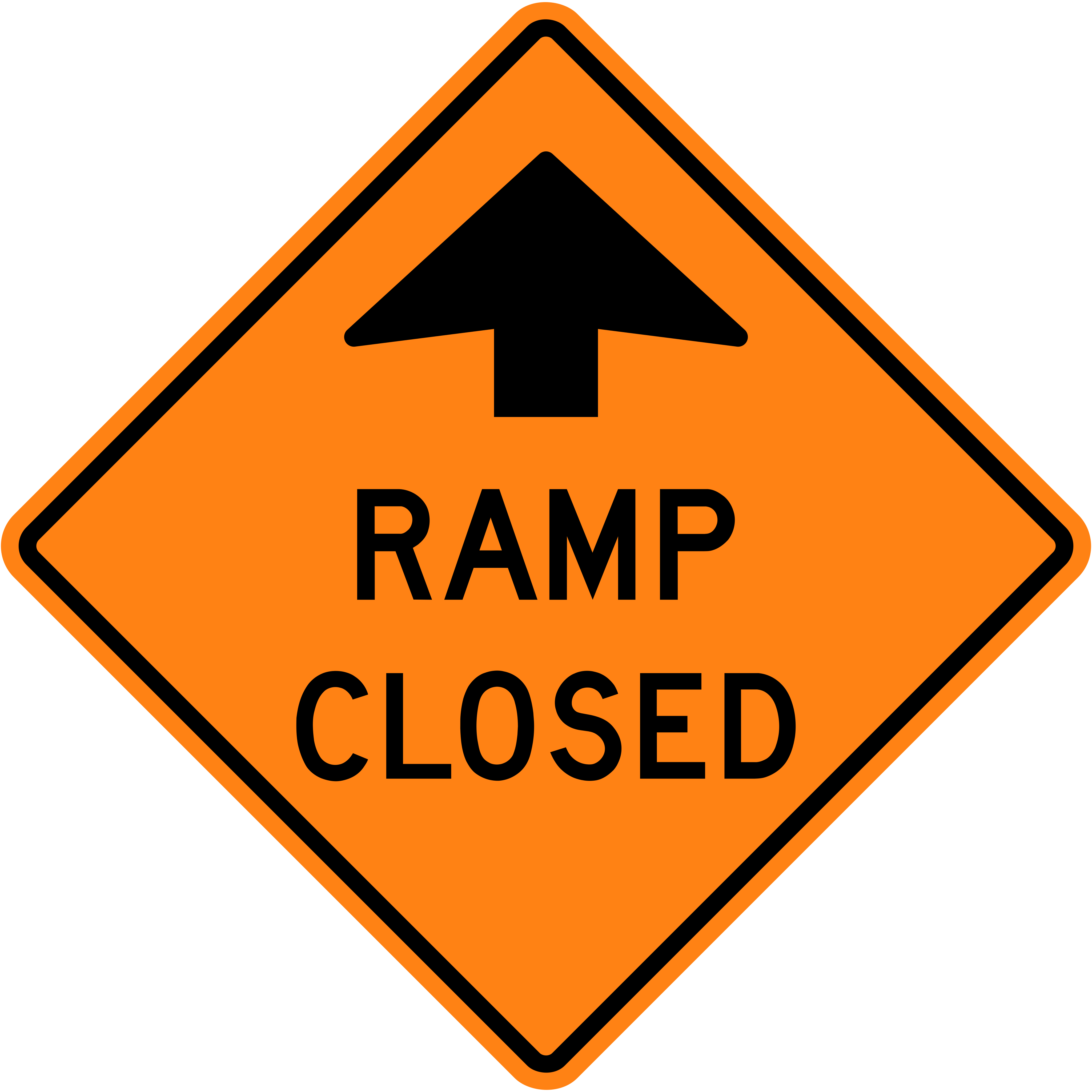
Ramp Closed
The ramp ahead is closed. Follow signs to another route.
Signs that tell you how to behave around police, ambulances, fire trucks and tow trucks.
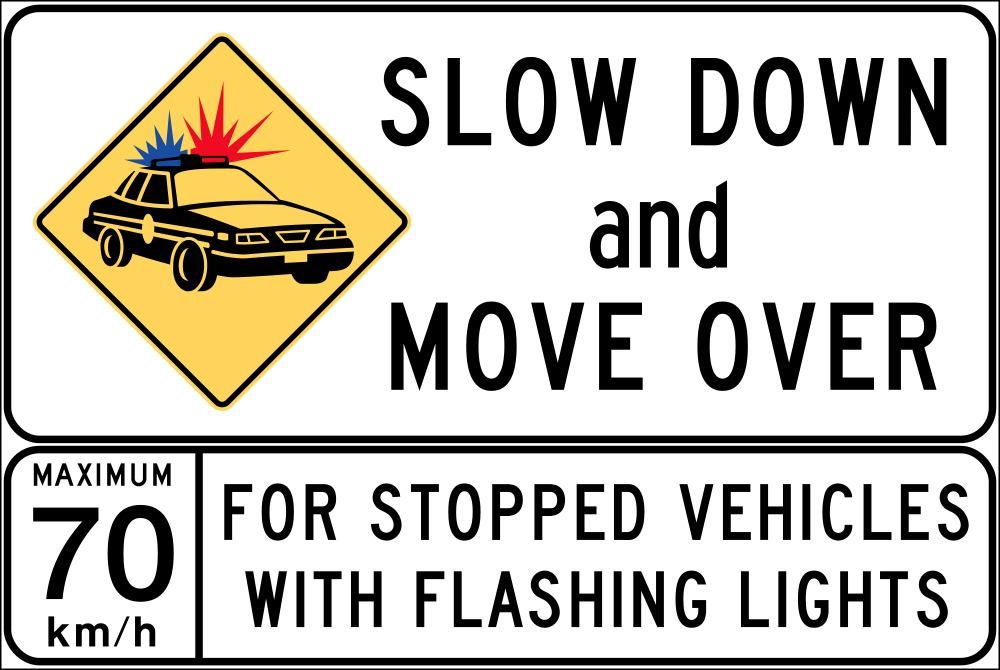
Slow Down and Move Over
Slow down and move over for stopped emergency vehicles with lights flashing, as your province or territory requires.
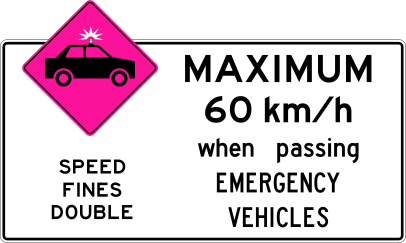
Fines Are Doubled
Fines may be increased in these areas.
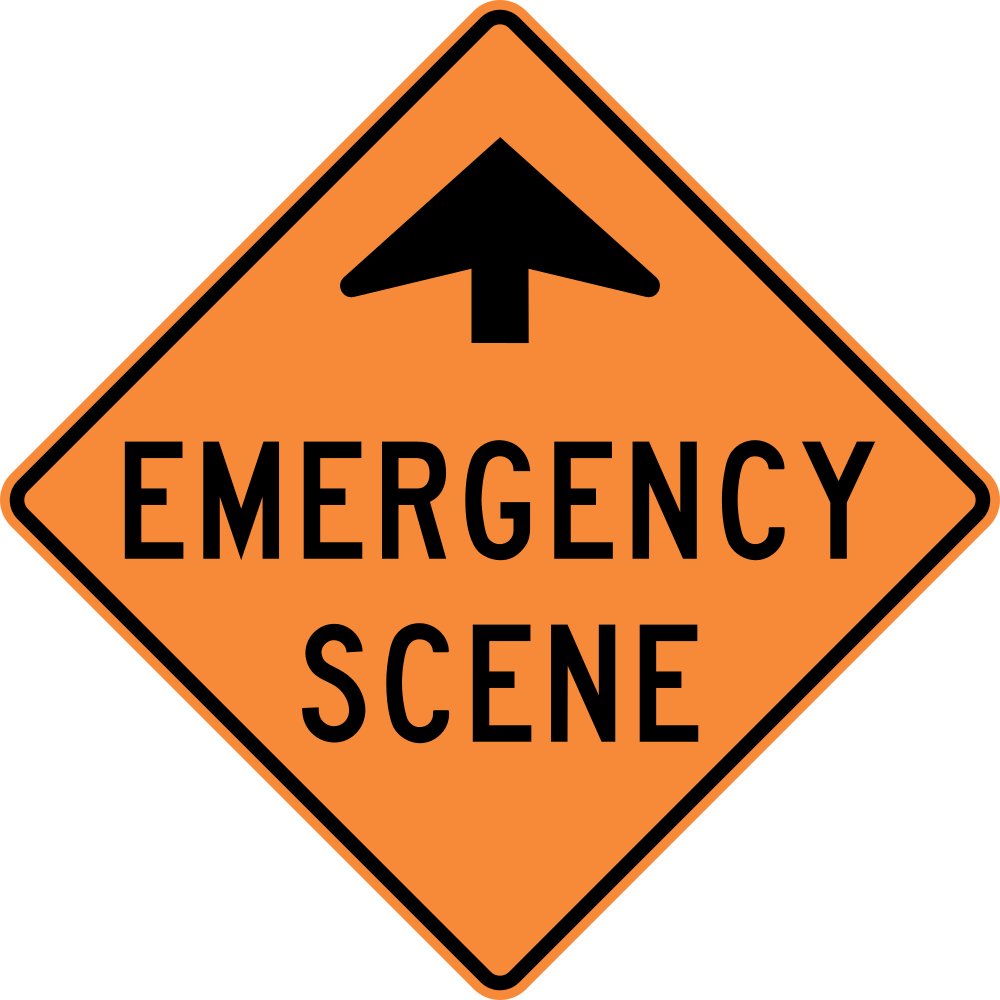
Emergency Scene Ahead
Expect lane shifts, closures, or personnel directing traffic.
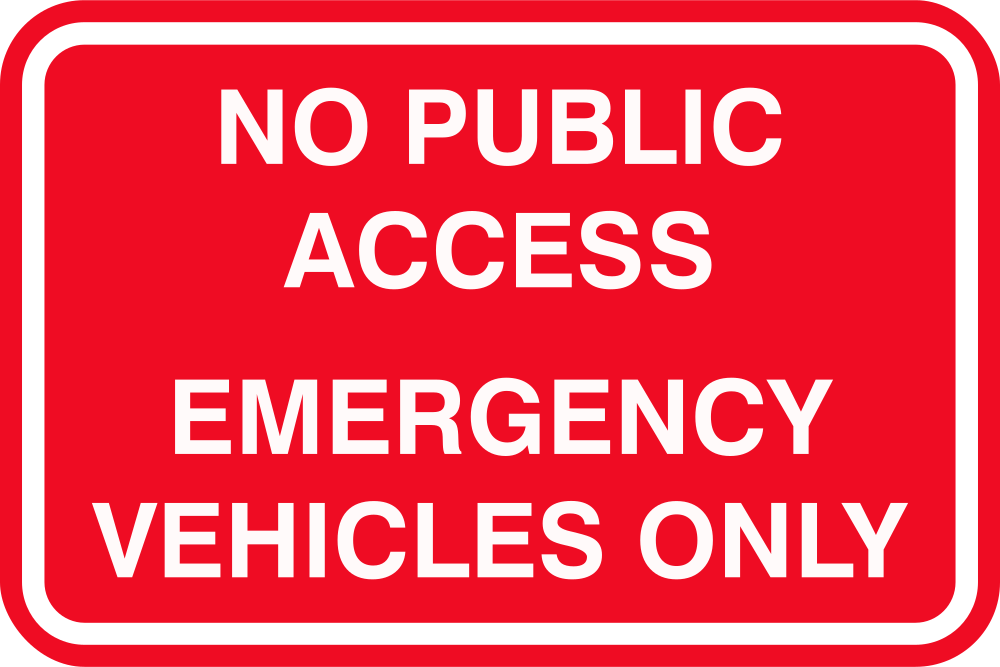
Emergency Vehicles Only
Some roads, lanes, or gates — like fire truck entrances — are reserved strictly for emergency vehicles.
🚂 Railway crossings
A train cannot swerve and can take more than a kilometre to stop, so crossings need a different level of attention than ordinary intersections. This sign is also listed under warning signs.
- Recognize the warnings. Look for signs, pavement markings and flashing lights, bells or gates. Not every crossing has lights or gates.
- Obey the signals. When lights flash, bells sound or gates lower, stop. Never drive around a lowered gate.
- Watch for a second train. Look both ways and check every track before you cross.
- Make sure you can clear the tracks. Only enter if there is room on the other side for your whole vehicle.
- If you get stuck, get out. Move well away from the tracks, then call the number on the blue Emergency Notification Sign, or 911 if there is immediate danger.
Ready to test yourself?
Try the free DriveReady practice test. No credit card and no account needed.
Start the free test →Road sign questions, answered
What shape are warning signs in Canada?
Most warning signs are yellow diamonds. They alert you to hazards or changes in road conditions ahead, such as a curve, an intersection or an animal crossing. Some warning signs use other shapes, so read the sign and follow your provincial or territorial driver's guide.
What colour are construction signs?
Work-zone signs are usually orange, which sets them apart from permanent yellow warning signs. Orange diamonds are common, but other shapes are used too.
What do blue and green road signs mean?
Green signs usually give directions and destinations. Blue signs are commonly used for services and information, such as hospitals, fuel, food and parking. Shapes vary by sign.
What is a regulatory sign?
A regulatory sign tells you what you must or must not do, such as a speed limit, a turn restriction or a parking rule. Many are white rectangles, but some use other colours and shapes. Stop signs are red octagons, and yield signs are red-and-white triangles.
What colour are school zone signs?
Many school zone signs are fluorescent yellow-green pentagons, while Newfoundland and Labrador uses both blue and fluorescent yellow school zone signs. Some school-related signs have different designs, and designs can differ by province or territory, so read the sign and follow your driver's guide.
Don’t see a sign here?
A sign not shown here may still appear in your provincial or territorial driver’s handbook, and your knowledge test is based on that handbook. Check the one for where you are getting licensed:
Ontario · British Columbia · Alberta · Quebec · Saskatchewan · Manitoba · Nova Scotia · New Brunswick · Prince Edward Island · Newfoundland and Labrador · Yukon · Northwest Territories · Nunavut