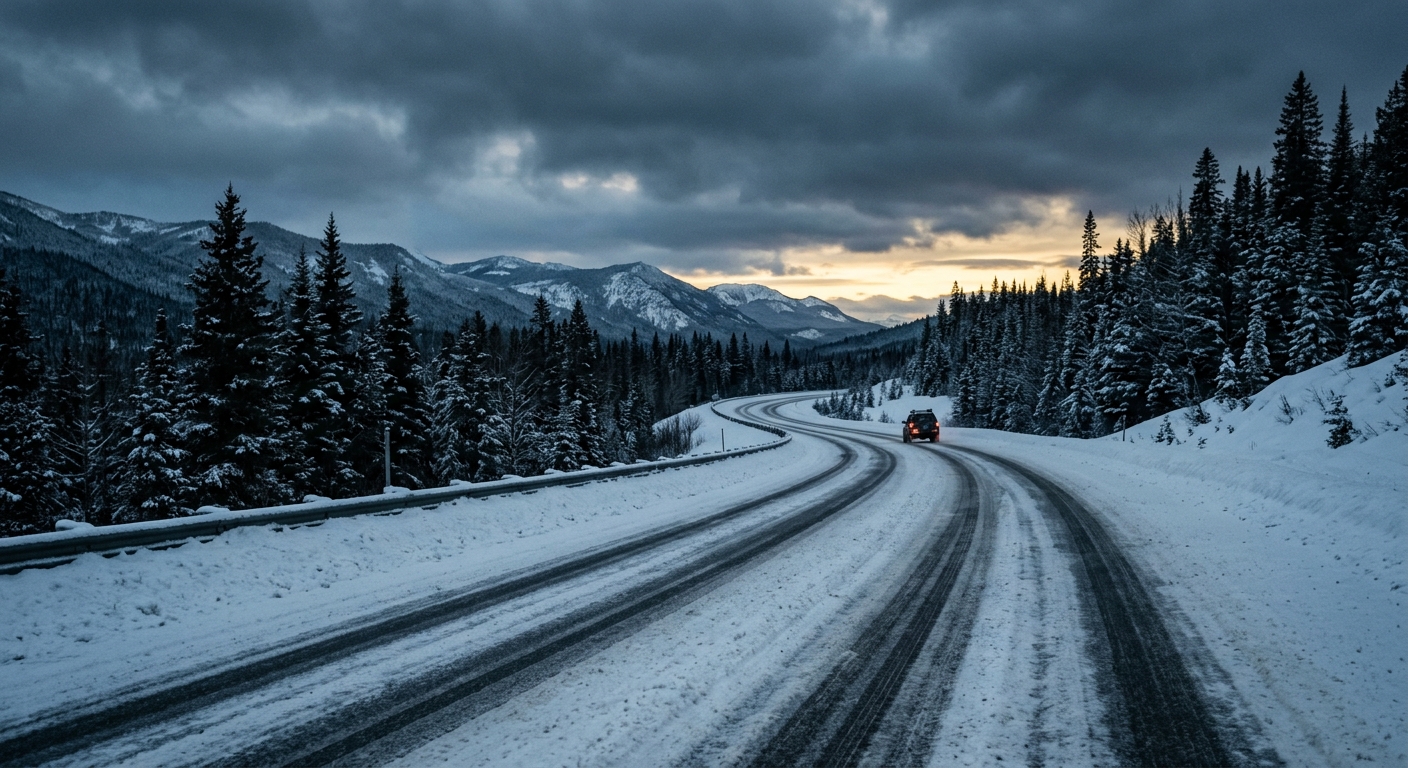
Winter Driving in Canada: What Every New Driver Needs to Know
Winter driving isn’t just regular driving with worse weather — it’s a genuinely different skill, and even confident drivers get caught off guard their first real Canadian winter. None of this is about being afraid of snow. It’s about understanding a few things that change under your tires and adjusting for them deliberately, rather than finding out the hard way.

I always tell new drivers: winter driving isn’t about being fearless, it’s about giving yourself room to be wrong. Extra following distance covers you for the moment your first instinct on ice turns out to be the wrong one.
The Physics You’re Actually Managing
On snow or ice, your stopping distance can be roughly double what it is on dry pavement — sometimes more. The practical fix is following distance: where 2 seconds is the usual dry-road guideline, winter conditions call for 4 to 6 seconds. Read our following distance guide for a deeper explanation of why this matters.
Same speed, same brakes — roughly double the distance to actually stop.
Brake and steer smoothly rather than abruptly, since sudden inputs are exactly what causes a skid on a slippery surface. Cruise control is worth avoiding on snow or ice, since it can’t respond to changing traction the way you can.
Winter Tires: Law vs. Recommendation
Only two provinces legally require winter tires — and even between those two, the rule works differently:
Black Ice and Other Hazards
Black ice is dangerous specifically because it’s invisible — a thin, clear layer that looks like wet pavement. It forms first on bridges and overpasses, since cold air circulates both above and below the road surface there, so treat any bridge or overpass with extra caution even if the rest of the road looks fine. Whiteout conditions from blowing snow can also cut visibility to near zero with almost no warning, especially on open highway stretches — slowing down early and using low-beam headlights (not high beams, which reflect off falling snow) both help.
Before You Even Start Driving
- Clear all windows, mirrors, lights, and the roof — not just a peephole through the windshield. Snow left on the roof can slide down and block your view, or become a hazard for the car behind you.
- Check that your washer fluid is rated for winter temperatures, and keep the reservoir topped up — road spray freezes fast and you’ll use it more than you expect.
- In regions with extreme cold, a block heater plugged in a few hours before driving makes starting easier and reduces engine wear.
- Keep a small winter emergency kit — blanket, flashlight, snacks — in case you’re stopped or stuck longer than planned.
A Practice Method That Actually Sticks
Winter driving skill comes from deliberate, low-risk practice — not from reading about it. Find an empty parking lot after a snowfall and practice braking and steering at low speed so you feel what reduced traction actually feels like, in a setting where a mistake costs nothing.
Practice a specific skill
Braking, steering — at low speed, low stakes, in an empty lot.
Notice what actually happens
Feel what reduced traction actually does to the car.
Review anything that surprised you
A skid, a longer stop than expected — note it specifically.
Understand why
Weight transfer, reduced friction — the actual mechanism.
Practice again before conditions get harder
Build the habit before the first real storm, not during it.
A Practice Plan
- Before the first snowfall: Get winter tires installed if you’re going to use them — don’t wait for the first storm, when shops are backed up.
- First snow of the season: Practice braking and turning in an empty lot before you need those skills in traffic.
- Ongoing: Build the 4–6 second following distance habit deliberately until it’s automatic, not just something you remember on bad days.
If Your Test Happens in Winter
Knowledge tests and road tests generally still go ahead in winter weather unless conditions are genuinely unsafe — don’t assume a snowy forecast means a postponement. If you’re taking a road test, examiners generally want to see winter-appropriate caution (extra following distance, smoother inputs, earlier braking), not hesitation or unsafe slowness. Reasonable caution reads as good judgment, not as a mistake.
The Bottom Line
Winter driving comes down to a short list of real adjustments — more following distance, smoother inputs, proper visibility, and tires suited to the season where it matters. None of it is complicated, but all of it deserves deliberate practice before you actually need it in traffic. Also see our guide on distracted driving — a risk that compounds significantly in winter conditions. Short winter days also mean more driving in the dark, so read our night driving guide, and if your routes include country roads, our rural roads guide.
Keep the rules of the road sharp too
Try a free practice test for your province — a good complement to winter driving skills. With DriveReady, you can also unlock Supervised Drive, a practical tool to help develop driving skills through guided practice sessions.
★ Start Free Practice Test